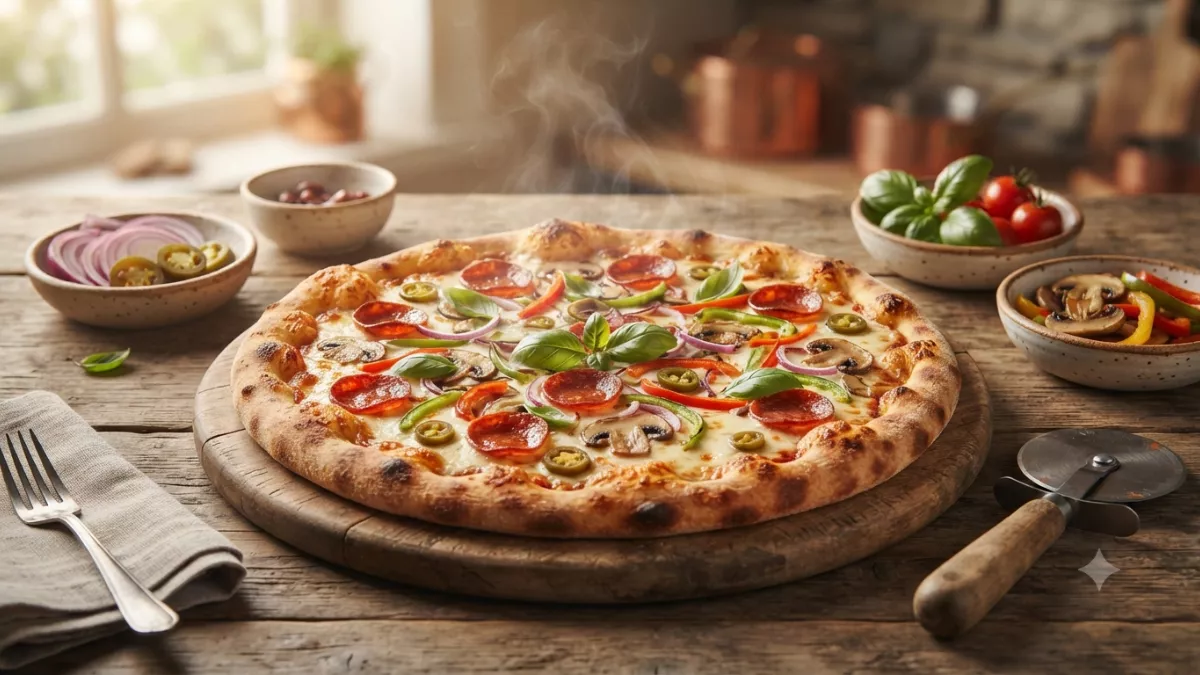
Pizza is one of the easiest foods to customize, but choosing toppings that actually work well together takes more thought than simply adding all your favorites. The best pizzas have balance. Sweet ingredients can complement salty toppings, creamy cheese can soften spicy flavors, and fresh vegetables can add brightness to rich meats. When the right ingredients are combined, every bite tastes more complete.
If you have ever made a pizza that looked delicious but somehow tasted too salty, too heavy, too wet, or simply confusing, the problem may have been the topping combination. Understanding how flavors, textures, moisture, and seasoning interact can help you build better pizza at home or make smarter choices when ordering.
This guide explains how pizza toppings work together and shares practical combinations that make it easier to create a balanced, flavorful pizza.
What Makes Pizza Toppings Work Well Together?
Good pizza topping combinations usually have a combination of complementary flavors and contrasting textures. You do not need a complicated ingredient list. In many cases, three to five well-chosen toppings can create a better pizza than a dozen ingredients competing for attention.
A balanced pizza often includes several of these flavor characteristics:
- Salty or savory ingredients
- Sweet or naturally mild ingredients
- Fresh or acidic ingredients
- Creamy or rich ingredients
- Spicy ingredients
- Earthy vegetables
- Fresh herbs
- Crunchy or soft textures
The goal is not to include every category. Instead, think about how one ingredient affects another.
For example, spicy sausage can become more enjoyable when paired with sweet peppers or caramelized onions. Rich mozzarella can benefit from fresh basil or tomatoes. Salty olives can work well with mild vegetables and creamy cheese.
1. Pepperoni and Mushrooms
Pepperoni and mushrooms are a classic pizza combination for a reason. The salty, savory flavor of pepperoni pairs naturally with the earthy taste of mushrooms.
Mushrooms also add moisture and a tender texture that contrasts with crisp, browned pepperoni edges.
For an even more balanced pizza, add:
- Mozzarella
- Tomato sauce
- A small amount of onion
- Fresh oregano or basil
Avoid adding too many additional salty toppings because pepperoni already brings plenty of seasoning.
2. Italian Sausage and Peppers
Italian sausage and peppers create an excellent balance between rich meat and fresh vegetable flavor. Sausage provides savory, seasoned notes, while bell peppers add sweetness and mild crunch.
You can use green, red, yellow, or orange peppers depending on the flavor you want.
Red and yellow peppers tend to provide a sweeter profile, while green peppers have a slightly more vegetal flavor.
A simple combination is:
- Italian sausage
- Bell peppers
- Mozzarella
- Tomato sauce
- Red onion
For extra freshness, finish the baked pizza with a small amount of fresh basil.
3. Pepperoni, Jalapeños, and Honey
If you enjoy sweet-and-spicy flavors, this combination is worth trying.
Pepperoni brings saltiness and richness. Jalapeños add heat and freshness, while a small drizzle of honey after baking introduces sweetness.
The important part is moderation. Honey should complement the other ingredients rather than turn the pizza into a dessert.
This combination works especially well with mozzarella because the mild cheese helps connect the spicy, salty, and sweet flavors.
4. Fresh Mozzarella, Tomato, and Basil
Sometimes the best pizza combinations are the simplest.
Fresh mozzarella, tomatoes, and basil create a bright and refreshing flavor profile. The creamy cheese contrasts with the acidity of tomatoes, while basil contributes a fresh herbal aroma.
A light tomato sauce or even a very thin layer of sauce can work well.
Because the ingredients are relatively delicate, avoid covering this pizza with heavy meats or too many strong seasonings.
A small drizzle of olive oil after baking can bring everything together.
5. Mushroom, Spinach, and Garlic
Mushrooms and spinach are excellent choices for a vegetable-focused pizza.
Mushrooms provide earthy depth, while spinach adds a mild green flavor. Garlic contributes aromatic intensity without overpowering the vegetables when used carefully.
Try combining:
- Mushrooms
- Fresh spinach
- Garlic
- Mozzarella
- Parmesan
- Tomato sauce
You can also use a white sauce instead of tomato sauce if you prefer a creamier pizza.
6. Chicken, Bacon, and Ranch-Inspired Flavors
Chicken and bacon create a rich and savory base. A creamy ranch-inspired flavor can add tanginess and herbs.
For a pizza version, consider:
- Seasoned chicken
- Crispy bacon
- Mozzarella
- Red onion
- A light ranch-style drizzle after baking
Because chicken and bacon can make a pizza quite rich, adding a fresh vegetable such as red onion or green pepper can help balance the overall flavor.
The key is to keep the sauce and toppings proportional so the pizza does not become overly heavy.
7. Ham and Pineapple
Ham and pineapple remain one of the most recognizable sweet-and-savory pizza combinations.
Ham provides saltiness and a meaty texture, while pineapple contributes sweetness and acidity. Mozzarella helps connect the two flavors.
For better balance, avoid using excessive amounts of pineapple. Too much fruit can release additional moisture and make the center of the pizza softer.
A moderate amount distributed evenly across the pizza usually works better.
8. Sausage, Onion, and Mushroom
This combination focuses on deep savory flavor.
Sausage brings seasoning and richness. Onions add sweetness as they cook, while mushrooms contribute earthy notes.
The three ingredients work particularly well because they have different but compatible flavor profiles.
For an especially flavorful version, lightly sauté the mushrooms and onions before putting them on the pizza. This can reduce excess moisture and intensify their natural flavors.
9. Spinach, Ricotta, and Garlic
Ricotta gives pizza a creamy texture that works beautifully with leafy greens and garlic.
A spinach, ricotta, and garlic pizza can be made with tomato sauce or without it. A white pizza version allows the creamy ingredients to become the focus.
Consider adding:
- Mozzarella
- Ricotta
- Spinach
- Garlic
- Parmesan
- Black pepper
A little lemon zest after baking can also add brightness without overwhelming the pizza.
10. Roasted Vegetables and Goat Cheese
Roasted vegetables develop deeper, sweeter flavors than many raw vegetables.
Try combining roasted:
- Bell peppers
- Zucchini
- Onions
- Mushrooms
with goat cheese and mozzarella.
The tangy goat cheese provides contrast to the sweetness of roasted vegetables.
Because goat cheese has a strong flavor, you generally do not need a large amount. Small portions distributed across the pizza can provide plenty of character.
How to Balance Salty Pizza Toppings
Salt is one of the easiest elements to overdo on pizza.
Ingredients such as pepperoni, sausage, bacon, ham, olives, and some cheeses can all contribute significant saltiness.
If you are using one strongly salted ingredient, consider pairing it with milder toppings.
For example:
Salty: Pepperoni
Balanced with: Mushrooms and bell peppers
Salty: Bacon
Balanced with: Spinach and onion
Salty: Olives
Balanced with: Tomato and fresh mozzarella
Salty: Feta
Balanced with: Roasted peppers and spinach
You do not necessarily need to remove salt completely. Instead, think about the total salt contribution of the entire pizza.
How Sweet and Savory Toppings Work Together
Sweet-and-savory combinations work because contrasting flavors can make each other more noticeable.
Common examples include:
- Ham and pineapple
- Pepperoni and hot honey
- Sausage and caramelized onions
- Bacon and roasted apples
- Prosciutto and figs
- Roasted peppers and salty cheese
The key is balance.
If every ingredient is sweet, the pizza can become one-dimensional. If every ingredient is salty and savory, the pizza may taste heavy.
A small sweet component can often make a savory pizza more interesting.
How Spicy Toppings Affect Pizza Flavor
Spicy ingredients can completely change the character of a pizza.
Jalapeños, hot peppers, spicy sausage, chili flakes, and hot honey can all add heat.
When using spicy toppings, consider adding a creamy or mildly sweet ingredient to soften the experience.
Good combinations include:
- Pepperoni + jalapeños + mozzarella
- Sausage + banana peppers + onions
- Spicy sausage + roasted peppers
- Jalapeños + pineapple + ham
- Pepperoni + hot honey + fresh basil
You can also use fresh herbs after baking to introduce a cooling, aromatic contrast.
Why Texture Matters as Much as Flavor
A pizza can have excellent ingredients and still feel unbalanced if every topping has the same texture.
Texture variety makes each bite more interesting.
For example:
- Crispy pepperoni + soft mushrooms
- Creamy ricotta + crunchy vegetables
- Chewy crust + crisp onions
- Soft mozzarella + roasted peppers
- Crispy bacon + tender spinach
Think about texture when designing a pizza rather than focusing only on flavor.
Do Not Use Too Many Toppings
One of the most common pizza mistakes is assuming that more toppings automatically create better flavor.
In reality, too many toppings can create several problems.
First, flavors can become difficult to distinguish. Second, heavy toppings can prevent the crust from baking properly. Third, vegetables can release excess water, making the center of the pizza soggy.
A pizza with four complementary toppings can often be more enjoyable than one loaded with ten unrelated ingredients.
A useful starting point is:
Sauce + cheese + 2–4 main toppings + optional finishing ingredient
This gives each ingredient enough room to contribute.
Consider the Moisture Level of Your Toppings
Moisture is another important part of building a good pizza.
Fresh tomatoes, mushrooms, spinach, pineapple, zucchini, and some cheeses can release water during baking.
If several high-moisture ingredients are combined, the pizza may become soft in the middle.
To reduce the problem:
- Drain fresh mozzarella before using it.
- Pat pineapple dry.
- Cook mushrooms briefly before topping.
- Avoid piling on raw vegetables.
- Use a moderate amount of sauce.
- Spread toppings evenly.
Managing moisture helps preserve the crust’s texture.
Match Strong Flavors With Mild Ingredients
Strong ingredients should usually have something mild to support them.
For example, goat cheese has a distinctive tangy flavor, so it can be paired with mild mozzarella and roasted vegetables.
Similarly, spicy sausage can work with mild bell peppers and mozzarella.
This creates a flavor hierarchy where certain ingredients stand out without dominating the entire pizza.
Build Pizza Toppings Around the Sauce
The sauce should also influence your topping choices.
A traditional tomato sauce works with a wide variety of ingredients because its acidity and savory flavor provide a flexible foundation.
White sauce creates a richer base and works particularly well with:
- Spinach
- Mushrooms
- Chicken
- Ricotta
- Garlic
- Parmesan
Pesto brings herbal, nutty, and garlicky flavors that can work with:
- Fresh mozzarella
- Tomatoes
- Chicken
- Mushrooms
- Spinach
- Roasted vegetables
The sauce is essentially the first flavor layer of the pizza, so toppings should complement it rather than fight against it.
Pizza Topping Combinations for Meat Lovers
If you prefer meat-heavy pizzas, focus on balancing rich ingredients with vegetables or acidic components.
Some combinations to try include:
Pepperoni, Sausage, and Banana Peppers
The meats provide richness while banana peppers introduce acidity and mild heat.
Sausage, Bacon, and Onion
Sweet onions help balance the salty, smoky flavors of the meat.
Pepperoni, Ham, and Pineapple
This combination creates a classic sweet-and-savory profile.
Chicken, Bacon, and Jalapeño
Creamy cheese and mild vegetables can help balance the richness and heat.
Pizza Topping Combinations for Vegetarians
Vegetarian pizza does not need to be boring. The key is combining vegetables with ingredients that provide depth and richness.
Try:
Mushroom + Onion + Spinach
Earthy, sweet, and fresh.
Tomato + Basil + Fresh Mozzarella
Bright, creamy, and herbaceous.
Roasted Pepper + Mushroom + Goat Cheese
Sweet, earthy, and tangy.
Spinach + Ricotta + Garlic
Creamy, aromatic, and satisfying.
Jalapeño + Corn + Black Bean
Sweet, spicy, and hearty.
Pizza Topping Combinations for Cheese Lovers
Cheese can also be layered strategically.
Instead of adding several cheeses simply because you like them, think about how each cheese contributes.
For example:
Mozzarella + Parmesan: Mild, creamy, and savory
Mozzarella + Ricotta: Soft and creamy
Mozzarella + Goat Cheese: Mild with a tangy finish
Mozzarella + Provolone: Rich and slightly sharper
Mozzarella + Blue Cheese: Creamy with a strong, distinctive flavor
Strong cheeses should generally be used in smaller amounts so they do not overpower the other ingredients.
How to Create Your Own Pizza Topping Combination
You can use a simple five-step process when creating a new pizza.
Step 1: Choose Your Main Flavor
Start with one ingredient you want to feature.
It could be pepperoni, sausage, mushrooms, chicken, spinach, or fresh mozzarella.
Step 2: Add a Supporting Ingredient
Choose something that complements the main ingredient.
For sausage, that might be peppers or onions.
For mushrooms, spinach or garlic can work well.
Step 3: Add Contrast
Introduce something that provides a different flavor or texture.
This might be a sweet ingredient, a spicy ingredient, or a fresh vegetable.
Step 4: Choose the Right Cheese
Mozzarella is versatile, but other cheeses can add different characteristics.
Use stronger cheeses carefully.
Step 5: Finish With Freshness
Fresh basil, parsley, arugula, chili flakes, olive oil, Parmesan, or a small drizzle of hot honey can add a final layer of flavor after baking.
A Simple Formula for Better Pizza Flavor
A useful way to think about pizza is:
Rich + fresh + salty + sweet + texture
You do not need all five every time. Instead, use the formula as a brainstorming tool.
For example:
Pepperoni + mozzarella + mushrooms + basil
gives you savory richness, creamy cheese, earthy vegetables, and fresh herbal flavor.
Another example:
Sausage + roasted peppers + onion + mozzarella
combines savory meat, sweetness, mild vegetable flavor, and creamy cheese.
The idea is to create contrast without creating chaos.
Common Pizza Topping Mistakes
Even good ingredients can produce disappointing results when they are used incorrectly.
Using Too Many Ingredients
Too many toppings can hide individual flavors.
Ignoring Moisture
High-moisture toppings can make the crust soft.
Adding Too Much Cheese
Excess cheese can overwhelm the sauce and toppings and may prevent proper browning.
Combining Too Many Strong Flavors
Strong sausage, spicy peppers, blue cheese, olives, and garlic together can create a pizza where nothing tastes clearly defined.
Uneven Distribution
If all the toppings are concentrated in the middle, the pizza can cook unevenly. Spread ingredients across the surface while leaving a small border for the crust.
How to Build a Better Pizza at Home
Start with a well-fermented dough and a properly preheated oven. Use a moderate amount of sauce and cheese, then distribute toppings evenly.
If you are using vegetables with high moisture content, consider pre-cooking or draining them.
Bake until the crust is properly browned and the cheese is melted with some golden spots.
After baking, add finishing ingredients such as:
- Fresh basil
- Parmesan
- Chili flakes
- Olive oil
- Arugula
- Hot honey
- Freshly ground black pepper
These small additions can significantly change the final flavor.
Final Thoughts
The best pizza topping combinations are not necessarily the ones with the most ingredients. Great pizza comes from balance. Salty toppings can benefit from fresh or sweet ingredients, rich cheeses can be balanced by acidic vegetables, spicy flavors can be softened with creamy ingredients, and soft toppings can become more interesting when paired with crisp textures.
When choosing toppings, think about flavor, texture, moisture, and intensity. Start with one main ingredient, add a complementary topping, introduce contrast, choose a suitable cheese, and finish with something fresh or aromatic.
Once you understand how pizza toppings work together, creating your own combinations becomes much easier. Instead of randomly adding ingredients, you can build a pizza where every topping has a purpose.
Frequently Asked Questions
What are the best pizza toppings to combine?
Popular combinations include pepperoni and mushrooms, sausage and peppers, ham and pineapple, mushrooms and onions, and fresh mozzarella with tomato and basil. The best combination depends on your preferred flavors and textures.
How many toppings should you put on a pizza?
Around two to four main toppings is a useful starting point. Using too many ingredients can make the pizza heavy, watery, and difficult to balance.
What toppings go well with pepperoni?
Pepperoni pairs well with mushrooms, onions, bell peppers, jalapeños, olives, pineapple, and fresh basil. Mild or fresh ingredients can help balance its salty and rich flavor.
What toppings go well with sausage?
Italian sausage works particularly well with peppers, onions, mushrooms, spinach, banana peppers, and mozzarella. Roasted or caramelized vegetables can add sweetness and balance.
How do you prevent pizza toppings from making the crust soggy?
Control moisture by draining fresh mozzarella, patting wet ingredients dry, pre-cooking watery vegetables when appropriate, using moderate sauce, and avoiding excessive toppings.