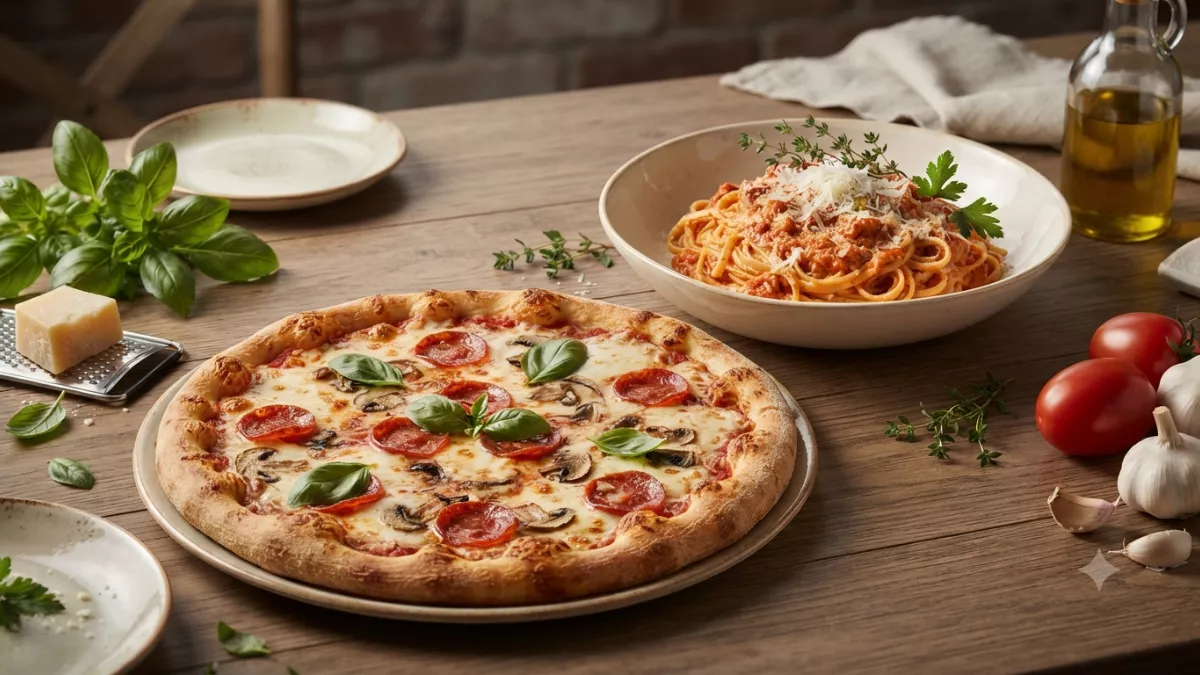
Pizza and pasta are two of the world’s most recognizable Italian foods. They appear on restaurant menus everywhere, have countless variations, and can be customized with an almost endless combination of sauces, cheeses, meats, vegetables, and herbs.
But have you ever wondered why pizza and pasta go so well together?
At first glance, the two foods are quite different. Pizza is baked on a flat dough base, while pasta is usually boiled and combined with a sauce. Yet they share many of the same ingredients and flavors.
Tomatoes, garlic, olive oil, mozzarella, Parmesan, basil, oregano, vegetables, meats, and other savory ingredients can appear in both dishes.
This shared flavor foundation makes pizza and pasta a natural combination for family dinners, restaurant meals, parties, and Italian-inspired gatherings.
In this guide, we’ll explore why pizza and pasta work so well together, how their flavors complement each other, popular combinations to try, and tips for creating a balanced meal.
What Do Pizza and Pasta Have in Common?
The connection between pizza and pasta starts with their ingredients.
Both foods can be built around a relatively simple group of ingredients:
- Wheat-based dough or pasta
- Tomato sauce
- Olive oil
- Garlic
- Cheese
- Fresh herbs
- Vegetables
- Meat
- Seafood
- Seasonings
This shared ingredient base means the flavors naturally overlap.
For example, a tomato sauce containing garlic, basil, and oregano can work equally well on pizza and pasta.
A combination of sausage, mushrooms, onions, and Parmesan can also appear in both dishes.
Because the flavors are familiar across both foods, eating pizza and pasta together doesn’t usually create a clash. Instead, the dishes can reinforce the same overall flavor profile.
1. They Share Similar Italian-Inspired Flavors
One of the biggest reasons pizza and pasta pair so naturally is their shared culinary tradition.
Italian cuisine frequently emphasizes quality ingredients and relatively straightforward combinations.
Tomatoes, olive oil, garlic, herbs, and cheese are used in countless preparations.
Pizza might combine these ingredients on a baked dough base, while pasta uses them in a sauce.
Consider a classic combination:
Tomato + garlic + basil + Parmesan
These ingredients can be used to create a pasta sauce or complement a pizza.
The individual flavors work well independently, but they become even more recognizable when combined across two dishes.
2. Tomato Sauce Connects the Two Foods
Tomato sauce is one of the clearest connections between pizza and pasta.
A pizza might use a simple tomato sauce underneath mozzarella, while pasta can be tossed with tomato sauce and herbs.
Although the recipes can differ considerably, the tomato provides acidity, sweetness, and savory depth.
This makes it easier to serve the two dishes together.
For example, a meal could include:
Margherita-style pizza + tomato basil pasta
Both dishes share tomato and basil flavors while offering different textures.
Another option is:
Pepperoni pizza + spicy tomato pasta
The tomato base creates continuity while the toppings and seasonings provide contrast.
3. Cheese Works Beautifully With Both
Cheese is another major connection.
Pizza is famous for melted mozzarella, while pasta can feature Parmesan, Pecorino, mozzarella, ricotta, mascarpone, or other cheeses.
Some pasta dishes are relatively light on cheese, while others use cheese as a central component.
When pizza and pasta are served together, cheese helps bridge the flavors.
Popular cheese pairings
Try:
- Mozzarella + Parmesan
- Mozzarella + ricotta
- Parmesan + Pecorino
- Mozzarella + provolone
- Ricotta + Parmesan
For example, a cheese pizza paired with creamy Parmesan pasta can create a rich, comforting meal.
However, because both foods can be rich, balance is important.
If the pizza contains lots of cheese and meat, consider serving a lighter pasta dish with vegetables or tomato sauce.
4. Their Textures Are Different in a Good Way
Flavor isn’t the only reason pizza and pasta work together.
Texture plays an important role.
Pizza can provide:
- Crisp crust
- Chewy dough
- Melted cheese
- Crisp toppings
Pasta can provide:
- Soft noodles
- Creamy sauce
- Tender vegetables
- Firm or al dente texture
These differences make the meal more interesting.
Imagine taking a bite of crispy pizza crust followed by a forkful of tender pasta.
The contrasting textures keep the meal from feeling repetitive.
This is one reason pizza and pasta can work particularly well for family-style meals.
5. Pizza Adds Crispness While Pasta Adds Softness
The textural contrast becomes even more noticeable when you choose the right dishes.
A thin-crust pizza can provide a crisp, browned base.
A pasta dish may have a soft, creamy, or al dente texture.
The contrast creates variety.
For example:
Crispy pepperoni pizza + creamy Alfredo pasta
offers:
- Crispy crust
- Chewy pepperoni
- Creamy sauce
- Soft pasta
- Melted cheese
Another combination:
Vegetable pizza + garlic and olive oil pasta
can create a lighter meal with different textures without becoming excessively rich.
6. Both Foods Are Highly Customizable
Another reason pizza and pasta work well together is their versatility.
Both dishes can be adapted to different tastes.
Pizza can be customized with:
- Pepperoni
- Sausage
- Chicken
- Mushrooms
- Peppers
- Onions
- Olives
- Pineapple
- Spinach
- Fresh basil
Pasta can be customized with:
- Tomato sauce
- Alfredo sauce
- Pesto
- Garlic and olive oil
- Meat sauce
- Chicken
- Shrimp
- Mushrooms
- Spinach
- Roasted vegetables
This means you can build combinations around the same flavor preferences.
If you enjoy mushrooms, for example, you could choose mushroom pizza and mushroom pasta.
If you enjoy spicy food, try spicy sausage pizza with chili-garlic pasta.
7. They Work Well for Family-Style Dining
Pizza and pasta are both convenient foods for sharing.
A large pizza can be sliced and placed in the middle of a table.
A large bowl of pasta can also be served family-style.
This makes the combination particularly useful for:
- Family dinners
- Birthday gatherings
- Casual parties
- Game nights
- Restaurant meals
- Weekend dinners
Instead of preparing one dish for everyone, you can offer several options.
For example:
Pizza: Pepperoni and mushroom
Pasta: Creamy Alfredo with chicken
Side: Caesar salad
This gives people different flavors and textures without making the meal overly complicated.
8. Pizza and Pasta Can Balance Each Other
The two dishes don’t have to be equally heavy.
This is one of the best ways to create a balanced meal.
If you’re serving a rich pizza with sausage, pepperoni, and extra cheese, consider pairing it with a lighter pasta.
Good options include:
- Garlic and olive oil pasta
- Tomato basil pasta
- Vegetable pasta
- Spinach pasta
On the other hand, if the pasta is rich and creamy, a simple vegetable or Margherita-style pizza may work better.
The goal is to avoid making every component of the meal equally heavy.
Best Pizza and Pasta Combinations
There are countless combinations to try.
Here are several easy ideas.
1. Margherita Pizza + Tomato Basil Pasta
Pizza: Tomato sauce, mozzarella, basil
Pasta: Tomato sauce, basil, Parmesan
This combination uses similar ingredients while offering different textures.
It is simple, familiar, and easy to prepare.
2. Pepperoni Pizza + Garlic Parmesan Pasta
Pizza: Tomato sauce, mozzarella, pepperoni
Pasta: Pasta, garlic, butter or olive oil, Parmesan
The pizza provides bold savory flavor while the pasta offers a softer, more delicate contrast.
3. Sausage Pizza + Creamy Pasta
Pizza: Italian sausage, peppers, onions, mozzarella
Pasta: Cream sauce, Parmesan, spinach
The vegetables on the pizza add freshness and texture to an otherwise rich meal.
4. Mushroom Pizza + Mushroom Pasta
Pizza: Mushrooms, mozzarella, onions
Pasta: Mushrooms, garlic, Parmesan, olive oil
This is a great option for mushroom lovers.
The earthy mushroom flavor appears in both dishes but in different textures.
5. Chicken Pizza + Pesto Pasta
Pizza: Chicken, mozzarella, tomatoes
Pasta: Pasta, pesto, Parmesan
The basil-based pesto creates a bright flavor that complements the savory chicken pizza.
6. Vegetable Pizza + Garlic Olive Oil Pasta
Pizza: Peppers, mushrooms, onions, spinach
Pasta: Garlic, olive oil, Parmesan, herbs
This can be a good choice for a lighter Italian-inspired meal.
Should Pizza and Pasta Have the Same Sauce?
Not necessarily.
Using the same sauce can create harmony, but using different sauces can provide more contrast.
For example:
Tomato pizza + Alfredo pasta
creates a combination of acidic tomato flavors and creamy richness.
Another option:
White pizza + tomato pasta
reverses the relationship.
The important thing is to make sure the flavors complement one another.
Pizza and Pasta for a Party
Pizza and pasta can make an excellent combination for entertaining because both can be prepared in relatively large quantities.
A simple party menu might include:
Main dishes
- Pepperoni pizza
- Vegetable pizza
- Chicken pizza
- Tomato basil pasta
- Creamy Parmesan pasta
Side dishes
- Green salad
- Garlic bread
- Roasted vegetables
- Antipasto
Finishing ingredients
- Parmesan
- Fresh basil
- Chili flakes
- Olive oil
This allows guests to build their own plates according to their preferences.
How to Keep a Pizza and Pasta Meal Balanced
Because both dishes can contain carbohydrates, cheese, and rich sauces, portion size and side dishes can help create a more balanced meal.
Consider adding vegetables or salad.
Good choices include:
- Mixed green salad
- Roasted vegetables
- Broccoli
- Spinach
- Tomatoes
- Arugula
You can also choose one rich dish and one lighter dish.
For example:
Pepperoni pizza + vegetable pasta
or:
Margherita pizza + creamy chicken pasta
This creates more variety without making every part of the meal equally heavy.
Pizza vs. Pasta: Which Is More Versatile?
Both are highly versatile, but they offer different strengths.
Pizza
Pizza is especially good for:
- Sharing
- Customization
- Parties
- Casual meals
- Individual slices
- Combining multiple toppings
Pasta
Pasta is especially good for:
- Saucy dishes
- Creamy recipes
- Vegetable combinations
- Seafood dishes
- One-pan meals
- Family-style servings
Rather than thinking of them as competing foods, it’s useful to see them as complementary dishes.
Are Pizza and Pasta Traditionally Served Together in Italy?
Pizza and pasta are both strongly associated with Italian cuisine, but the idea of serving a pizza and pasta together as a standard single meal is more common in modern restaurant and casual dining contexts than as a universal traditional Italian meal format.
Italian regional cuisines are extremely diverse, and meal structures can vary.
Pizza and pasta each have their own culinary traditions and contexts.
The modern popularity of combining them often comes from the fact that they share many familiar ingredients and flavors.
Why Do People Love Pizza and Pasta So Much?
Their popularity comes from several characteristics.
Comfort
Both foods are warm, filling, and familiar.
Variety
There are countless ways to prepare them.
Familiar flavors
Tomato, cheese, garlic, herbs, and olive oil are recognizable combinations.
Customization
Both dishes can be adjusted to suit different tastes.
Sharing
Large pizzas and pasta dishes work well for groups.
Convenience
Both can be prepared relatively quickly once the ingredients are ready.
These qualities make them especially appealing for casual dinners and social occasions.
Tips for Ordering Pizza and Pasta at a Restaurant
If you’re ordering both dishes, consider variety.
Instead of ordering two tomato-heavy dishes, choose contrasting flavors.
For example:
Pizza: Pepperoni and mushroom
Pasta: Garlic Parmesan
Or:
Pizza: Margherita
Pasta: Chicken Alfredo
You can also choose different textures.
A crispy thin-crust pizza pairs nicely with creamy pasta, while a softer pizza may work well with a lighter pasta dish.
Tips for Making Pizza and Pasta at Home
If you’re preparing both dishes yourself, timing is important.
Pizza usually benefits from being served immediately after baking.
Pasta can also be served fresh, so try to coordinate the cooking process.
Prepare your sauce and toppings before putting the pizza in the oven.
Then cook the pasta close to serving time.
This allows both dishes to arrive at the table hot and fresh.
You can also prepare certain ingredients ahead of time, such as:
- Pizza sauce
- Pasta sauce
- Chopped vegetables
- Cooked meats
- Grated cheese
- Fresh herbs
This makes dinner much easier to manage.
Frequently Asked Questions
Why do pizza and pasta go well together?
Pizza and pasta share many ingredients and flavors, including tomato sauce, cheese, garlic, olive oil, herbs, vegetables, and meats. Their different textures also create an enjoyable contrast.
Can you serve pizza and pasta at the same meal?
Yes. They can work well together for family dinners, parties, and restaurant meals. For balance, consider pairing a rich pizza with a lighter pasta or adding vegetables and salad.
What pasta goes well with pizza?
Tomato basil pasta, garlic Parmesan pasta, pesto pasta, vegetable pasta, and simple olive-oil-based pasta can all complement pizza.
Is pizza healthier than pasta?
Neither food is automatically healthier. Nutritional content varies substantially depending on portion size, crust, sauce, cheese, toppings, pasta sauce, and preparation method.
What pizza goes well with Alfredo pasta?
Simple pizzas such as Margherita, mushroom, vegetable, or pepperoni can complement creamy Alfredo pasta. A pizza with lighter toppings can help balance the richness of the sauce.
Final Thoughts
Pizza and pasta go well together because they share many of the same beloved flavors while offering completely different textures and eating experiences.
Tomatoes, cheese, garlic, olive oil, herbs, meats, and vegetables can appear in both dishes, creating a natural connection.
At the same time, pizza provides qualities such as crisp crust and melted cheese, while pasta can offer creamy, silky, tender, or al dente textures.
The secret to serving them together is balance.
Pair a rich pizza with a lighter pasta, or choose a simple pizza when the pasta has a heavy sauce. Add vegetables or salad for freshness, and don’t be afraid to experiment with different combinations.
Whether you’re planning a casual family dinner, a weekend meal, or a party spread, pizza and pasta provide an easy way to create a satisfying Italian-inspired menu.
Sometimes the simplest combination is the most enjoyable: a hot pizza, a bowl of flavorful pasta, good company, and plenty of time to enjoy the meal.