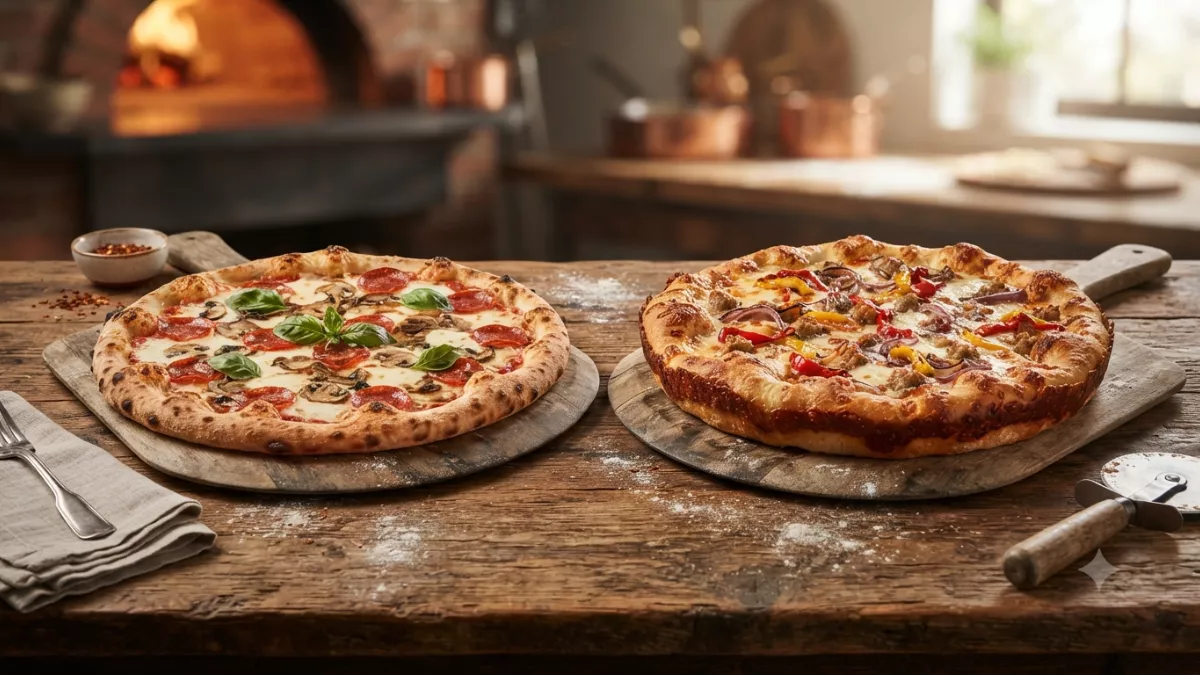
Pizza can look completely different depending on the crust. A thin crust creates a lighter, crispier bite where the toppings and sauce often take center stage. A thick crust provides more chew, softness, and bread-like texture, giving the crust a stronger presence in every bite.
The difference between thin crust and thick crust pizza is not simply about how much dough is used. Crust thickness affects texture, flavor balance, topping distribution, moisture, baking time, and even how a slice feels when you eat it.
So, what actually changes when you choose a thin crust instead of a thick crust?
This guide explains the differences between thin crust and thick crust pizza, how each style affects flavor and texture, what toppings work best with each crust, and how to choose the right option for your next pizza night.
What Is Thin Crust Pizza?
Thin crust pizza is made with a relatively thin layer of dough that is stretched or rolled into a wider, flatter shape before baking.
Depending on the pizza style, the crust can range from lightly crisp and flexible to extremely thin and crunchy.
Thin crust generally allows the sauce, cheese, and toppings to become more prominent because there is less bread-like dough between the toppings and your palate.
Common characteristics include:
- Crisp or lightly crisp edges
- A thinner center
- Less bread-like texture
- Faster cooking in many recipes
- A higher ratio of toppings to crust
- A lighter-feeling bite
Thin crust does not necessarily mean dry or hard. A well-made thin crust can still have a slightly chewy interior while developing crispness around the edges.
What Is Thick Crust Pizza?
Thick crust pizza uses a larger amount of dough or a thicker dough layer, creating a more substantial base.
Depending on the style, thick crust can be soft, airy, chewy, crispy on the outside, or even deep and substantial.
Examples of thicker pizza styles include pan pizza and deep-dish-inspired formats, although these styles have their own distinct preparation methods.
Typical characteristics include:
- More substantial dough
- A soft or chewy interior
- A thicker edge
- More bread-like flavor
- Greater structural support for toppings
- A more filling texture
Because there is more dough, the crust becomes an important part of the overall flavor experience.
Thin Crust vs. Thick Crust: The Main Difference
The simplest way to understand the difference is to think about the role of the crust.
With thin crust pizza, the crust often acts as a crisp foundation for the toppings.
With thick crust pizza, the crust becomes a major component of the meal.
This changes the balance between dough, sauce, cheese, and toppings.
| Feature | Thin Crust Pizza | Thick Crust Pizza |
|---|---|---|
| Texture | Crisp, light, chewy or crunchy | Soft, chewy, airy or substantial |
| Dough presence | Lower | Higher |
| Topping prominence | Usually stronger | More balanced with crust |
| Bite | Light and crisp | Hearty and substantial |
| Sauce perception | Often more noticeable | Can be balanced by dough |
| Cheese ratio | Often feels more prominent | Shares attention with crust |
| Eating style | Can be crisp or foldable | Usually more substantial |
| Best for | Topping-focused pizzas | Hearty pizzas and heavier toppings |
Neither style has to taste better or worse. They simply create different eating experiences.
How Crust Thickness Changes Texture
Texture is probably the most obvious difference between thin and thick crust pizza.
A thin crust has less dough available to absorb moisture and create a soft interior. When baked at an appropriate temperature, it can develop a crisp surface and delicate chew.
Thick crust has more dough structure. This gives the crust a softer, chewier interior and can create a satisfying contrast between a browned exterior and a fluffy center.
The exact texture also depends on:
- Flour type
- Hydration
- Fermentation
- Yeast
- Oil
- Baking temperature
- Baking time
- Pan or pizza stone
- Dough handling
This is why two pizzas with similar thickness can still have very different textures.
How Thin Crust Changes Flavor
Thin crust tends to put more attention on the toppings.
Because there is less dough, each bite can contain a relatively high proportion of sauce, cheese, and toppings compared with crust.
This can make flavors such as tomato acidity, mozzarella, pepperoni, mushrooms, basil, garlic, and vegetables feel more noticeable.
Thin crust is particularly useful when you want the toppings to define the pizza.
For example, a thin crust topped with fresh mozzarella, tomatoes, basil, and olive oil can create a bright, ingredient-focused pizza.
How Thick Crust Changes Flavor
Thick crust adds another layer of flavor.
Bread itself has a mild but important taste, especially when the dough has been properly fermented. A thicker crust can contribute notes from flour, fermentation, olive oil, browning, and caramelization.
Because there is more dough, the toppings may feel less dominant.
This can actually be useful with strongly flavored toppings.
A thick crust can provide a substantial base for:
- Sausage
- Pepperoni
- Bacon
- Mushrooms
- Onions
- Peppers
- Extra cheese
- Heavier vegetable combinations
The crust acts almost like a cushion that balances the intensity of the toppings.
Thin Crust and Crispy Texture
One of the biggest attractions of thin crust pizza is crispness.
A thin dough layer can lose moisture more quickly during baking, helping create a crisp exterior.
However, achieving the right texture requires careful baking.
If the crust is too thin or baked too aggressively, it can become brittle or overly dry.
A good thin crust should ideally have enough structure to support the toppings while still providing a satisfying crunch or chew.
Thick Crust and Chewiness
Thick crust offers more room for gluten development and fermentation to influence texture.
Depending on the recipe, the interior can become soft, airy, chewy, or bread-like.
This makes thick crust particularly appealing to people who enjoy the dough itself as part of the pizza.
A well-fermented thick crust can have a pleasant contrast between a browned exterior and a tender interior.
Which Crust Makes Toppings Taste Better?
The answer depends on what you want from the pizza.
Thin crust generally allows toppings to become more prominent.
Thick crust gives the dough a larger role.
If you are using delicate ingredients such as:
- Fresh basil
- Fresh mozzarella
- Tomatoes
- Arugula
- Olive oil
- Light vegetables
a thin crust can help preserve the ingredient-focused character of the pizza.
If you are using heavier ingredients such as:
- Sausage
- Pepperoni
- Bacon
- Extra cheese
- Roasted vegetables
a thicker crust can provide additional structure and chew.
Best Toppings for Thin Crust Pizza
Thin crust generally works well with toppings that do not overwhelm the delicate structure.
Fresh Mozzarella, Tomato, and Basil
This combination keeps the pizza fresh and relatively light.
Mushroom and Onion
Earthy mushrooms and sweet onions provide plenty of flavor without requiring a huge amount of topping.
Pepperoni and Jalapeño
The crisp crust provides contrast to rich pepperoni and spicy jalapeños.
Prosciutto and Arugula
Add arugula and thinly sliced prosciutto after baking or near the end of cooking for a fresh finishing flavor.
Roasted Peppers and Goat Cheese
Sweet roasted peppers contrast nicely with tangy goat cheese.
The general idea is to use toppings that complement rather than bury the crust.
Best Toppings for Thick Crust Pizza
Thicker crust can support heavier combinations.
Sausage, Peppers, and Onion
A classic combination that provides savory, sweet, and aromatic flavors.
Pepperoni, Mushroom, and Extra Mozzarella
The substantial crust provides a sturdy base for rich toppings.
Bacon, Chicken, and Onion
A hearty combination that works well with a substantial dough base.
Spinach, Ricotta, and Garlic
Creamy ricotta and vegetables pair nicely with a soft, chewy crust.
Meatball and Mozzarella
Meatballs bring considerable weight and richness, making a substantial crust a practical choice.
How Sauce Changes With Crust Thickness
Sauce plays an important role in the thin-versus-thick crust debate.
Thin crust pizzas often benefit from a moderate layer of sauce because too much sauce can soften the crust.
A thick crust can generally accommodate a little more sauce because the dough provides more structure and absorbency.
However, more sauce is not always better.
The goal is to distribute enough sauce for flavor without creating an overly wet center.
Tomato sauce also contributes acidity, sweetness, herbs, and umami, so the quantity can change the perceived balance of the entire pizza.
How Cheese Changes With Crust Thickness
Cheese behaves differently depending on the crust beneath it.
On a thin crust, melted mozzarella can become a major part of the bite because there is less dough underneath.
On thick crust, cheese shares more of the texture with the bread-like base.
Thin crust can work particularly well with:
- Fresh mozzarella
- Low-moisture mozzarella
- Parmesan
- Pecorino
- Goat cheese
Thick crust can handle richer combinations such as:
- Mozzarella
- Provolone
- Parmesan
- Ricotta
- Cheddar in moderation
The important thing is to avoid excessive cheese that could overpower the crust and make the pizza greasy or difficult to bake evenly.
Why Thick Crust Can Feel More Filling
A thicker crust contains more dough, which naturally makes the pizza more substantial.
That extra structure can make a couple of slices feel more satisfying than the same number of slices from a very thin pizza.
The toppings also matter. A thick crust loaded with meat and cheese can create a particularly hearty meal.
Thin crust, meanwhile, may allow you to enjoy more topping-focused slices without the same amount of bread-like dough.
This is one reason crust preference can depend heavily on appetite and occasion.
Baking Differences Between Thin and Thick Crust
Thin and thick crust pizzas require different approaches to baking.
Thin crust usually benefits from:
- High heat
- A well-preheated cooking surface
- Careful topping quantities
- Shorter baking times in many setups
- Proper moisture control
Thick crust often requires:
- Enough time for the center to cook
- Careful control of oven temperature
- A suitable pan or baking surface
- Proper dough fermentation
- Attention to the bottom crust
A thick pizza can brown on the outside before the center is fully baked if the temperature and timing are not appropriate.
Why Oven Temperature Matters
Pizza dough changes rapidly under high heat.
The exterior begins to brown, moisture evaporates, gases expand, and the dough structure sets.
Thin dough reaches the finished texture relatively quickly because there is less material to heat through.
Thicker dough takes longer for heat to travel into the center.
This is why simply taking a thin-crust baking method and applying it to a thick crust can produce poor results.
The crust thickness should always be considered when choosing baking temperature and time.
Thin Crust vs. Thick Crust for Different Pizza Styles
Different pizza traditions use different approaches to crust.
New York-Style Pizza
New York-style pizza is generally associated with a thin-to-medium crust that can be crisp underneath while remaining flexible enough to fold.
Neapolitan-Style Pizza
Neapolitan pizza typically has a relatively thin center with a puffy, airy edge. The crust is not simply “thin” from edge to edge.
Detroit-Style Pizza
Detroit-style pizza is known for a thick, airy crust with a distinctive pan-baked structure and substantial toppings.
Chicago Deep-Dish
Chicago deep-dish uses a much deeper crust structure and a distinctive layering approach compared with many traditional thin-crust pizzas.
These examples show why “thin” and “thick” are broad categories rather than complete descriptions of a pizza style.
Which Crust Is Better for Vegetable Toppings?
Vegetable-heavy pizzas can work with either crust, but moisture becomes especially important.
Vegetables such as:
- Mushrooms
- Tomatoes
- Spinach
- Zucchini
- Bell peppers
- Onions
can release water during cooking.
On a thin crust, excessive moisture can quickly affect crispness.
On a thick crust, the additional dough provides more structure, but too much moisture can still create a soft or underbaked center.
Pre-cooking particularly watery vegetables can improve the final result.
Which Crust Is Better for Meat Toppings?
Thick crust provides a strong base for heavier meat toppings.
Sausage, bacon, meatballs, and multiple layers of cheese can place considerable weight on the dough.
Thin crust can still work with meat toppings, but portion control becomes more important.
A thin pizza loaded with too much meat can become difficult to cook evenly and may lose its crisp texture.
Can You Make Thin Crust Pizza Crispy at Home?
Yes.
Start by allowing your oven and baking surface to become thoroughly hot.
A pizza stone or steel can help transfer heat efficiently to the bottom of the dough.
Keep the dough relatively thin and avoid excessive sauce or wet toppings.
Use enough flour during shaping to prevent sticking without coating the dough excessively.
Then bake until the bottom develops the level of browning and crispness you want.
The exact baking time depends on your oven, dough formulation, and cooking temperature.
Can Thick Crust Pizza Still Have a Crispy Bottom?
Absolutely.
A thick crust does not have to mean a soft bottom.
Pan-baked pizzas can develop a deeply browned, crisp exterior while remaining airy and tender inside.
Using oil in the pan can help create a flavorful browned bottom, while adequate preheating and correct baking time help the dough cook thoroughly.
This combination of crispy exterior and soft interior is one of the defining pleasures of many thick-crust pizza styles.
Common Crust Mistakes
Making Thin Crust Too Thin
If the dough is stretched excessively, it may become fragile and unable to support the toppings.
Overloading Thin Crust
Too much sauce, cheese, or wet toppings can prevent crisping.
Underbaking Thick Crust
A thick pizza needs enough time for the interior to cook.
Using the Same Baking Method for Every Crust
Different dough thicknesses require different baking strategies.
Ignoring Fermentation
Fermentation affects flavor, extensibility, and texture regardless of crust thickness.
How to Choose Between Thin and Thick Crust
Ask yourself what you want the pizza to emphasize.
Choose thin crust if you prefer:
- Crisp texture
- A lighter-feeling bite
- More prominent toppings
- A higher topping-to-dough ratio
- Flexible or crunchy slices depending on style
Choose thick crust if you prefer:
- Soft or chewy dough
- A substantial bite
- More bread-like flavor
- Strong structural support for toppings
- A hearty pizza experience
Your topping choices can also guide the decision.
Fresh and delicate toppings often pair naturally with thinner crusts, while heavy and rich toppings can work particularly well with thicker crusts.
Thin Crust vs. Thick Crust: Is One More Flavorful?
Crust thickness does not automatically determine how flavorful a pizza will be.
Instead, it changes where the flavor emphasis falls.
Thin crust can make sauce, cheese, toppings, and finishing ingredients more noticeable.
Thick crust adds more dough flavor and creates a larger role for fermentation, browning, and texture.
A well-made pizza in either style can have excellent flavor when the dough, sauce, cheese, toppings, and baking method are properly balanced.
Final Thoughts
Thin crust and thick crust pizza offer two distinctly different ways to enjoy the same basic combination of dough, sauce, cheese, and toppings.
Thin crust tends to emphasize crispness and toppings, creating a lighter and more ingredient-focused bite. Thick crust gives the dough a larger role, producing a softer, chewier, and more substantial experience.
The difference also affects how you should choose toppings, manage moisture, use cheese, apply sauce, and bake the pizza.
Rather than thinking of thin crust and thick crust as simply two competing choices, consider them different tools for creating different pizza experiences. A delicate vegetable pizza may shine on a crisp thin crust, while a hearty sausage-and-pepper combination may work beautifully on a substantial thick crust.
The best approach is to match the crust with the toppings, texture, and flavor profile you want.
Frequently Asked Questions
What is the main difference between thin crust and thick crust pizza?
Thin crust generally provides a crispier, lighter, more topping-focused bite, while thick crust offers more dough, chewiness, softness, and a substantial texture.
Does thin crust pizza taste better with more toppings?
Not necessarily. Thin crust usually benefits from moderate topping quantities because too many toppings can add moisture and weight, reducing crispness.
Is thick crust pizza more filling?
It can feel more filling because it contains more substantial dough. The overall serving size and amount of cheese and toppings also affect how satisfying the pizza feels.
What toppings work best on thin crust pizza?
Fresh mozzarella, tomatoes, basil, mushrooms, onions, peppers, pepperoni, jalapeños, and other moderate toppings can work well on thin crust.
What toppings work best on thick crust pizza?
Thick crust can support hearty toppings such as sausage, pepperoni, bacon, chicken, mushrooms, onions, peppers, meatballs, and generous cheese combinations.