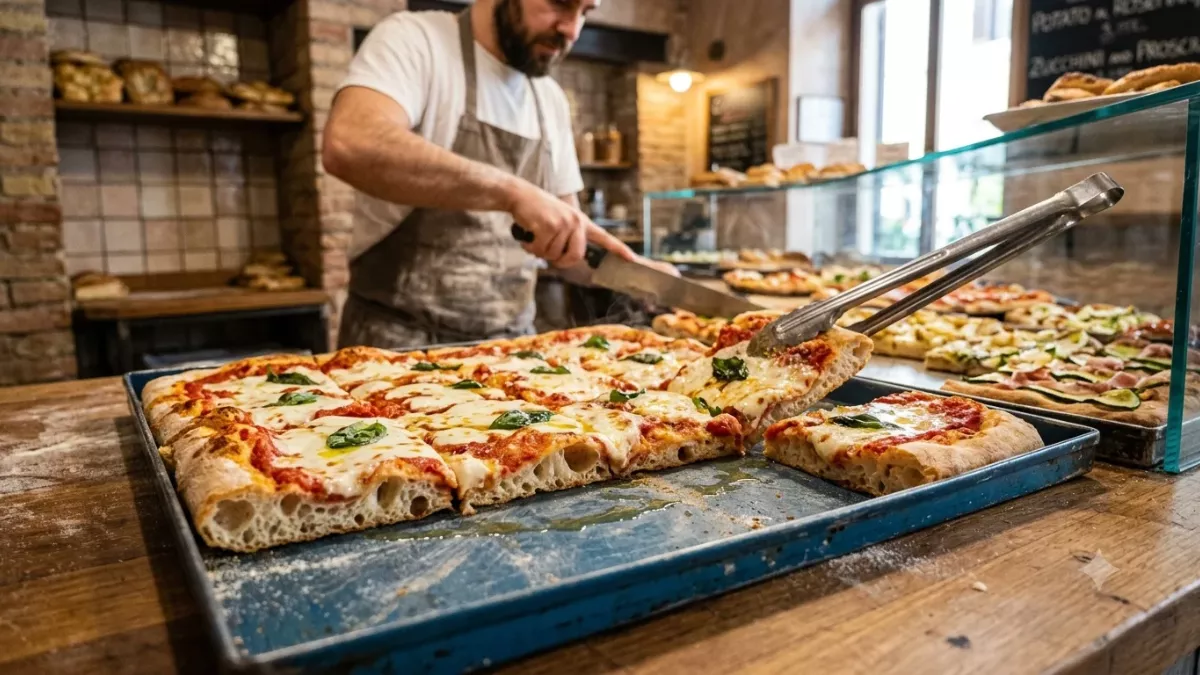
Pizza is enjoyed around the world in many different shapes, sizes, and styles. While some pizzas are served as whole round pies, others are sold as individual slices for people who want a quick and satisfying meal. In Rome, Italy, one of the most recognizable examples is pizza al taglio, a rectangular pizza that is cut to order and commonly sold by weight.
Unlike traditional round pizzas served at a restaurant table, pizza al taglio is designed for flexibility. Customers can choose a small piece for a snack, combine several varieties for lunch, or purchase enough to share. The seller cuts the requested portion, weighs it, and calculates the price according to its weight.
However, pizza al taglio is more than a convenient way to buy pizza. Its identity comes from Roman food culture, distinctive dough preparation, long fermentation, rectangular baking trays, and an enormous variety of toppings. The result can range from a light, airy base to a crisp, golden crust, depending on the recipe and bakery.
In this guide, we will explore how pizza al taglio developed, why it is sold by weight, what makes its crust different, and how it compares with other popular Italian and American pizza styles.
What Is Pizza al Taglio?
Pizza al taglio is an Italian expression meaning “pizza by the cut.” It describes pizza that is baked in large rectangular trays and divided into portions when customers order.
The style is strongly associated with Rome, where specialized bakeries and pizza shops display rows of freshly baked pizza with different toppings. Customers point to the varieties they want, indicate how much they would like, and watch as the seller cuts the pizza to size.
Unlike a standard round pizza with a fixed price, pizza al taglio is frequently priced by weight. This allows customers to choose portions according to their appetite and budget.
The dough is often prepared in large batches and baked in rectangular pans. Many modern Roman versions use relatively high-hydration dough and extended fermentation to create an open, airy interior. Depending on the bakery, the bottom may be crisp, the edges lightly browned, and the crumb soft and chewy.
Toppings vary widely. Classic options include tomato, mozzarella, potatoes, vegetables, cured meats, and combinations of cheese and herbs. Some bakeries also offer seasonal ingredients and creative modern recipes.
Although pizza al taglio has become internationally recognized as Roman pizza, individual bakeries may use different dough formulas, baking temperatures, and topping combinations.
1. Why Pizza al Taglio Is Sold by Weight
One of the most distinctive features of pizza al taglio is its pricing system. Instead of charging a single price for an entire pizza, many shops calculate the cost according to the weight of the portion.
This approach works naturally with rectangular trays. Since customers can request pieces of different sizes, weighing the cut portion provides a practical way to determine the final price.
For example, a customer might select a small piece of potato pizza and a larger portion topped with tomato and mozzarella. The seller cuts each piece, weighs it, and calculates the total using the shop’s price per unit of weight.
This system offers several advantages:
- Flexible portions: Customers can purchase exactly the amount they want.
- Variety: It is easy to combine several toppings in one meal.
- Convenience: A small piece can work as a snack, while several portions can make a complete lunch.
- Transparent pricing: Customers can see how the size and weight of their selection affect the cost.
The price per kilogram or other unit varies by bakery, topping, and location. Some businesses may use different pricing methods, so selling strictly by weight is common but not universal.
The tradition reflects the practical nature of Roman pizza shops, where speed, choice, and convenient portions are central to the experience.
2. The Rectangular Shape Makes Serving Easier
Pizza al taglio is usually baked in large rectangular trays rather than as individual round pizzas. This shape allows bakeries to prepare substantial quantities at once and cut portions according to customer requests.
The rectangular format is particularly useful in busy shops. Several trays with different toppings can be prepared ahead of time, allowing staff to serve customers quickly without making a new pizza for every order.
It also creates an efficient way to display different varieties. Customers can compare toppings visually and select the pieces that appeal to them.
The shape influences how the dough cooks, too. The tray supports the dough during baking, helping it retain a consistent thickness. Depending on the recipe and pan, the bottom can develop a crisp surface while the interior remains soft.
Portioning is flexible because the seller can cut narrow strips, small rectangles, or larger sections. This makes pizza al taglio suitable for people eating alone, groups sharing different flavors, and customers who want to sample several varieties.
Although rectangular pizza is not exclusive to Rome, the combination of tray baking, flexible cutting, and weight-based pricing is particularly associated with pizza al taglio.
3. The Dough Creates a Light and Airy Texture
The dough is a major reason pizza al taglio can feel different from a conventional round pizza.
Many Roman bakeries use dough with relatively high hydration, meaning that it contains a substantial amount of water compared with the flour. When properly mixed, fermented, and handled, this can help create a light crumb with visible air pockets.
The dough commonly contains flour, water, yeast, and salt. Olive oil may also be included, depending on the recipe.
Fermentation allows yeast to produce carbon dioxide, which becomes trapped in the developing gluten network. As the dough rises, its structure expands. During baking, the trapped gas expands further and helps create the characteristic open texture.
Some recipes rely on extended fermentation, including refrigeration, to develop flavor and improve dough handling. However, hydration and fermentation times vary considerably among bakeries.
A successful dough must balance softness with strength. If it is too weak, it may not retain its shape; if it is too dense, the finished pizza may lack the airy interior associated with many modern Roman versions.
Not every pizza al taglio has an extremely open crumb. Some are thinner and crispier, while others are thicker and softer. The final result depends on the baker’s preferred style.
4. Long Fermentation Helps Develop Flavor
Fermentation is an important part of many pizza al taglio recipes. Giving dough enough time to develop can improve its aroma, texture, and handling properties.
During fermentation, yeast consumes available sugars and produces carbon dioxide and flavor compounds. Enzymatic activity also changes components of the flour, contributing to the dough’s overall development.
Some bakers use a direct dough method, where ingredients are mixed and fermented together. Others use a pre-ferment, such as a biga, which is prepared separately and incorporated into the final dough.
A biga can contribute flavor and structure, although it is not required for all pizza al taglio recipes.
Long fermentation does not automatically guarantee better pizza. The correct timing depends on yeast quantity, flour strength, hydration, and temperature. Dough that ferments for too long may become difficult to handle or lose strength.
For home cooks, the most useful principle is to follow a recipe designed for the chosen fermentation method rather than simply leaving the dough to rise for as long as possible.
When fermentation is well managed, the finished pizza can have a flavorful crust, a tender interior, and a texture that works well with a wide range of toppings.
5. Pizza al Taglio Offers an Enormous Variety of Toppings
Another defining characteristic of pizza al taglio is the variety of flavors available in a single shop.
Because the pizzas are baked in trays and sold in portions, bakeries can prepare several toppings at once. Customers are not limited to selecting just one flavor for an entire round pizza.
Common options include:
- Tomato sauce and mozzarella
- Potatoes with rosemary and olive oil
- Seasonal vegetables
- Mushrooms and cheese
- Sausage and peppers
- Cured meats and selected cheeses
- Simple tomato pizza with herbs and olive oil
Potato pizza is especially recognizable in Roman bakeries. Thinly sliced potatoes are arranged over the dough and seasoned with ingredients such as rosemary, salt, and olive oil. When baked properly, the potatoes become tender while the crust develops a golden base.
Vegetable toppings also play an important role. Depending on the season, bakeries may use zucchini, eggplant, peppers, or other ingredients.
The variety makes pizza al taglio suitable for different tastes. Someone who prefers a simple, savory slice can choose potatoes or tomato, while another customer might select cheese, sausage, or a more elaborate combination.
However, topping selection affects moisture and texture. Ingredients containing a lot of water need to be prepared carefully so they do not leave the crust soggy.
6. The Baking Method Helps Create a Crisp Bottom
Pizza al taglio is generally baked in rectangular trays, and the tray plays an important role in the final texture.
Many bakeries use commercial ovens that allow them to bake large quantities consistently. The temperature, tray material, dough thickness, and baking time all influence the result.
The dough must cook through while the bottom develops sufficient color and structure. If the oven is too cool or the baking time is too short, the base may remain pale or soft. If the heat is too intense for the thickness of the dough, the exterior may brown before the interior is fully cooked.
Oil in the tray can encourage browning and help the pizza release more easily. It may also contribute to a pleasantly crisp underside.
Some bakeries use a two-stage baking method. The dough may be partially baked first, then topped and baked again to finish the crust and heat the ingredients. This can be useful for managing moisture and service speed, although the method is not universal.
The objective is to create a crust that supports the toppings without becoming excessively dry. A well-made piece should retain enough structure to be lifted and eaten comfortably.
7. Pizza al Taglio Reflects Rome’s Everyday Food Culture
Pizza al taglio is closely connected with the rhythm of everyday life in Rome. Its flexible portions and quick service make it a convenient option for office workers, students, residents, and visitors exploring the city.
Unlike a formal meal built around a whole pizza, buying pizza by the cut allows customers to eat according to their schedule. A small piece can serve as a snack between activities, while several portions can make a satisfying lunch.
The tradition also supports variety. Customers can sample different toppings without ordering multiple whole pizzas, and bakeries can prepare different recipes throughout the day.
Pizza al taglio has evolved over time, with modern shops experimenting with dough fermentation, flour blends, seasonal ingredients, and creative toppings. Some emphasize traditional Roman flavors, while others combine Italian techniques with contemporary culinary ideas.
Despite these changes, the essential concept remains straightforward: pizza is baked in trays, displayed for customers, and cut into portions as needed.
This practical format has helped the style spread beyond Rome. Restaurants and bakeries in other countries have adopted the approach, adapting it to local ingredients and tastes while retaining the idea of pizza sold by the slice or weight.
Pizza al Taglio vs. Other Popular Pizza Styles
| Feature | Pizza al Taglio | Neapolitan Pizza | New York Pizza | Sicilian-Style Pizza |
|---|---|---|---|---|
| Common shape | Rectangular | Round | Round | Often rectangular |
| Baking method | Large trays | Traditionally a very hot pizza oven | Often a deck oven | Usually pan-baked in American versions |
| Crust | Often airy, with a crisp bottom | Thin center with a puffy rim | Thin, chewy, and foldable | Thick and often bread-like |
| Portion size | Cut to order | Usually a whole individual pizza | Often sold as triangular slices | Often cut into squares |
| Pricing | Frequently by weight | Commonly per pizza | By slice or whole pie | Varies by shop |
| Topping variety | Often many choices in one shop | Traditional versions tend to be simple | Wide variety | Varies by regional tradition |
| Main appeal | Flexible portions and variety | Fresh ingredients and rapid baking | Convenience and foldability | Thick crust and substantial texture |
These descriptions represent common patterns rather than strict rules. Recipes, sizes, and pricing practices vary by location and restaurant.
How to Enjoy Pizza al Taglio Like a Local
If you visit a Roman bakery that sells pizza al taglio, the ordering process is usually simple.
Look at the available varieties. Many shops display their pizzas in trays, making it easy to compare the toppings and crusts before ordering.
Choose different flavors. Since portions can be cut individually, you can sample tomato, potato, vegetable, or cheese-based varieties in the same meal.
Ask for the amount you want. You can indicate the piece or approximate quantity you prefer. The staff will cut the pizza and weigh it if the shop charges by weight.
Check the price. If prices are listed per kilogram, remember that the final cost depends on the weight of your portion.
Enjoy the texture while it is fresh. Pizza al taglio can be eaten at room temperature or warmed, depending on the shop’s preparation and your preference. A freshly heated piece may offer a particularly crisp base.
For home cooks, experimenting with different toppings is an easy way to explore the style. Start with simple combinations, pay attention to dough fermentation, and avoid excessive moisture from toppings.
Frequently Asked Questions
1. What does pizza al taglio mean?
Pizza al taglio means “pizza by the cut” in Italian. It refers to pizza baked in large trays and cut into portions when customers order. Many Roman shops sell it by weight, although practices vary.
2. Why is Roman pizza al taglio sold by weight?
Selling by weight allows customers to choose portions of different sizes and combine multiple flavors. The seller weighs the cut piece and calculates the price according to the shop’s rate.
3. Is pizza al taglio the same as Sicilian pizza?
No. Both styles can be rectangular and baked in trays, but they have different regional traditions and preparation methods. Roman pizza al taglio is closely associated with flexible portions and weight-based sales, while Sicilian pizza includes several distinct regional and American styles.
4. What makes pizza al taglio crust airy?
Hydrated dough, yeast fermentation, gluten development, and careful handling can create an open, airy crumb. The exact texture depends on the recipe and baking method.
5. Can you make pizza al taglio at home?
Yes. A rectangular metal baking tray, a suitable pizza dough recipe, and a hot oven are enough to get started. Allow adequate fermentation, use toppings in balanced quantities, and bake until the base is cooked and lightly crisp.
Final Thoughts
Pizza al taglio demonstrates how a simple food can become a distinctive regional tradition through the way it is prepared and served. Rome’s rectangular tray-baked pizza combines flexible portions, a wide variety of toppings, and dough that can be both airy and crisp. Selling it by weight allows customers to choose exactly how much they want while sampling several flavors in one meal.
Its appeal lies in more than convenience. Fermentation, dough hydration, tray baking, and thoughtful topping choices all contribute to the finished texture and flavor. Whether you encounter a traditional potato slice in Rome or prepare your own version at home, pizza al taglio offers a delicious introduction to the variety of Italian pizza culture.