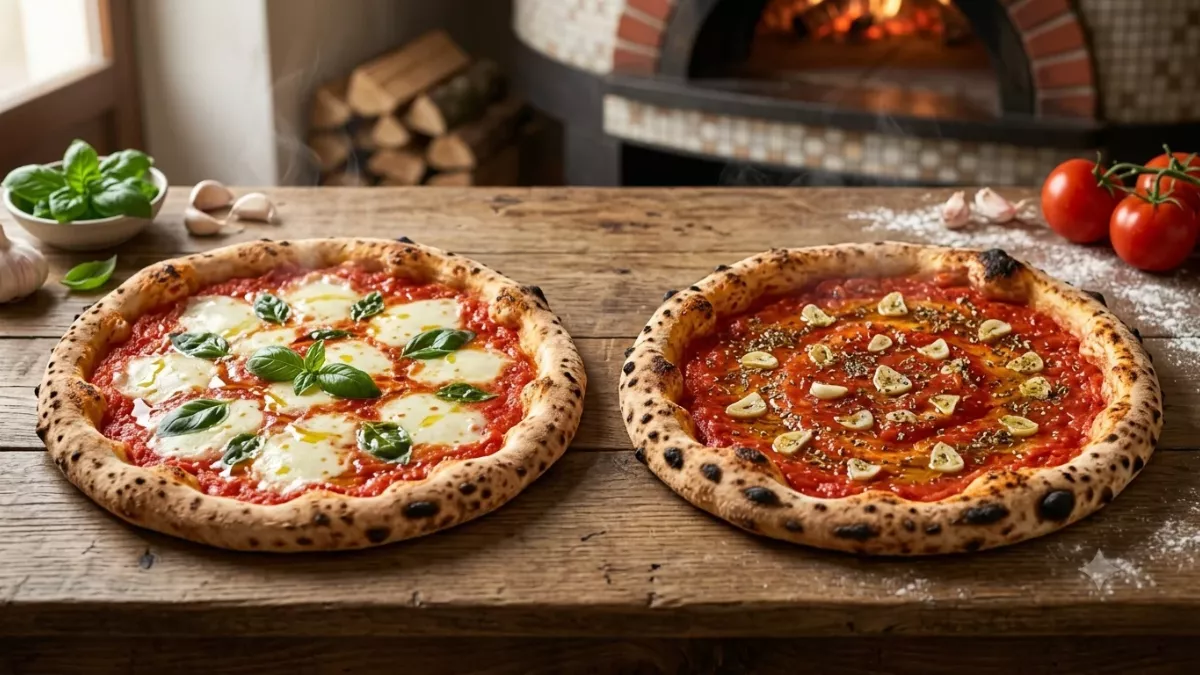
Italian pizza is famous around the world for its simple ingredients, distinctive flavors, and centuries of culinary tradition. Among the best-known examples are Margherita pizza and Marinara pizza. Both are closely associated with Naples, the southern Italian city widely recognized as one of the historic centers of modern pizza-making. Although they share a similar foundation of dough, tomatoes, and olive oil, the two pizzas deliver noticeably different eating experiences.
Margherita pizza is known for its combination of tomato, mozzarella cheese, and fresh basil. Marinara pizza, on the other hand, traditionally features tomatoes, garlic, oregano, and olive oil without cheese. This difference might seem small, but it changes the aroma, texture, richness, and overall character of each pizza.
Understanding Margherita vs. Marinara pizza is not simply about deciding whether cheese belongs on a pizza. It is also an opportunity to explore Italian food history, traditional preparation methods, regional identity, and the way a few carefully chosen ingredients can create distinctive flavors.
Whether you enjoy a creamy, balanced slice or a fragrant pizza with a pronounced garlic-and-herb flavor, these two Italian classics offer excellent examples of how simplicity can produce remarkable food.
What Is Margherita Pizza?
Margherita pizza is a traditional Italian pizza prepared with a thin, soft dough base, tomato, mozzarella cheese, fresh basil, and olive oil. It is particularly associated with Neapolitan pizza, which is recognized for its tender center, puffy edge, and characteristic spots of browning from high-temperature baking.
The appeal of Margherita pizza comes from the balance between its ingredients. Tomatoes provide acidity and sweetness, mozzarella contributes a creamy texture, and basil adds a fresh herbal aroma. Olive oil brings the flavors together while helping the toppings complement the crust.
A well-made Margherita pizza does not need a long list of toppings. Instead, it depends on ingredient quality, careful dough preparation, and appropriate baking. The cheese should melt without completely overwhelming the tomato, while the basil should contribute fragrance rather than dominate every bite.
Traditional versions often use mozzarella made from cow’s milk or, in some preparations, buffalo milk. The choice of cheese affects moisture, richness, and flavor. A pizza maker must also consider how much moisture the tomatoes and cheese release during baking to prevent the center from becoming excessively wet.
Margherita pizza is popular because it is approachable yet expressive. Its familiar ingredients make it appealing to many diners, while its simplicity gives skilled pizza makers little room to hide mistakes. Dough fermentation, tomato quality, cheese distribution, and oven temperature all influence the finished result.
What Is Marinara Pizza?
Marinara pizza is another classic associated with Naples. Its traditional toppings are tomato, garlic, oregano, and olive oil, with no cheese. Despite the name, Marinara pizza does not traditionally contain seafood. The name is commonly connected to the food of Neapolitan sailors and the people who prepared meals for them, although historical explanations of the name and its origins vary.
Without mozzarella, Marinara pizza places greater emphasis on the tomato sauce, aromatic garlic, herbs, and olive oil. Its flavor profile is often brighter and more directly savory than that of Margherita pizza. Garlic contributes a distinctive aroma, while oregano provides an earthy, slightly peppery herbal note.
The absence of cheese also changes the texture. Instead of a layer of melted mozzarella, the toppings form a relatively light coating over the dough. Depending on the tomato preparation and baking method, the surface can feel less creamy and the overall slice may seem less rich.
Marinara pizza demonstrates that cheese is not essential to a satisfying traditional pizza. Its success depends on using flavorful tomatoes, fresh or properly stored garlic, good olive oil, and a balanced amount of oregano. Too much garlic can overpower the tomato, while excessive oil can make the surface greasy.
For diners who prefer dairy-free traditional options, Marinara pizza can be a useful choice, provided the dough and preparation process do not introduce unwanted dairy ingredients or cross-contact. Its ingredient list is short, but each component plays an important role in the final flavor.
Margherita vs. Marinara Pizza: The Main Differences
The clearest difference between Margherita and Marinara pizza is the presence or absence of cheese. However, their distinctions extend to aroma, texture, flavor balance, and how the ingredients interact during baking.
| Feature | Margherita Pizza | Marinara Pizza |
|---|---|---|
| Main toppings | Tomato, mozzarella, basil, olive oil | Tomato, garlic, oregano, olive oil |
| Cheese | Traditionally included | Traditionally omitted |
| Dominant flavor | Balanced tomato, dairy, and basil | Tomato, garlic, and herbs |
| Texture | Creamy topping with melted cheese | Lighter topping without melted cheese |
| Aroma | Fresh basil and melted mozzarella | Garlic, oregano, and olive oil |
| Dairy | Usually contains dairy | Traditionally dairy-free |
| Overall character | Rich, balanced, and fresh | Savory, aromatic, and direct |
| Traditional association | Naples, Italy | Naples, Italy |
These descriptions reflect traditional preparations. Modern restaurants may adapt either style with different cheeses, herbs, dough formulations, or additional toppings.
1. The Difference in Ingredients
Ingredients are the foundation of the contrast between these pizzas. Margherita pizza combines tomato with mozzarella and basil, creating a layered mixture of acidity, creaminess, and herbal freshness. Marinara pizza relies on tomato, garlic, oregano, and olive oil to create a more aromatic, savory profile.
Tomatoes are important in both styles. They may be used as a simple crushed tomato preparation or as a lightly seasoned sauce. In traditional Neapolitan pizza, the goal is generally to preserve the tomato’s natural character rather than turn it into a thick, heavily spiced sauce.
Mozzarella is the defining ingredient of Margherita pizza. As it melts, it creates soft pockets of cheese that blend with the tomato. Fresh basil contributes fragrance and a green herbal note that balances the richness.
Marinara pizza substitutes no cheese for mozzarella; instead, it highlights garlic and oregano. Garlic can be sliced or finely prepared depending on the recipe, and oregano is distributed in an amount that complements rather than overwhelms the tomato. Olive oil helps carry the aromas across the surface.
This ingredient difference makes both pizzas useful examples of Italian cooking philosophy: a dish can achieve complexity through thoughtful combinations rather than an extensive ingredient list.
2. How Their Flavors Compare
Margherita pizza usually offers a rounded flavor experience. Tomato acidity is softened by mozzarella’s creamy qualities, while basil adds a refreshing aroma. The result can feel balanced, with no single ingredient needing to dominate.
Marinara pizza has a more pronounced savory character. Garlic gives it a recognizable aroma, oregano contributes herbal depth, and olive oil adds smoothness. Without cheese, the tomato remains more exposed, making the quality and seasoning of the sauce especially noticeable.
Neither pizza is automatically stronger or milder in every preparation. Tomato varieties, garlic quantity, basil freshness, oregano quality, olive oil, and baking time can all change the result.
People who enjoy creamy, familiar flavors may prefer Margherita pizza. Those who like garlic-forward dishes, herbal aromas, and a lighter topping may enjoy Marinara pizza more. Tasting both is often the easiest way to discover which style suits individual preferences.
3. Crust and Texture
Both pizzas can use the same traditional Neapolitan-style dough. This dough is commonly fermented before being shaped by hand into a round base with a relatively thin center and a raised outer edge.
The crust may develop a soft, flexible center and an airy rim with darkened spots from intense oven heat. The precise texture depends on hydration, fermentation, flour, shaping technique, oven temperature, and baking time.
Margherita pizza has the added texture of melted mozzarella. Depending on the cheese and moisture level, its center may be soft, creamy, and slightly stretchy. A carefully prepared pizza should retain enough structure for the crust to support the toppings.
Marinara pizza does not have a layer of cheese, so its surface feels different. The tomato, garlic, oregano, and oil sit more directly on the dough. The absence of mozzarella can make the topping feel lighter, although it does not guarantee a crispier crust. Tomato moisture, dough structure, and baking conditions still matter.
Neither style is inherently thicker or thinner than the other. Crust thickness is primarily determined by the pizza tradition and the maker’s technique, not by whether cheese is used.
4. The History and Italian Heritage of Both Pizzas
Naples is central to the story of both Margherita and Marinara pizza. The city’s pizza culture developed through local ingredients, urban food traditions, and practical methods of preparing affordable meals. Over time, Neapolitan pizza became an internationally recognized culinary tradition.
Marinara pizza is generally considered one of the older traditional Neapolitan styles. Its simple combination of tomato, garlic, oregano, and oil suited a food culture in which affordability, availability, and strong flavor were important. The familiar story connecting the name to sailors is widely repeated, but specific historical details should be treated with care.
Margherita pizza is often linked to a story about Queen Margherita of Savoy and a pizza prepared in Naples in the late nineteenth century. In the popular version, the tomato, mozzarella, and basil represented the colors of the Italian flag. This account is a major part of the pizza’s modern identity, though historians have debated elements of the familiar origin story.
Regardless of the precise details, both styles illustrate how Neapolitan pizza developed around a relatively small number of ingredients. Their continued popularity shows that traditional recipes can travel internationally while retaining a connection to their regional roots.
5. Preparation Methods and Cooking Techniques
The preparation of either pizza begins with dough. Flour, water, salt, and yeast are combined, then the dough is allowed to ferment. The fermentation period influences its flavor, elasticity, and ability to develop an airy rim in the oven.
After fermentation, the dough is portioned and shaped. A pizza maker typically presses and stretches it by hand to preserve air in the edge rather than rolling it completely flat.
For Margherita pizza, tomato is spread over the dough, followed by mozzarella, basil, and olive oil according to the recipe and the cook’s preferred timing. Some cooks add basil before baking, while others add some or all of it afterward to preserve its fresh aroma.
For Marinara pizza, tomato is topped with garlic, oregano, and olive oil. Since cheese is not part of the traditional topping, the distribution of these ingredients has a strong influence on the final flavor.
Traditional Neapolitan pizza is baked in a very hot oven for a short period. Home ovens generally operate at lower temperatures, so baking times and crust development will differ. A pizza stone or steel, when used correctly, can help improve heat transfer to the base.
The goal is to cook the dough thoroughly, develop appealing browning, and avoid burning the garlic or drying out the toppings. In either style, ingredient quality and technique matter more than adding extra toppings.
6. Which Pizza Is Better for Different Preferences?
Choosing between Margherita and Marinara pizza depends on what you enjoy in a meal.
Margherita is a natural option for people who like the combination of melted cheese, tomato, and fresh herbs. Its creamy texture and balanced flavor can make it an approachable introduction to traditional Neapolitan pizza.
Marinara is worth trying if you prefer bold garlic aromas, oregano, and a topping that does not rely on cheese. It may also appeal to people avoiding dairy, although those with allergies or strict dietary requirements should verify the ingredients and kitchen preparation with the restaurant.
For a shared meal, ordering one of each can provide a useful comparison. Both pizzas offer a similar dough foundation, so the contrast between their toppings becomes easy to appreciate. Taste the Margherita for its creamy balance, then try the Marinara to notice how garlic and oregano shape the tomato.
There is no universal winner. The better pizza is the one that fits your taste, dietary needs, and expectations for texture and flavor.
7. Nutrition and Dietary Considerations
The nutritional profile of Margherita and Marinara pizza depends on portion size, dough ingredients, tomato quantity, oil, cheese, and the recipe used. It is not possible to assign a reliable calorie count without knowing the preparation and serving size.
Margherita pizza generally contains more fat and protein from mozzarella than a comparable Marinara pizza. It also contains dairy, which is relevant to people with milk allergies or lactose intolerance. The exact amount of lactose varies by cheese and preparation, so people with a medical dietary requirement should check carefully rather than assume it is suitable.
Marinara pizza omits cheese in its traditional form, so it can be lower in dairy-derived fat and protein. It may suit a dairy-free eating pattern, but the dough, utensils, ovens, and preparation surfaces should be checked when avoiding milk strictly.
Neither pizza should automatically be considered healthier in every situation. Sodium, portion size, crust ingredients, added oil, and the rest of the meal all contribute to overall nutrition. A balanced approach focuses on the full recipe and serving size rather than judging a food by one ingredient alone.
8. Common Myths About Margherita and Marinara Pizza
Several misunderstandings surround these two Italian classics.
Myth 1: Marinara pizza contains seafood. The traditional Neapolitan pizza called Marinara is made with tomato, garlic, oregano, and olive oil. The name does not mean that seafood is a required topping.
Myth 2: Margherita pizza is named after margarita cocktails. The pizza’s name is associated with the Italian name Margherita and a well-known historical story involving Queen Margherita of Savoy. The cocktail is a separate creation.
Myth 3: Marinara pizza is always crispier. Without cheese, its topping may feel lighter, but crust crispness depends on dough, oven heat, moisture, and baking technique.
Myth 4: Margherita pizza must use buffalo mozzarella. Buffalo mozzarella is one traditional option, but cow’s-milk mozzarella is also commonly used. The choice changes the flavor and moisture characteristics.
Myth 5: Traditional pizza needs many toppings to taste good. Both pizzas demonstrate the opposite. A short ingredient list can deliver a distinctive result when the ingredients are carefully selected and prepared.
9. How to Enjoy Both Italian Classics at Home
You do not need a professional wood-fired oven to appreciate the differences between these pizzas. A home oven, a suitable baking surface, and well-prepared dough can produce enjoyable results.
Start with a dough recipe that suits your available time. Allow enough time for fermentation, and avoid loading the center with too much tomato, which can leave the base wet. Preheat your oven thoroughly, following the temperature limits of your equipment and baking surface.
For Margherita pizza, choose a flavorful tomato preparation, mozzarella that is not excessively wet, and fresh basil. Distribute the ingredients evenly without covering the dough completely. Add olive oil sparingly so the finished pizza tastes balanced rather than greasy.
For Marinara pizza, use good-quality tomatoes, a measured amount of garlic, oregano, and olive oil. Because there is no cheese to soften the garlic’s intensity, even distribution is especially important. Avoid using so much garlic that it masks the tomato.
Serve both pizzas soon after baking, when the crust is at its best. Compare the aroma first, then the texture and aftertaste. This simple tasting exercise can help you understand why two pizzas made from a similar dough can still feel completely different.
10. What to Look for When Ordering at a Pizzeria
When ordering Margherita or Marinara pizza, look beyond the name on the menu. Restaurants may use different dough styles, tomato preparations, and baking techniques, even when they serve traditional recipes.
For Margherita pizza, check whether the restaurant uses fresh basil and mozzarella. Ask about the cheese if you prefer cow’s-milk mozzarella or buffalo mozzarella. If you enjoy a lighter topping, you can also ask whether the kitchen can avoid adding too much cheese.
For Marinara pizza, the balance of garlic, oregano, tomato, and olive oil is particularly important. A good version should have a clear garlic aroma without tasting overwhelmingly sharp. The tomato should remain noticeable, and the crust should be properly baked.
It is also useful to ask whether a restaurant’s Marinara pizza is prepared without cheese, especially if you follow a dairy-free diet. Traditional recipes omit cheese, but modern menus and kitchen practices can vary.
Ultimately, a well-made pizza should showcase its ingredients rather than hide them. Both styles reward careful preparation and demonstrate why traditional Italian pizza remains popular across the world.
Frequently Asked Questions
1. What is the main difference between Margherita and Marinara pizza?
The main difference is the toppings. Margherita pizza traditionally contains tomato, mozzarella, basil, and olive oil. Marinara pizza uses tomato, garlic, oregano, and olive oil without cheese.
2. Is Marinara pizza vegetarian?
Traditional Marinara pizza is generally vegetarian because it contains no meat or seafood. However, people following strict dietary rules should check the dough, ingredients, and preparation practices at the restaurant.
3. Is Marinara pizza healthier than Margherita pizza?
Neither is automatically healthier in every situation. Marinara pizza typically contains less dairy-derived fat and protein because it has no cheese, while the nutritional value of both pizzas depends on the dough, olive oil, portion size, and other ingredients.
4. Why is Margherita pizza so popular?
Margherita pizza is popular because its combination of tomato, mozzarella, and basil creates a familiar, balanced flavor. Its simple recipe also showcases the quality of the ingredients and the skill involved in preparing traditional pizza dough.
Last Thought
Margherita pizza and Marinara pizza show how Italian cooking can create two distinctive dishes from a similar foundation. Margherita offers the creamy richness of mozzarella, the freshness of basil, and the acidity of tomato. Marinara highlights the savory aroma of garlic, the herbal character of oregano, and the natural flavor of tomatoes without cheese. Neither style needs an elaborate topping list to stand out. Instead, each relies on thoughtful ingredient selection and careful preparation. Whether you prefer the balanced taste of Margherita or the bold simplicity of Marinara, trying both provides a delicious introduction to Neapolitan pizza traditions and the enduring appeal of classic Italian food.