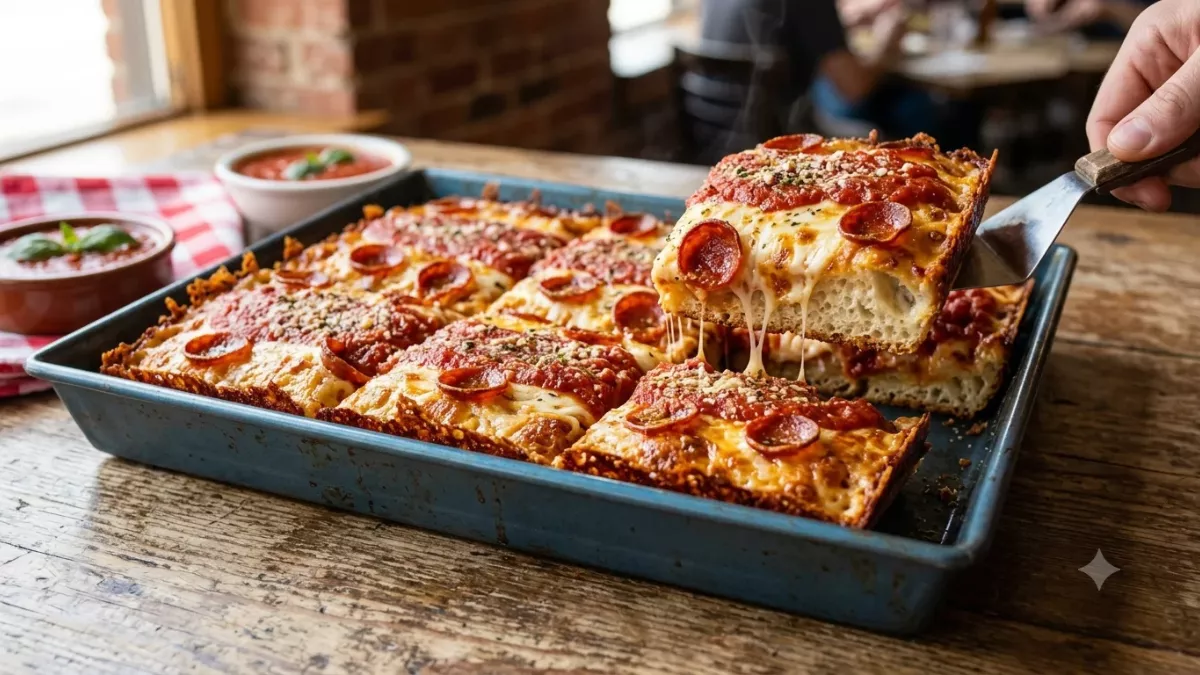
Pizza lovers often judge a great slice by its crust, cheese, sauce, and toppings. Detroit-style pizza takes these familiar ingredients and combines them in a distinctive way. It is famous for its rectangular shape, airy interior, golden bottom, and especially its crispy, caramelized cheese edges. Unlike many traditional pizzas, where cheese stays mostly within the boundaries of the dough, Detroit-style pizza deliberately lets cheese reach the sides of the pan, creating a crunchy border as it bakes.
This unusual feature is one of the reasons the style has become popular far beyond its birthplace. Beneath the crisp exterior, the crust remains soft and light, while the toppings and sauce provide a rich balance of flavors.
However, the secret behind Detroit-style pizza is not simply adding extra cheese. The pan, dough, cheese selection, ingredient placement, and baking temperature all contribute to its signature texture.
In this guide, we will explain how Detroit-style pizza developed, why its cheese edges become crispy, what ingredients make it distinctive, and how it compares with other popular pizza styles. You will also learn practical tips for recreating its characteristic crust at home.
What Is Detroit-Style Pizza?
Detroit-style pizza is a regional American pizza known for its rectangular shape, thick yet airy crust, and cheese that caramelizes against the sides of the baking pan. It originated in Detroit, Michigan, during the mid-twentieth century and developed a recognizable identity through its distinctive preparation method.
The pizza is traditionally baked in a rectangular steel pan, often associated with the industrial trays historically used in Detroit-area kitchens. The dough rises into a thick base with a tender interior, while the pan helps create a crisp underside.
Cheese is spread across the dough and often pushed right to the edges. During baking, the cheese touching the hot pan melts, browns, and forms a deeply flavored, crunchy border. This browned layer is sometimes called a cheese frico.
Another recognizable feature is the use of tomato sauce applied over the cheese, often in stripes. The exact sauce placement and topping order can vary between pizzerias, but the contrasting red sauce and golden cheese are strongly associated with the style.
Traditional versions often use Wisconsin brick cheese, a rich, flavorful cheese that melts well. Modern recipes may use mozzarella or a blend of cheeses when brick cheese is unavailable.
The result is a pizza with several textures in one bite: crisp edges, a soft interior, savory cheese, and tangy tomato sauce.
1. The Secret Behind Crispy, Caramelized Cheese Edges
The most distinctive feature of Detroit-style pizza is its crunchy cheese border. This develops when cheese extends beyond the dough and makes direct contact with the hot, lightly oiled metal pan.
As the pizza bakes, the cheese melts and spreads. The portions touching the pan lose moisture, brown, and develop a crisp texture. Meanwhile, the cheese on top of the dough remains softer and more elastic.
This contrast is what makes the edges so appealing. Instead of having a uniform crust from the center to the rim, the pizza develops a crunchy, savory border around its perimeter.
The process depends on a few important factors:
- Cheese placement: Cheese must reach the edges of the dough and contact the pan.
- Pan material: A suitable metal pan transfers heat efficiently and encourages browning.
- Oven temperature: Enough heat is needed to brown the cheese without burning the crust.
- Baking time: The pizza needs sufficient time for the cheese to develop a crisp edge.
- Moisture control: Excess liquid can interfere with browning and make the crust less crisp.
The browned cheese develops a deeper, toasted flavor that complements the soft dough. This combination of textures is central to Detroit-style pizza.
For home cooks, the goal is not to burn the cheese but to allow it to turn golden to deep brown around the edges while the center remains properly cooked.
2. The Rectangular Pan Changes Everything
The pan is more than a container. It is an essential part of Detroit-style pizza’s construction.
Traditional Detroit-style pizza is associated with rectangular steel pans, which help produce its characteristic shape and crisp base. The dough is pressed or stretched into the pan and allowed to rise, creating a thick foundation.
The rectangular design provides several advantages.
First, it creates a large perimeter where cheese can touch the metal and caramelize. A round pizza can also develop browned cheese, but the rectangular shape gives Detroit-style pizza its recognizable corners and long, crisp edges.
Second, the pan supports the dough as it rises. This allows the interior to become airy without spreading too thin.
Third, the pan helps the bottom and sides brown during baking. When properly prepared, the base can develop a firm, golden crust while the inside remains soft.
The corners are especially prized by people who enjoy crunchy textures because they can develop browned cheese along two adjoining sides.
A suitable rectangular metal pan is useful when making the pizza at home. A pan that is too shallow or made from a material with different heat-transfer properties may produce a different result, so baking time and temperature may need adjustment.
3. The Dough Is Thick, Light, and Airy
The thickness of Detroit-style pizza can make it look heavy, but a properly prepared version often has an open, airy interior.
Its dough commonly contains flour, water, yeast, and salt, with some recipes also using oil or other ingredients. Hydration and fermentation play important roles in developing the texture.
During fermentation, yeast produces gas that becomes trapped in the dough’s gluten structure. This allows the dough to expand and form air pockets.
A good Detroit-style dough needs enough strength to hold its shape in the pan while remaining flexible enough to rise. If the dough is handled too aggressively after fermentation, some of the gas can escape, producing a denser crust.
Many recipes use a relatively long rise, and some include a cold fermentation period to develop flavor. However, the best approach depends on the recipe, flour, room temperature, and yeast quantity.
The dough is generally thicker than New York-style pizza but does not need to feel dense or dry. The contrast between a light interior and a crisp bottom is one of the defining characteristics of a well-made Detroit-style pizza.
4. Brick Cheese Gives Detroit Pizza Its Signature Flavor
Cheese selection is another important factor in the style’s distinctive taste and texture.
Wisconsin brick cheese is traditionally associated with Detroit-style pizza. It is known for its rich flavor and good melting properties, making it suitable for a pizza where cheese plays a major role.
When brick cheese melts and reaches the hot pan, it can develop a browned, savory edge. The cheese inside the pizza stays softer, creating a contrast between the creamy center and crunchy perimeter.
Brick cheese may not be readily available everywhere, so some home recipes use mozzarella or a combination of mozzarella and other melting cheeses. These alternatives can produce a good pizza, although the flavor and browning may differ.
When choosing cheese, consider the following:
- Melting quality: The cheese should melt smoothly over the dough.
- Flavor: A rich, savory cheese complements the lightly browned crust.
- Moisture: Excess moisture can affect browning and the texture of the base.
- Edge coverage: Enough cheese should reach the perimeter to form the signature border.
Fresh mozzarella can release considerable moisture, so it may need to be drained or used carefully. A lower-moisture cheese is often more practical for achieving crisp edges in a home oven.
5. Tomato Sauce Is Often Added on Top
Many traditional pizzas spread tomato sauce over the dough before adding cheese. Detroit-style pizza is well known for a different arrangement: the cheese and toppings are often placed first, with tomato sauce added on top.
The sauce is commonly applied in stripes running lengthwise across the rectangular pizza. This gives the finished pie a distinctive appearance, with bright red lines contrasting against the golden cheese.
The arrangement also influences the eating experience. Each bite can combine the rich cheese and crust with the bright, slightly acidic flavor of the tomatoes.
Detroit-style sauce varies by restaurant. Some versions use a simple seasoned tomato sauce, while others have a thicker texture or more pronounced herbal flavor.
Adding sauce on top is not an absolute rule for every Detroit-style pizza, but it is one of the style’s most recognizable traditions.
For home baking, avoid using excessive amounts of watery sauce. Too much liquid can soften the crust and interfere with the crisp texture. A moderately thick sauce helps maintain the balance between the airy dough, melted cheese, and browned edges.
6. The Baking Method Creates Multiple Textures
Detroit-style pizza relies on a combination of pan heat, dough fermentation, and sufficient baking time.
It is commonly baked in a hot oven, often around 450–550°F (230–290°C), although temperatures vary with the recipe, oven, and pan. Baking generally takes longer than a traditional Neapolitan pizza because the dough is thicker.
During the bake, the bottom becomes golden, the dough expands, the cheese melts, and the edges begin to brown. The cheese that contacts the pan develops a crisp texture while the interior remains soft.
The corners and perimeter may brown more intensely than the center because of their direct contact with the hot pan. This creates a combination of crunchy and tender textures within the same pizza.
Several practical tips help achieve a better result:
- Preheat the oven thoroughly before baking.
- Use a suitable metal pan and prepare it according to the recipe.
- Allow the dough enough time to rise.
- Spread the cheese close to the edges.
- Avoid overloading the pizza with wet toppings.
- Bake until the bottom is cooked and the cheese border has browned.
After baking, let the pizza rest briefly before removing it from the pan. This helps the cheese and toppings settle while making the pizza easier to cut.
7. Detroit-Style Pizza Has a Distinctive History
Detroit-style pizza developed in Detroit, Michigan, during the 1940s. The style is commonly linked to Buddy’s Rendezvous, which began serving its now-famous square pizza in 1946. Gus Guerra and his family are widely credited with helping establish the tradition.
The rectangular steel pans associated with the pizza are often connected to the city’s industrial background. Their shape and construction proved useful for baking a thick pizza with a crisp bottom and browned edges.
Over time, Detroit-style pizza became a local favorite before gaining wider recognition across the United States. Pizzerias developed their own variations, experimenting with dough fermentation, cheese blends, toppings, and sauce.
Today, the style is known for more than its rectangular shape. Its defining combination of airy dough, crisp edges, and distinctive cheese placement separates it from other American pizza traditions.
Detroit-style pizza also demonstrates how regional food evolves through local ingredients, equipment, and cooking practices. A relatively simple combination of dough, cheese, and sauce became a recognizable culinary specialty because the preparation method created a unique result.
Detroit-Style Pizza vs. Other Popular Pizza Styles
| Feature | Detroit-Style | Chicago Deep-Dish | New York Style | Neapolitan |
|---|---|---|---|---|
| Shape | Rectangular | Usually round | Round | Round |
| Crust | Thick and airy | Thick with deep sides | Thin and flexible | Thin center, airy rim |
| Baking surface | Rectangular metal pan | Deep round pan | Often a deck oven | Traditionally a very hot pizza oven |
| Cheese edges | Crispy and caramelized | Usually contained within the crust | Generally less prominent | Not a defining feature |
| Sauce placement | Often on top | Often on top | Usually beneath cheese | Usually beneath cheese |
| Typical texture | Crisp bottom, airy interior | Rich, layered filling | Chewy and foldable | Soft center with a puffy rim |
| Serving style | Rectangular or square pieces | Wedges | Triangular slices | Individual round pizza |
These descriptions represent common characteristics, not strict rules. Recipes and techniques vary among restaurants.
How to Make Detroit-Style Pizza at Home
You can make Detroit-style pizza in a home oven with a suitable rectangular metal pan and a dough recipe designed for pan baking.
Prepare the dough. Mix flour, water, yeast, and salt according to your chosen recipe. Allow the dough to ferment until it has expanded and developed structure.
Oil the pan. Coat the pan lightly with oil, following the recipe’s instructions. This helps the dough release and encourages a browned bottom.
Transfer and rise. Place the dough in the pan and gently stretch it toward the corners. If it resists stretching, let it rest before trying again. Allow a final rise if the recipe calls for one.
Add cheese and toppings. Spread the cheese across the dough, extending it to the edges. Add your preferred toppings in appropriate quantities.
Add the sauce. Spoon or stripe tomato sauce over the top, using a thick enough consistency to avoid excess moisture.
Bake until golden. Follow the recipe’s recommended temperature and timing. Look for a cooked base, a light interior, and browned cheese around the perimeter.
Rest and serve. Let the pizza sit briefly before cutting it into rectangular pieces.
If you cannot find Wisconsin brick cheese, a suitable melting cheese or blend can work. The result may not taste exactly like a traditional Detroit pizza, but it can still reproduce the style’s essential textures.
Frequently Asked Questions
1. Why are Detroit-style pizza edges so crispy?
The cheese extends to the edges of the dough and contacts the hot metal pan. During baking, it melts, loses moisture, and browns, forming a crisp, savory border known as a cheese frico.
2. What cheese is traditionally used in Detroit-style pizza?
Wisconsin brick cheese is traditionally associated with the style because of its rich flavor and melting properties. Mozzarella and cheese blends are common alternatives, especially where brick cheese is difficult to find.
3. Why is Detroit-style pizza rectangular?
The rectangular shape is linked to its traditional pan-baking method. A rectangular pan supports the dough and creates long edges and corners where cheese can brown against the metal.
4. Is Detroit-style pizza the same as Sicilian pizza?
No. Both can be thick, airy, and rectangular, but Detroit-style pizza is particularly known for its caramelized cheese edges, pan-browned crust, and sauce often placed on top. Sicilian pizza covers a broader range of regional Italian and American preparations.
5. Can Detroit-style pizza be made without a special pan?
Yes. A suitable oven-safe rectangular metal baking pan can work. However, pan depth, material, and dimensions affect the crust and browning, so you may need to adjust the baking method.
Final Thoughts
Detroit-style pizza proves that the way a pizza is built can be just as important as the ingredients it contains. Its rectangular pan, airy dough, generous cheese coverage, and distinctive sauce placement work together to create a crisp bottom and the caramelized cheese edges that fans love.
The key is allowing the cheese to reach the hot sides of the pan while giving the dough enough time to rise and bake properly. The result is a satisfying contrast between crunchy, browned edges and a soft, tender interior.
Whether you order it from a Detroit pizzeria or try making it at home, this regional specialty offers a different experience from thin New York slices, traditional Neapolitan pizza, or Chicago deep-dish. Its unique textures and rich flavor explain why Detroit-style pizza has become a favorite far beyond Michigan.