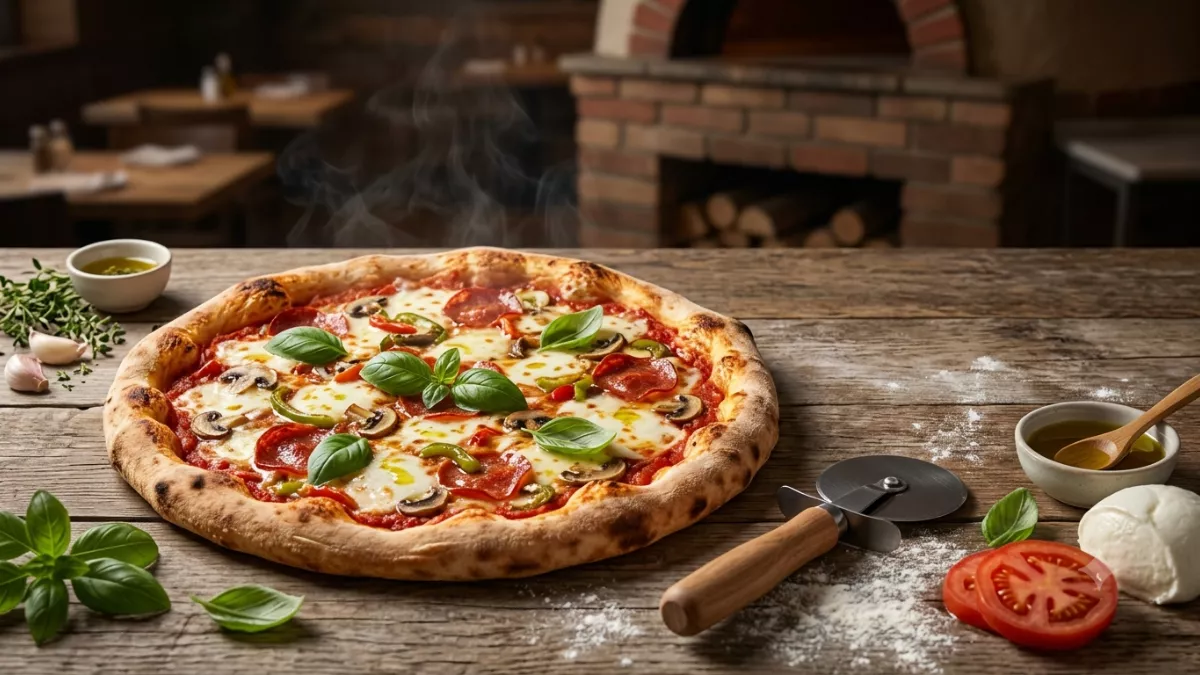
What Makes a Great Pizza? 8 Things to Look For
Pizza may seem simple at first glance: dough, sauce, cheese, toppings, and heat. But creating a truly great pizza requires much more than putting ingredients together and baking them. The best pizzas have balance, texture, freshness, and flavor in every bite.
Whether you prefer a thin New York-style slice, a crispy homemade pizza, or a loaded American-style pie, certain qualities separate an average pizza from an unforgettable one.
So, what makes a great pizza? From the crust and sauce to the cheese, toppings, baking temperature, and overall balance, there are several important details to consider.
In this guide, we’ll explore 8 things to look for in a great pizza and explain why each one matters.
What Makes a Great Pizza?
A great pizza combines several elements rather than relying on one ingredient. The crust should have the right texture, the sauce should complement the cheese, toppings should be balanced, and the pizza should be baked properly.
The eight most important things to look for are:
- A flavorful, well-made crust
- Balanced pizza sauce
- Quality cheese
- Fresh, flavorful toppings
- The right topping-to-crust ratio
- Proper baking and temperature
- Good texture and structure
- Overall flavor balance
Let’s take a closer look at each one.
1. A Flavorful, Well-Made Crust
The crust is the foundation of every pizza. Even excellent sauce and toppings cannot completely rescue a crust that is tough, soggy, bland, or undercooked.
A great pizza crust should have a pleasant texture and enough flavor to stand on its own.
Depending on the pizza style, the ideal crust can vary considerably. A New York-style pizza usually has a thin, foldable crust with a crisp exterior and chewy center. A thicker pan pizza may have a more substantial, airy texture.
What to look for in a great pizza crust
A good crust generally has:
- A crisp or lightly browned exterior
- A soft or chewy interior
- Good fermentation and flavor
- Enough strength to hold the toppings
- No excessive sogginess
- A pleasant toasted aroma
- A texture appropriate for its pizza style
The crust should also complement the toppings rather than overpower them.
Why dough fermentation matters
Fermentation plays an important role in developing both flavor and texture. Allowing pizza dough enough time to ferment can create a more flavorful and complex crust.
This is one reason restaurant and artisan pizzas can taste noticeably different from quickly prepared pizzas.
2. Balanced Pizza Sauce
Pizza sauce is another major component of a great pizza. It provides acidity, sweetness, saltiness, and moisture.
The best sauce doesn’t necessarily have to be complicated. In many cases, a simple tomato sauce made with quality ingredients can produce excellent results.
The key is balance.
A pizza sauce that is too acidic can overpower the cheese. A sauce that is too sweet can make the pizza taste unbalanced. Too much sauce can also make the crust wet and difficult to eat.
What makes good pizza sauce?
Look for sauce that has:
- A fresh tomato flavor
- Balanced acidity
- Moderate sweetness
- Appropriate seasoning
- Enough moisture without being watery
- A consistency that spreads easily
Garlic, oregano, basil, black pepper, and other seasonings can add additional flavor, but the seasoning shouldn’t completely hide the tomato flavor.
Sauce quantity matters
More sauce doesn’t automatically mean a better pizza.
A thin, even layer is often enough to provide flavor while allowing the crust and cheese to remain noticeable.
This is especially important for thin-crust pizza, where excessive sauce can make the center soggy.
3. Quality Cheese
Cheese is one of the most recognizable characteristics of pizza. It adds creaminess, saltiness, richness, and that satisfying melted texture people expect from a good slice.
Mozzarella is a classic choice, but different pizza styles can use different cheese combinations.
What should good pizza cheese do?
A good cheese should:
- Melt evenly
- Develop appealing browning
- Provide a creamy texture
- Complement the sauce
- Add flavor without overwhelming the crust
- Stretch without becoming excessively greasy
Low-moisture mozzarella is commonly used for many American-style pizzas because it melts well and produces a familiar combination of stretch and browning.
Fresh mozzarella can provide a softer, creamier texture and is especially popular in certain traditional pizza styles.
Don’t use too much cheese
A heavily loaded layer of cheese can sometimes hide the other ingredients.
Great pizza is generally about balance, not simply adding more of everything.
The cheese should work together with the sauce, crust, and toppings.
4. Fresh, Flavorful Toppings
Toppings can transform a basic pizza into something memorable. But quality matters more than quantity.
Fresh mushrooms, onions, peppers, herbs, meats, vegetables, and other toppings can add different textures and flavors.
The important thing is choosing ingredients that work well together.
Popular pizza toppings include:
- Pepperoni
- Italian sausage
- Mushrooms
- Onions
- Green peppers
- Black olives
- Bacon
- Ham
- Chicken
- Fresh basil
- Jalapeños
- Pineapple
- Extra cheese
Different combinations create completely different eating experiences.
For example, spicy pepperoni can pair nicely with creamy cheese and slightly sweet tomato sauce. Mushrooms can provide an earthy flavor, while fresh basil adds brightness after baking.
Freshness makes a difference
Fresh ingredients can improve aroma, texture, and overall flavor.
Vegetables should ideally be fresh and properly prepared. Meats should be cooked safely and distributed evenly.
If using ingredients with high water content, such as fresh mushrooms or certain vegetables, managing moisture becomes particularly important.
5. The Right Topping-to-Crust Ratio
One of the easiest mistakes to make when preparing pizza is adding too many toppings.
It can be tempting to create an enormous pile of meat, vegetables, cheese, and sauce. However, excessive toppings can make pizza difficult to bake properly.
The center may remain soft while the crust becomes overcooked.
Why topping balance matters
Every bite should contain a combination of:
Crust + sauce + cheese + toppings
No single ingredient should completely dominate unless that is intentionally part of the pizza style.
For example, a pepperoni pizza should taste like pepperoni, but the crust, tomato sauce, and cheese should still contribute to the overall experience.
Avoid overcrowding
Instead of covering every inch of the pizza with toppings, distribute them evenly.
This helps with:
- Even cooking
- Better texture
- Less moisture
- Easier slicing
- More balanced flavor
Sometimes a pizza with five carefully selected ingredients tastes better than one containing fifteen different toppings.
6. Proper Baking and Temperature
Even excellent ingredients can produce disappointing pizza if the baking process isn’t right.
Pizza generally benefits from high heat because high temperatures allow the crust to develop quickly while the toppings cook and the cheese melts.
Traditional pizza ovens can reach temperatures considerably higher than many household ovens.
Home cooks can still achieve excellent results by preheating the oven thoroughly and using appropriate pizza equipment.
Why a hot oven matters
A properly heated oven helps create:
- Better crust browning
- Crispier edges
- Faster cooking
- Better cheese melting
- Improved texture
- More developed roasted flavors
One of the biggest mistakes when making pizza at home is putting the pizza into an oven that hasn’t fully preheated.
Pizza stone or baking steel
A pizza stone or baking steel can help transfer heat efficiently to the dough.
A baking steel generally provides strong heat transfer, while a pizza stone offers another traditional approach to creating a crisp pizza base.
Whichever option you use, adequate preheating is essential.
7. Good Texture and Structure
Flavor gets most of the attention, but texture can determine whether a pizza feels satisfying.
A great pizza usually offers several textures at once.
You might experience:
- Crisp edges
- Chewy crust
- Soft melted cheese
- Slightly crisp toppings
- Juicy or tender meats
- Fresh herbs
That contrast makes each bite more interesting.
What should a pizza feel like?
The exact texture depends on the style.
For a thin New York-style pizza, you might expect:
- A flexible slice
- Crisp edges
- A chewy center
- A foldable structure
For a pan pizza, you might expect:
- A thicker crust
- A crisp bottom
- A soft interior
- More substantial bite
For a thin, crispy pizza, the entire crust may be designed to provide a crunchy texture.
There isn’t one universal definition of perfect pizza texture. Instead, the texture should match the style being served.
8. Overall Flavor Balance
Perhaps the most important characteristic of a great pizza is balance.
A pizza can contain excellent ingredients but still taste disappointing if the flavors don’t work together.
Think about the major flavor components:
- Saltiness from cheese and meats
- Acidity from tomato sauce
- Sweetness from tomatoes or certain toppings
- Richness from cheese and oils
- Spiciness from peppers or hot seasonings
- Freshness from herbs and vegetables
- Savory flavor from meats and roasted ingredients
When these elements are balanced, the pizza becomes more enjoyable.
Why balance matters
Imagine a pizza with extremely salty meat, salty cheese, and heavily seasoned sauce. Even if every ingredient is individually good, the finished pizza may taste overwhelmingly salty.
Likewise, a pizza with too much sauce and too little cheese may taste acidic and unbalanced.
Great pizza brings these components together rather than allowing one flavor to dominate unnecessarily.
8 Signs You’re Eating a Great Pizza
If you’re trying to judge a pizza quickly, look for these eight signs:
1. The crust has character
It isn’t bland or simply a carrier for toppings. It has its own flavor and texture.
2. The center isn’t excessively soggy
The pizza should hold together without becoming wet or collapsing under the toppings.
3. The cheese is properly melted
It should be creamy and integrated with the sauce rather than sitting like a separate layer.
4. Toppings are evenly distributed
You shouldn’t have three pieces of pepperoni on one side and none on the other.
5. The sauce is balanced
It provides flavor without dominating the entire pizza.
6. The crust has appealing browning
A well-baked crust usually develops roasted aromas and attractive browning.
7. Every ingredient contributes
The toppings, sauce, cheese, and crust should work together.
8. You want another bite
Perhaps the simplest test is whether the flavors and textures make you want to continue eating.
What Makes Restaurant Pizza Taste So Good?
Restaurant pizza can have several advantages over homemade pizza.
Professional pizza kitchens often use:
- High-temperature ovens
- Specialized pizza decks
- Long-fermented dough
- Commercial mixers
- Consistent ingredient preparation
- Experienced pizza makers
- Carefully controlled cooking times
These factors can make a significant difference.
However, home cooks can reproduce many of these principles.
The most important starting points are quality ingredients, good dough fermentation, thorough oven preheating, and proper topping balance.
How to Make Better Pizza at Home
You don’t need a professional kitchen to improve your pizza.
Try these practical tips.
Use quality ingredients
Start with good flour, tomatoes, cheese, and toppings. Better ingredients can provide better flavor without requiring complicated recipes.
Give your dough enough time
Longer fermentation can improve dough flavor and texture.
Preheat your oven thoroughly
Don’t rush this step. A properly heated oven is critical for good pizza.
Don’t overload your pizza
Use enough toppings to provide flavor without covering the crust with a heavy layer.
Bake on a hot surface
A preheated pizza stone or baking steel can help produce a better crust.
Finish with fresh ingredients
Fresh basil, Parmesan, chili flakes, or a small drizzle of quality olive oil can add brightness after baking.
Common Pizza Mistakes to Avoid
Even simple mistakes can affect the final result.
Using too much sauce
Excess sauce can create a soggy center.
Adding too many toppings
Heavy toppings increase moisture and make even cooking more difficult.
Not preheating the oven
A cold baking surface can prevent the crust from becoming properly crisp.
Using cold dough incorrectly
Very cold dough can be harder to stretch and may not behave as expected during preparation.
Cutting the pizza immediately
Allowing a pizza to rest briefly after baking can make it easier to slice and handle.
Ignoring ingredient moisture
Wet vegetables and excessive sauce can introduce unnecessary moisture into the pizza.
Using too much flour during shaping
Excess flour can burn during baking and create a bitter or dusty flavor.
Is Homemade Pizza Better Than Restaurant Pizza?
There isn’t one universal answer.
Homemade pizza offers complete control over:
- Ingredients
- Toppings
- Dough thickness
- Sauce quantity
- Cheese
- Cooking time
- Pizza size
Restaurant pizza, on the other hand, can benefit from professional equipment and years of preparation experience.
The best choice depends on what you’re looking for.
For home cooks, the goal isn’t necessarily to copy every restaurant pizza. It’s to understand the principles that create good pizza and adapt them to your own kitchen.
What Is the Most Important Part of a Pizza?
The answer depends on the pizza style and personal preference.
Some people focus on the crust because it determines texture and structure. Others care most about cheese, sauce, or toppings.
From a cooking perspective, however, pizza works best as a complete system.
A great crust cannot compensate for poor toppings, and excellent toppings cannot completely fix an undercooked crust.
The goal is harmony between all the components.
Frequently Asked Questions
1. What makes a pizza taste great?
A great pizza usually combines flavorful crust, balanced sauce, quality cheese, fresh toppings, proper baking, and good flavor and texture balance.
2. What is the most important ingredient in pizza?
The dough is arguably one of the most important components because it provides the foundation for the entire pizza. However, the final quality depends on how all ingredients work together.
3. Why does restaurant pizza taste different from homemade pizza?
Restaurant pizzas may be cooked in high-temperature ovens and prepared with specialized equipment and carefully fermented dough. These factors can create differences in crust, texture, and flavor.
4. How do you make pizza crust crispy?
Use a thoroughly preheated oven and a hot baking surface such as a pizza stone or baking steel. Avoid adding excessive sauce and wet toppings.
5. Should pizza have lots of toppings?
Not necessarily. A great pizza can have many toppings, but they should be balanced. Too many toppings can create excess moisture and overwhelm the crust and sauce.
Final Thoughts
So, what makes a great pizza?
It isn’t just one ingredient or one cooking technique. Great pizza comes from the combination of a flavorful crust, balanced sauce, quality cheese, fresh toppings, proper proportions, high-quality baking, satisfying texture, and harmonious flavors.
The best pizza doesn’t necessarily have the most toppings or the most expensive ingredients. Instead, each component should have a purpose.
Whether you’re ordering a classic pepperoni pizza, enjoying a New York-style slice, or making pizza at home, pay attention to the details. Look at the crust, smell the baked dough, notice how the sauce and cheese work together, and consider whether the toppings complement rather than overpower the pizza.
Once you understand these eight characteristics, you’ll have a much better idea of what separates an ordinary pizza from a truly memorable one.