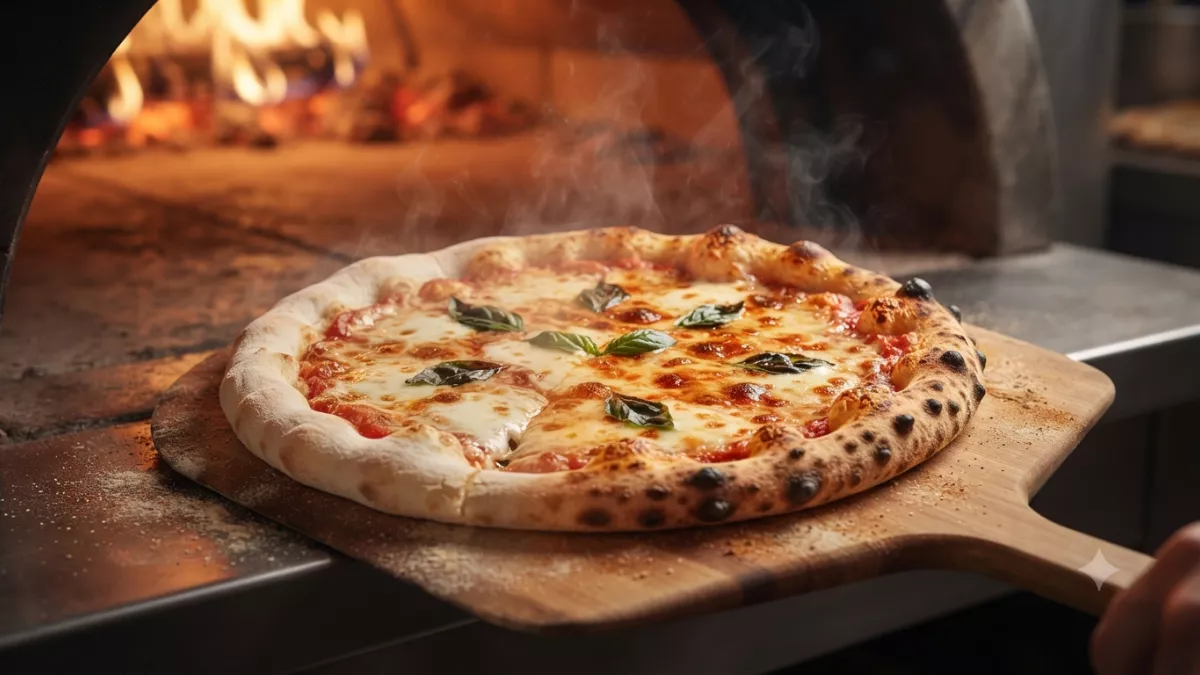
Oven temperature is one of the biggest factors determining whether a pizza comes out soft and pale, crisp and golden, or beautifully browned with a light, airy crust. You can use excellent dough, flavorful sauce, quality cheese, and carefully selected toppings, but if the oven temperature is wrong, the final pizza may still disappoint.
Pizza dough changes dramatically when exposed to intense heat. Water turns into steam, gluten expands, cheese melts, sugars and proteins brown, and the crust develops its final texture. The temperature of the oven controls how quickly many of these processes happen.
This is why a pizza baked in a very hot professional pizza oven can have a completely different texture from one baked in a standard home oven.
Understanding how oven temperature changes pizza can help you make better decisions about baking time, crust thickness, toppings, and equipment. It can also explain why one pizza develops a crisp bottom and golden crust while another remains pale, soft, or undercooked.
In this guide, we will explore the relationship between oven temperature and pizza texture, browning, moisture, cheese, crust development, and overall flavor.
Why Oven Temperature Matters So Much for Pizza
Pizza is a relatively simple food, but baking it successfully requires several processes to happen at the right time.
When pizza enters a hot oven:
- Water inside the dough begins turning into steam.
- Yeast activity rapidly changes as the dough heats.
- Gluten expands and sets.
- Starches gelatinize.
- The crust loses moisture.
- Cheese melts.
- Toppings cook.
- Sugars caramelize.
- Proteins participate in browning reactions.
- The crust develops its final color and texture.
The speed of these reactions depends heavily on temperature.
A very hot oven can create dramatic oven spring and rapid browning. A cooler oven may require a much longer bake, allowing more moisture to escape before the exterior develops the desired color.
The result can be a completely different pizza.
What Happens When Pizza Enters a Hot Oven?
The first few moments of baking are extremely important.
The dough rapidly absorbs heat from the oven environment and baking surface.
Water inside the dough begins moving toward the boiling point. As it converts into steam, it expands and pushes against the dough’s internal structure.
This contributes to oven spring.
The outer edge can inflate quickly, creating the airy structure associated with many artisan pizzas.
At the same time, the dough begins transitioning from a flexible raw structure into a firm baked crust.
The timing of this transformation is critical.
If the oven is hot enough, the pizza can develop significant expansion before the crust becomes completely set.
That can produce a lighter, more open interior.
What Is Oven Spring?
Oven spring is the rapid expansion that occurs when dough enters a hot oven.
Several factors contribute to it, including:
- Steam production
- Gas expansion
- Dough hydration
- Gluten strength
- Fermentation
- Oven temperature
- Dough thickness
A high oven temperature encourages rapid expansion.
This is one reason pizzas baked at very high temperatures can develop dramatically puffed edges even when the center remains relatively thin.
The outer crust expands before the structure fully sets.
Low Oven Temperature: What Happens to Pizza?
A lower oven temperature generally means a longer baking time.
This can produce useful results for certain pizza styles, but it can also create problems if the dough and toppings are designed for high-temperature baking.
A pizza baked at a relatively low temperature may develop:
- A softer crust
- Less dramatic oven spring
- More gradual browning
- A drier interior if baked for too long
- Less pronounced blistering
- Less intense roasted flavor
If the pizza remains in the oven for a long time, moisture can continue escaping from the crust.
The result may be a pizza that is technically cooked but lacks the combination of crisp exterior and tender interior that many people want.
High Oven Temperature: What Changes?
High heat accelerates the entire baking process.
A very hot oven can quickly:
- Expand the dough
- Melt cheese
- Brown the crust
- Cook toppings
- Evaporate surface moisture
- Develop blistering
- Create roasted flavors
This allows the exterior to brown before the interior loses excessive moisture.
That balance is particularly important for thin pizza.
The goal is not simply to cook the dough.
The goal is to cook it quickly enough that the outside develops color and texture while the inside remains pleasantly tender.
Oven Temperature and Crust Browning
One of the most visible effects of temperature is browning.
A properly baked pizza typically develops a range of colors, from pale golden areas to deeper brown spots.
Browning is influenced by chemical reactions involving sugars and proteins.
Two important processes are caramelization and the Maillard reaction.
Caramelization
Caramelization involves the breakdown and browning of sugars when exposed to sufficient heat.
It contributes sweetness, color, and complex roasted flavors.
Maillard Reaction
The Maillard reaction occurs between reducing sugars and amino compounds, producing hundreds of flavorful compounds and contributing to the browned appearance of baked foods.
Together, these processes help create the characteristic aroma and appearance of a well-baked pizza crust.
Why Is Some Pizza Pale Even When It Is Cooked?
A pizza can be fully cooked internally while still appearing pale.
This often happens when the surface does not reach the right conditions for significant browning.
Possible causes include:
- Oven temperature is too low.
- Pizza is baked too far from the heat source.
- Dough contains insufficient browning potential.
- Baking time is not appropriate.
- The oven was not fully preheated.
- Excess moisture is slowing surface drying.
A pale crust may still be edible, but it can lack the roasted flavor and appealing texture associated with properly browned pizza.
Why Does High Heat Create Better Browning?
Browning requires the surface to become sufficiently hot and dry.
If the crust contains too much moisture, energy is consumed in evaporating water rather than rapidly increasing surface temperature.
Once enough surface moisture has evaporated, the temperature can rise further and browning accelerates.
A hot oven helps drive this process quickly.
This is one reason professional pizza ovens can create dark, blistered areas in a matter of minutes.
Professional Pizza Ovens vs. Home Ovens
Professional pizza ovens are designed to operate at temperatures substantially higher than many conventional home ovens.
A commercial high-temperature pizza oven can produce intense heat from multiple directions while maintaining a very hot baking surface.
A typical home oven operates at a much lower maximum temperature.
This difference affects:
- Baking time
- Oven spring
- Browning
- Crust structure
- Cheese melting
- Topping cooking
- Moisture loss
A home cook therefore cannot always reproduce a professional pizza simply by copying the recipe.
The baking environment matters.
Why Pizza Stones and Baking Steels Matter
A hot baking surface can dramatically improve pizza in a home oven.
A pizza stone or baking steel stores heat during preheating and transfers that heat directly into the dough when the pizza is placed on it.
This rapid transfer can help:
- Set the bottom crust quickly
- Increase crispness
- Improve oven spring
- Reduce sogginess
- Develop stronger browning
A baking steel generally transfers heat more aggressively than many traditional pizza stones because metal conducts heat very efficiently.
Both can be useful depending on the pizza style and equipment available.
Why Preheating Is So Important
Putting a pizza into an oven that has only recently reached its displayed temperature can produce inconsistent results.
The oven may indicate that it has reached the target air temperature, but the baking surface may not yet have stored enough heat.
A stone or steel needs time to become thoroughly heated.
For pizza, proper preheating is therefore about more than simply waiting for the oven’s temperature indicator.
The baking surface must also be hot enough to transfer substantial energy to the dough.
What Happens at Around 400°F?
At approximately 400°F, pizza can certainly be baked, particularly thicker or pan-style pizzas.
However, the baking process will generally be slower than in a hotter oven.
A thicker crust can benefit from a moderate temperature because it gives the center more time to cook before the exterior becomes excessively dark.
The final texture may be softer and less dramatically blistered.
For thin artisan-style pizza, however, this temperature may not provide the same rapid browning and oven spring as a hotter bake.
What Happens Around 450–500°F?
A home oven operating around 450–500°F can produce excellent pizza when combined with a properly preheated stone or steel.
This range gives the dough substantially more heat than lower-temperature baking.
You can expect:
- Better browning
- More crispness
- Faster cooking
- Improved cheese melting
- Better oven spring
- More developed roasted flavor
The exact result depends on dough thickness, hydration, oven design, and baking surface.
What Happens at Very High Pizza-Oven Temperatures?
At extremely high temperatures, pizza can bake in only a short period.
This is common with certain traditional pizza styles.
The high heat rapidly inflates the dough and creates intense browning and blistering.
The center can remain soft and tender while the outer edge becomes dramatically charred.
This fast baking process is fundamentally different from baking pizza for a much longer period in a conventional oven.
Temperature and Pizza Crust Texture
Temperature does not simply determine whether the crust is cooked.
It affects the balance between crispness, softness, chewiness, and tenderness.
A very hot, short bake can produce:
Crisp exterior + soft interior
A lower-temperature, longer bake can produce:
More evenly baked + potentially drier crust
Neither result is automatically better.
The ideal combination depends on the pizza style.
Thin Crust Needs Different Heat Than Thick Crust
Thin pizza usually benefits from high heat because the dough does not need a long time to cook through.
The objective is to brown the exterior and set the structure quickly.
Thick pizza needs more time for the center to heat and cook properly.
If a thick pizza is exposed to extreme heat for too long, the outside can burn before the interior is ready.
This is why temperature and dough thickness must be considered together.
How Temperature Affects Cheese
Cheese responds quickly to heat.
At the right temperature, mozzarella softens, melts, stretches, and develops attractive browned areas.
Too much heat for too long can cause cheese to:
- Dry out
- Separate excessively
- Become rubbery
- Burn
- Develop an overly greasy surface
Fresh mozzarella requires additional moisture management because it contains more water than many low-moisture cheeses.
The goal is to expose cheese to enough heat to melt properly without allowing it to overcook.
How Temperature Affects Pepperoni
Pepperoni responds particularly well to high heat.
As it warms, its fat renders and the edges can curl and brown.
Higher temperatures can create the crisp edges that many people enjoy.
However, extremely intense heat can burn thin pepperoni quickly.
Placement also matters.
Pepperoni directly exposed to the oven’s strongest heat can brown much faster than pepperoni partially covered by cheese.
How Temperature Affects Vegetables
Vegetables contain varying amounts of water.
High heat can encourage roasting and caramelization, producing deeper flavor.
But vegetables can also burn before becoming tender if they are sliced too thickly or placed too close to intense heat.
For pizza, thin slicing is often helpful.
You can also pre-cook vegetables when necessary.
This is particularly useful for:
- Mushrooms
- Onions
- Bell peppers
- Eggplant
- Zucchini
- Hearty greens
Why High Heat Does Not Always Mean Better Pizza
It can be tempting to assume that the hottest possible oven always produces the best pizza.
That is not true.
Temperature must match the dough and pizza style.
A very wet dough with delicate toppings may require a different baking strategy from a thin, low-hydration dough.
Similarly, a thick pan pizza should not necessarily be baked using exactly the same temperature and timing as a very thin artisan pizza.
The best temperature is the one that produces the desired balance of:
- Crust texture
- Browning
- Interior doneness
- Cheese melting
- Topping doneness
How Hydration Interacts With Oven Temperature
Hydration and temperature work together.
A high-hydration dough contains more water, which means there is more moisture available to turn into steam during baking.
With sufficient heat, this can contribute to strong oven spring and a light, open crumb.
But if the baking environment does not provide enough heat, the crust may remain moist for too long.
A high-hydration dough therefore benefits from appropriate baking conditions.
This connects directly with pizza dough hydration: the same dough can behave differently depending on how aggressively it is baked.
How Fermentation Interacts With Temperature
Fermentation creates gases and develops the dough’s internal structure before it reaches the oven.
A properly fermented dough can respond beautifully to high heat.
Under-fermented dough may have less developed structure and can produce a denser crust.
Over-fermented dough can become weak and difficult to handle.
Oven temperature cannot completely fix poor fermentation.
Good pizza begins with properly prepared dough and ends with appropriate baking conditions.
Why Your Pizza Bottom May Stay Soft
A soft bottom is one of the most common pizza problems.
Possible causes include:
- Baking surface is not hot enough.
- Oven was not preheated sufficiently.
- Too much sauce was used.
- Toppings contain excessive moisture.
- Pizza was overloaded.
- Baking temperature is too low.
- Pizza was removed before the bottom had browned.
- The dough was too thick for the chosen baking method.
Using a thoroughly preheated stone or steel can make a major difference.
Why the Bottom Can Burn Before the Top Browns
The opposite problem can also occur.
If the baking surface is extremely hot while the top heat is relatively weak, the bottom may become dark before the cheese and toppings have browned sufficiently.
This is an issue of heat balance.
Possible solutions include:
- Moving the pizza higher in the oven.
- Reducing the baking surface temperature.
- Adjusting the oven’s heating mode.
- Using a different rack position.
- Changing the baking time.
The ideal setup provides enough bottom heat for crispness without burning the crust.
How to Get Better Browning in a Home Oven
For many home pizza makers, the following process works well:
Step 1: Preheat Thoroughly
Give the oven and baking surface enough time to become hot.
Step 2: Use a Pizza Stone or Steel
Place it where it can receive strong heat.
Step 3: Keep the Pizza Lightly Topped
Avoid excessive sauce, cheese, and wet toppings.
Step 4: Bake at the Highest Appropriate Temperature
Use the highest temperature that suits your dough and equipment.
Step 5: Watch the Crust
Look for a combination of golden color, browned spots, and a properly cooked bottom.
Step 6: Finish Under Strong Top Heat if Necessary
A short period closer to the upper heating element can improve cheese and crust browning.
Be careful because the transition from beautifully browned to burned can happen quickly.
How to Know When Pizza Is Done
Visual cues are extremely useful.
Look for:
- Golden or deep golden crust
- Browned spots
- Firm bottom
- Fully melted cheese
- Properly cooked toppings
- Crisp edges
- A crust that does not feel doughy
For thin pizza, the bottom should usually have enough structure to support the slice without collapsing.
The exact appearance will vary by pizza style.
Temperature and Pizza Flavor
Oven temperature influences flavor indirectly as well as directly.
Higher heat can encourage:
- Browning
- Roasting
- Caramelization
- Maillard reactions
- Toasted flour aromas
- Charred notes
These reactions create complex flavors that cannot be reproduced simply by adding more seasoning.
This is one reason properly baked pizza can taste much more developed than pale, slowly baked dough.
Common Pizza Temperature Mistakes
Starting With a Cold Baking Surface
Even if the air inside the oven is hot, the pizza may not receive enough heat from below.
Trusting the Oven Display Completely
The displayed temperature may not represent the exact temperature at the baking surface.
Opening the Oven Too Often
Frequent opening releases heat and can extend the baking process.
Using the Same Temperature for Every Pizza
Thin, thick, pan, and heavily topped pizzas may require different approaches.
Baking Wet Pizza Too Slowly
Excess moisture combined with low heat can produce a soft crust.
Using Extreme Heat Without Watching the Pizza
Very high temperatures can burn toppings quickly.
A Practical Home Pizza Temperature Guide
As a general starting point:
400–425°F: Useful for thicker pizzas and slower baking.
450–500°F: Excellent range for many home-oven pizzas.
500°F and above: Useful when the oven and dough are designed for faster, hotter baking.
Very high professional temperatures: Appropriate for pizza styles specifically designed for extremely rapid baking.
These are guidelines rather than strict rules.
The ideal temperature depends on your dough, pizza style, oven, baking surface, and toppings.
The Relationship Between Temperature and Baking Time
Temperature and time are closely connected.
Generally:
Higher temperature = shorter baking time
Lower temperature = longer baking time
But the goal is not to find the shortest possible baking time.
The goal is to reach the desired internal and external texture.
For a thin pizza, a short high-temperature bake can preserve tenderness while producing excellent browning.
For a thicker pizza, a longer bake may be necessary to cook the center properly.
Frequently Asked Questions
What temperature is best for baking pizza?
For many home ovens, 450–500°F is a useful starting range. The ideal temperature depends on crust thickness, dough hydration, toppings, oven design, and baking surface.
Does a hotter oven make pizza crispier?
A hotter oven can improve crispness and browning, particularly when combined with a hot stone or steel. However, excessive heat can burn the crust or toppings, so temperature must match the pizza style.
Why does my pizza stay pale?
A pale pizza may be caused by insufficient heat, inadequate preheating, excessive moisture, or insufficient baking time. Better preheating and a hotter baking environment can often improve browning.
Why is my pizza bottom burning?
The baking surface may be receiving too much direct heat compared with the top. Try changing the rack position, reducing the surface temperature, or adjusting the baking time.
Does oven temperature affect pizza flavor?
Yes. Temperature influences browning, caramelization, Maillard reactions, roasting, and charring, all of which contribute to the final flavor of the crust and toppings.
Final Thoughts
How oven temperature changes pizza is really a story about controlling heat, moisture, browning, and time.
A cooler oven generally produces a slower bake, while a hotter oven can rapidly expand the dough, melt cheese, evaporate moisture, and create the deep browning that gives pizza its characteristic roasted flavor.
The key is matching the temperature to the pizza.
Thin crust usually benefits from fast, intense heat. Thick pizza may need a longer bake. High-hydration dough can benefit from strong heat to create oven spring and an airy interior. Wet toppings require careful moisture management. A stone or steel can dramatically improve heat transfer in a home oven.
Instead of thinking only about the number displayed on your oven, think about the entire baking environment: the heat coming from above, the temperature of the baking surface, the thickness and hydration of the dough, the amount of toppings, and the desired final texture.
When those elements work together, the result is a pizza with a crisp bottom, tender interior, melted cheese, properly cooked toppings, and beautifully developed golden-brown color.
That is the real secret behind perfect pizza browning.