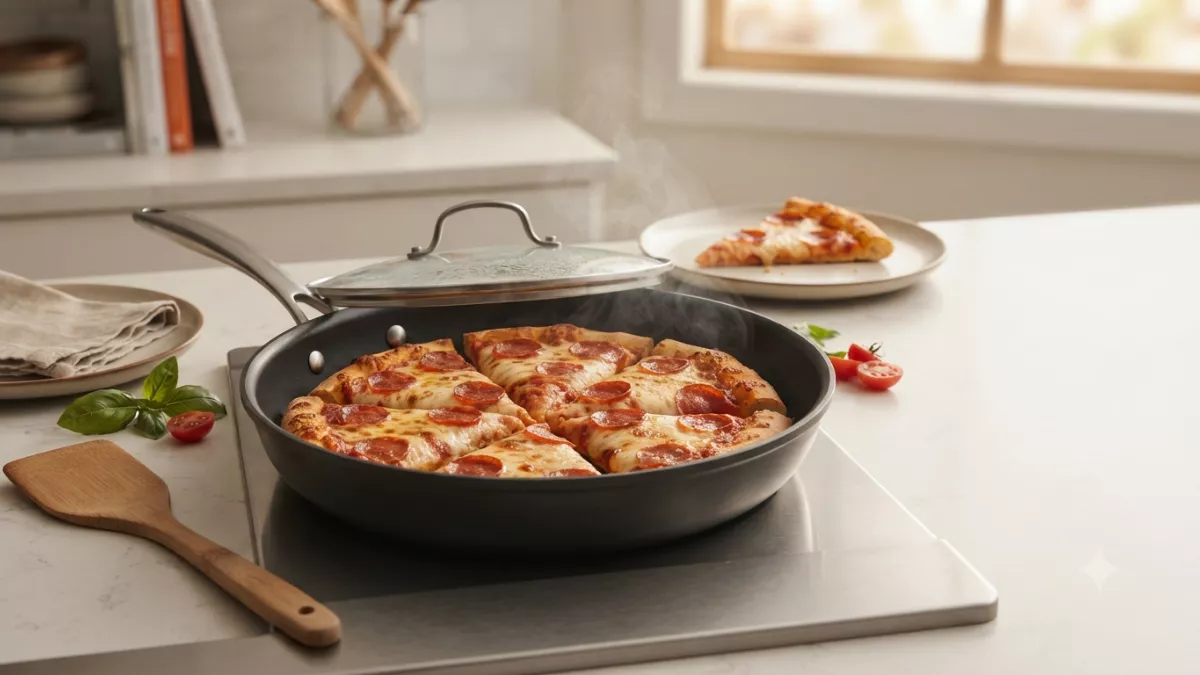
Leftover pizza can be almost as satisfying as a freshly baked slice—if you reheat it correctly.
Unfortunately, reheating pizza can also go wrong very quickly. Put a slice in the microwave for too long and the crust can become soft and chewy. Use too much heat in the wrong way and the cheese may dry out while the edges become hard. Reheating an entire pizza without controlling moisture can leave you with a slice that tastes nothing like the crispy, cheesy pizza you enjoyed the first time.
The good news is that you do not need a professional pizza oven to reheat pizza successfully.
With the right method, you can bring back a crisp bottom, warm toppings, and properly melted cheese without turning the crust soggy.
The key is understanding what happens to pizza as it cools and how different reheating methods handle moisture and heat.
In this guide, we will explain how to reheat pizza without making the crust soggy, compare the skillet, oven, toaster oven, air fryer, and microwave methods, and share practical tips for getting better results from leftover pizza.
Why Does Leftover Pizza Become Soggy?
Before learning how to reheat pizza, it helps to understand why leftover pizza changes texture.
Freshly baked pizza contains a significant amount of water. Some of that moisture comes from the dough, while other moisture comes from tomato sauce, cheese, and toppings.
When pizza is hot, steam moves through the crust and escapes into the surrounding air.
As the pizza cools, the moisture distribution changes.
The crust can become softer because moisture from the toppings and interior migrates into areas that were previously crisp.
Refrigeration also changes the texture of the starches in the crust. This is one reason cold pizza can feel firmer and chewier than freshly baked pizza.
When you reheat it, your goal is not simply to make it hot.
You want to remove or redistribute excess moisture while restoring enough heat to melt the cheese and warm the toppings.
That is why dry, direct heat generally works better than simply surrounding the pizza with hot air and moisture.
The Best Overall Method: Reheat Pizza in a Skillet
For many leftover slices, a skillet is one of the most effective ways to restore a crispy crust.
A skillet provides direct heat to the bottom of the pizza, which helps drive moisture out of the crust while warming the toppings.
It is particularly useful when you want a crisp bottom with melted cheese.
How to Reheat Pizza in a Skillet
Place a nonstick or cast-iron skillet over medium-low to medium heat.
Put the cold pizza slice directly into the dry skillet.
Let it heat for approximately 2 to 4 minutes, depending on the thickness of the crust.
Check the bottom periodically.
Once the crust begins to crisp, add a few drops of water to the empty area of the skillet rather than directly onto the pizza.
Immediately cover the skillet with a lid.
The small amount of steam helps warm and melt the cheese while the pizza bottom continues to receive direct heat.
Cook for another 1 to 2 minutes.
Remove the lid and check the crust.
If the bottom is crisp and the cheese is melted, the pizza is ready.
Why the Skillet Works
The skillet gives the crust direct contact with a hot surface.
At the same time, covering the pan briefly creates enough steam to warm the upper part of the pizza.
This creates a useful combination of dry heat underneath and controlled steam above.
The important detail is not to add too much water.
A few drops are enough.
Pouring water directly over the pizza can make the crust soggy rather than restoring it.
Reheating Pizza in the Oven
The oven is another excellent choice, especially when reheating several slices at once.
Unlike the microwave, the oven can provide consistent dry heat around the pizza while allowing the crust to regain some of its crispness.
How to Reheat Pizza in the Oven
Preheat your oven to approximately 375°F to 425°F.
Place the pizza slices on a baking sheet, pizza stone, or preheated pizza steel.
Avoid stacking the slices.
Heat for approximately 5 to 10 minutes, depending on the thickness of the pizza and how cold it is.
Check the cheese and crust near the end of the heating time.
When the cheese is hot and the bottom has regained some crispness, remove the pizza.
Should You Use a Baking Sheet?
A baking sheet is convenient and works well for most pizzas.
However, a preheated pizza stone or steel can provide stronger heat directly to the bottom of the crust.
This can be especially useful for thin-crust pizza when crispness is the priority.
Avoid a Cold Baking Surface
If crispness matters, placing pizza on a completely cold pan can slow down the reheating process.
A preheated surface can provide more immediate heat to the bottom.
Be careful when handling hot cookware and always follow the safety instructions for your equipment.
Reheating Pizza in a Toaster Oven
A toaster oven can be an excellent option for one or two slices.
It heats a smaller space than a conventional oven, making it convenient for small portions.
Place the pizza directly on the toaster oven rack or on a suitable tray.
Set the temperature around 375°F to 400°F and heat for several minutes.
Check frequently because toaster ovens can heat food quickly.
The result can be a warm slice with a noticeably firmer crust.
How to Reheat Pizza in an Air Fryer
An air fryer is another convenient option for leftover pizza.
It circulates hot air around the slice, allowing the crust to heat quickly while the cheese becomes warm and bubbly.
Air Fryer Method
Preheat the air fryer if your model recommends preheating.
Place the pizza slice in the basket without overlapping other slices.
Heat at approximately 350°F to 375°F for around 3 to 5 minutes.
Check after a few minutes because air fryers vary considerably in power.
The crust can become very crisp, so avoid leaving thin slices in too long.
When an Air Fryer Works Particularly Well
Air fryers are especially convenient for thin and medium-crust pizza.
They can also be useful when you want to reheat a small amount of pizza quickly without turning on a large oven.
However, because the heating environment is intense, delicate toppings can dry out if the slice is reheated for too long.
Can You Reheat Pizza in the Microwave?
Yes, but the microwave is usually not the best choice if your goal is crispy crust.
Microwaves heat moisture within the food very quickly.
That makes them excellent for speed, but it can also make pizza crust soft and chewy.
If convenience matters more than crispness, the microwave is perfectly practical.
How to Improve Microwave-Reheated Pizza
Place the pizza on a microwave-safe plate.
Heat it in short intervals rather than using one long heating cycle.
Try approximately 20 to 30 seconds at a time.
Check the slice between intervals.
One commonly used trick is to place a microwave-safe cup of water beside the pizza.
The added moisture can sometimes help prevent the cheese and toppings from becoming excessively dry, but it will not recreate the crisp crust produced by a skillet or oven.
For the best microwave result, consider microwaving the pizza only until the toppings are warm and then finishing it briefly in a hot skillet.
The Microwave-and-Skillet Combination
If you are short on time, combining two methods can provide a useful compromise.
First, microwave the pizza briefly to warm the center and toppings.
Then transfer the slice to a hot skillet for approximately 1 to 2 minutes.
This allows the microwave to provide quick internal heating while the skillet restores crispness to the bottom.
The key is keeping the microwave stage short.
Overheating the pizza in the microwave can make the crust rubbery before you have a chance to crisp it in the pan.
How to Reheat Thick-Crust Pizza
Thick-crust pizza requires a slightly different approach.
Because the crust is thicker, the center may remain cold while the exterior becomes hot.
A moderate oven temperature can help heat the pizza more evenly.
Try reheating thick pizza at around 350°F to 375°F for several minutes.
If the top begins browning too quickly, loosely cover it with foil while the center warms.
Avoid sealing the pizza tightly because trapped steam can soften the crust.
How to Reheat Thin-Crust Pizza
Thin-crust pizza generally reheats quickly.
A skillet or air fryer can be particularly effective.
Because there is less dough to heat through, the crust can become crisp again relatively quickly.
Watch the pizza carefully.
A thin slice can go from perfectly reheated to overly dry within a short period.
How to Reheat Pizza With Lots of Toppings
Heavily topped pizza can be more difficult to reheat because different ingredients contain different amounts of moisture.
Mushrooms, vegetables, fresh mozzarella, and other high-moisture ingredients may release water during reheating.
A skillet can help because the crust receives direct heat while the toppings warm gradually.
If the toppings are already very wet, you can briefly blot excess moisture with a paper towel before reheating.
Do this gently so you do not remove the sauce or cheese.
How to Keep Cheese From Becoming Rubbery
Overheating is one of the main reasons reheated cheese becomes rubbery.
Cheese does not need extremely high heat to become warm and melted.
Instead, use moderate heat and allow the pizza to warm gradually.
If the crust is already crisp but the cheese is not fully melted, briefly covering a skillet can help warm the top without dramatically increasing the heat underneath.
Avoid repeatedly reheating the same slice.
Repeated heating and cooling can significantly change the texture of the cheese and crust.
How to Keep the Crust Crispy
The most important principle is moisture control.
Use dry, direct heat whenever possible.
Do not pour water over the pizza.
Avoid covering the pizza tightly during reheating.
Do not overload the reheating environment with steam.
Use a preheated pan, skillet, stone, or steel when appropriate.
Also avoid reheating the pizza for longer than necessary.
The longer pizza stays exposed to heat, the more likely the crust and toppings are to dry out.
Should You Reheat Pizza on Aluminum Foil?
You can use aluminum foil in the oven, but it is not always ideal for crisping the bottom.
Foil can create a barrier between the crust and a hot baking surface.
For a crisp bottom, placing the pizza directly on a suitable baking surface can provide stronger heat transfer.
If you use foil, make sure it is appropriate for your appliance and positioned safely.
How to Reheat Multiple Slices
If you have several slices, the oven is usually more practical than a skillet.
Preheat the oven to around 375°F to 425°F.
Arrange the slices in a single layer.
Leave enough space between them for hot air to circulate.
Heat until the cheese is warm and the crust has regained its desired texture.
For a large quantity of pizza, you may need to work in batches rather than overcrowding the pan.
Overcrowding can trap moisture and reduce crispness.
How to Store Pizza Before Reheating
Good reheating begins with proper storage.
Do not leave leftover pizza sitting at room temperature for an extended period.
Refrigerate leftovers promptly using appropriate food-storage practices.
Place slices in an airtight container or wrap them properly to reduce exposure to air.
However, excessive moisture trapped inside the container can soften the crust.
If stacking slices, separate them appropriately so they do not stick together.
Proper storage helps preserve flavor and makes reheating more successful.
Can You Freeze Leftover Pizza?
Yes, pizza can be frozen for longer storage.
Wrap individual slices well to reduce exposure to air and prevent freezer burn.
When you are ready to reheat, you can generally heat the frozen slice directly using an oven or air fryer rather than allowing it to sit at room temperature for a long period.
The exact reheating time depends on the thickness and toppings.
Frozen pizza slices usually need more time than refrigerated slices.
Common Reheating Mistakes
Using High Microwave Power for Too Long
This can produce rubbery crust and overheated cheese.
Adding Too Much Water
A small amount of steam can help, but excess water can make the crust soggy.
Covering the Pizza Completely
A sealed environment traps moisture and can soften the crust.
Overheating the Cheese
Excessive heat can dry or toughen cheese.
Reheating Too Long
Pizza only needs to become hot and properly textured again. Extended heating can dry it out.
Overcrowding the Pan
Too many slices at once can interfere with hot-air circulation.
Starting With a Cold Skillet
A properly heated skillet provides the direct heat needed to crisp the crust.
Quick Comparison of Pizza Reheating Methods
| Method | Crust Crispness | Speed | Best For |
|---|---|---|---|
| Skillet | Excellent | Fast | One or two slices |
| Oven | Excellent | Moderate | Several slices |
| Toaster Oven | Very Good | Moderate | Small portions |
| Air Fryer | Excellent | Very Fast | One or two slices |
| Microwave | Low | Very Fast | Maximum convenience |
| Microwave + Skillet | Very Good | Fast | Quick reheating with crispness |
The best method depends on what matters most to you.
If you want the crispiest possible crust, a skillet, oven, or air fryer is generally more suitable than a microwave.
If speed is your priority, the microwave wins.
The Best Method for Different Pizza Styles
Different pizza styles respond differently to reheating.
New York-Style Pizza
A skillet is particularly useful because it can restore the crisp underside while keeping the center flexible.
Thick-Crust Pizza
An oven at moderate heat can help warm the thicker interior without burning the exterior.
Thin-Crust Pizza
An air fryer or skillet can quickly restore crispness.
Deep-Dish Pizza
The oven is generally better because the thick structure requires more time to heat through.
Vegetable-Heavy Pizza
Gentle oven heating can help warm the toppings without excessively drying them.
A Simple Rule for Better Leftover Pizza
Think of reheating as a two-part process.
First, warm the pizza.
Second, restore the texture.
If you only focus on temperature, you may end up with a hot but soggy slice.
If you focus on both heat and moisture, the result can be much closer to freshly baked pizza.
That is why dry heat and direct contact with a hot surface work so well.
Frequently Asked Questions
What is the best way to reheat pizza without making it soggy?
A skillet is one of the best methods for restoring a crisp crust. Heat the slice over medium-low to medium heat and briefly cover the pan near the end to help melt the cheese.
Is it better to reheat pizza in the oven or microwave?
The oven is generally better when you want to restore crispness. The microwave is faster but tends to make the crust softer.
How do you make leftover pizza crispy again?
Use a hot skillet, preheated baking surface, or air fryer. These methods provide direct or circulating dry heat that helps remove excess moisture from the crust.
Can you reheat pizza in an air fryer?
Yes. An air fryer can reheat pizza quickly and produce a crisp crust. Around 350°F to 375°F for several minutes is a useful starting point, but cooking times vary by appliance.
Why does reheated pizza become chewy?
Pizza can become chewy when moisture moves into the crust during storage and reheating. Excessive microwave heating can also change the structure of the crust and make it rubbery or chewy.
Conclusion
Knowing how to reheat pizza without making the crust soggy can turn yesterday’s leftovers into a surprisingly satisfying meal.
For the best combination of crispness and melted cheese, a skillet is an excellent choice. An oven works especially well for multiple slices, while an air fryer offers a fast way to restore crispness to individual pieces. A microwave remains useful when convenience is the priority, but it generally produces a softer crust.
The most important principle is simple: control heat and moisture.
Use enough heat to warm the pizza thoroughly, but avoid excessive cooking. Use dry heat to restore the crust, and if you need steam to melt the cheese, keep it controlled and brief.
With the right method, leftover pizza does not have to taste like a compromise. A properly reheated slice can have warm toppings, melted cheese, and a crisp, flavorful crust that makes it worth enjoying all over again.