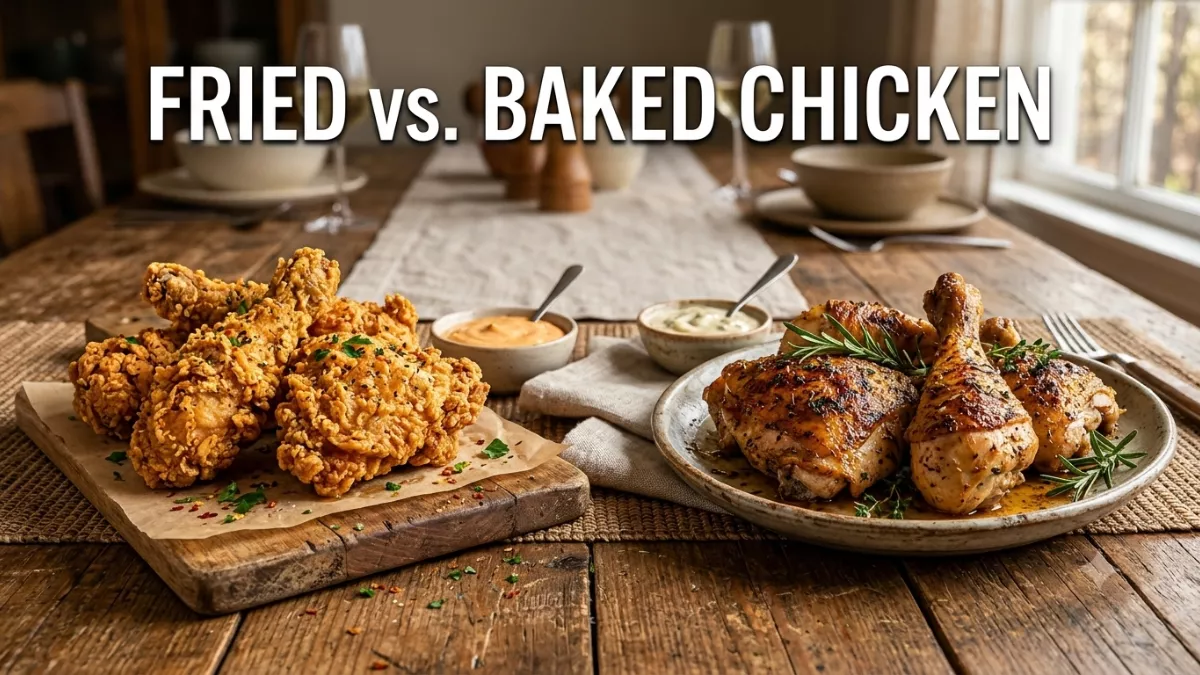
Chicken is one of the most versatile ingredients in home cooking, and there are countless ways to prepare it. However, two popular methods continue to stand out: crispy fried chicken and oven-baked chicken. Both can produce delicious meals, but they differ significantly in texture, flavor, preparation time, and the amount of oil required.
Crispy fried chicken is known for its crunchy coating, golden-brown exterior, and juicy interior. Oven-baked chicken, on the other hand, offers a convenient alternative that can use less added oil while still delivering excellent flavor. The better choice depends on what you value most, whether that is restaurant-style crispiness, everyday convenience, or a cooking method that fits your family’s dietary preferences.
If you are deciding which method to use for your next family dinner, this guide compares fried chicken and oven-baked chicken in detail. You will learn how each method works, what affects its taste and texture, how the nutritional differences arise, and how to make either version delicious at home.
What Is Crispy Fried Chicken?
Crispy fried chicken is typically prepared by coating chicken pieces in seasoned flour, breadcrumbs, or a batter before cooking them in hot oil. Depending on the recipe, the chicken may be marinated in buttermilk, seasoned milk, yogurt, or a spice mixture before it is coated.
During frying, the hot oil transfers heat rapidly to the coating. Moisture escapes from the outer layer, helping it become crisp and golden. Meanwhile, the chicken cooks inside, developing a tender texture when it is prepared correctly.
Why Fried Chicken Is So Popular
One of the biggest reasons people love fried chicken is its distinctive texture. The contrast between the crunchy exterior and juicy meat makes every bite satisfying. Seasonings such as paprika, black pepper, garlic powder, onion powder, and cayenne can add depth and complexity.
Frying also encourages browning, creating a rich aroma and a savory flavor that many people associate with classic comfort food.
Common Types of Fried Chicken
There are several popular variations, including:
- Southern-style fried chicken: Often seasoned with a flour coating and fried until golden and crisp.
- Buttermilk fried chicken: Marinated in seasoned buttermilk to help tenderize the meat and improve coating adhesion.
- Spicy fried chicken: Uses cayenne pepper, chili powder, or hot sauce for additional heat.
- Japanese karaage: Usually features bite-sized chicken pieces marinated in savory seasonings and coated with starch before frying.
- Crispy chicken tenders: Made with strips of chicken coated in flour, breadcrumbs, or another crunchy mixture.
Each style has its own flavor and texture, but the defining characteristic is a crisp outer layer produced by frying in hot oil.
What Is Oven-Baked Chicken?
Oven-baked chicken is prepared by cooking chicken in a heated oven instead of submerging it in hot oil. It can be seasoned with herbs, spices, marinades, sauces, or a breadcrumb coating.
Baking works through hot air and heat transferred from the baking dish or tray. The chicken gradually cooks, while its surface browns when the temperature and cooking conditions are suitable.
Oven-baked chicken can be prepared with skin-on thighs, skinless breasts, drumsticks, wings, or breaded cutlets. Each cut behaves differently, so the ideal temperature and cooking time depend on the recipe and the size of the pieces.
Why People Choose Oven-Baked Chicken
Oven-baked chicken is convenient because it requires less active attention than stovetop frying. Once the chicken is arranged on a baking tray, the oven does most of the work.
Another advantage is that baking generally requires less added oil. A light coating of oil can help with browning and prevent a breadcrumb crust from becoming dry, but the chicken does not need to be immersed in oil.
Baking also makes it easy to prepare chicken alongside vegetables or potatoes, creating a complete meal with fewer cooking steps.
Popular Oven-Baked Chicken Recipes
Some common options include:
- Herb-roasted chicken: Seasoned with rosemary, thyme, garlic, and black pepper.
- Crispy oven-baked chicken tenders: Coated in seasoned breadcrumbs and baked until golden.
- Baked BBQ chicken: Brushed with barbecue sauce during the later part of cooking.
- Lemon pepper chicken: Prepared with lemon juice, black pepper, and aromatic herbs.
- Parmesan-crusted chicken: Coated with breadcrumbs and Parmesan cheese for a savory crust.
With the right technique, oven-baked chicken can be flavorful, tender, and crisp on the outside.
1. Taste: Which Chicken Has Better Flavor?
Taste is subjective, but the cooking method has a noticeable influence on the final result.
The Flavor of Fried Chicken
Fried chicken often develops a rich, savory flavor because its coating browns rapidly in hot oil. The seasoning in the crust contributes significantly to the overall taste, while the contrast between the crisp coating and moist meat makes it especially appealing.
A well-seasoned flour mixture or marinade can give fried chicken layers of flavor. However, excessive oil temperature can burn the coating before the interior is cooked, while oil that is too cool may produce a greasy result.
The Flavor of Oven-Baked Chicken
Oven-baked chicken has a different flavor profile. Herbs, garlic, lemon, paprika, mustard, and marinades can provide a fresh, aromatic taste.
Roasting can also develop appealing browned flavors, particularly when the chicken is placed in a sufficiently hot oven and its surface is not overly wet. Skin-on chicken can become flavorful and crisp as its fat renders during cooking.
Which tastes better? Fried chicken usually wins for people who prefer a crunchy, richly browned coating. Oven-baked chicken may be the better option for those who enjoy roasted herbs, lighter seasoning, and the natural flavor of the meat.
2. Texture: Crunchy or Tender?
Texture is one of the most noticeable differences between these two cooking methods.
Why Fried Chicken Gets Crispy
Hot oil transfers heat efficiently to the coating, allowing its surface to lose moisture and develop a crunchy structure. A well-prepared coating can remain crisp while the chicken inside stays moist.
The results depend on several factors, including oil temperature, coating thickness, moisture on the chicken’s surface, and the amount of chicken added to the pan at once.
Overcrowding the pan lowers the oil temperature and can make the coating less crisp. Placing freshly fried chicken directly on a flat plate may also trap steam underneath, softening the crust.
Can Oven-Baked Chicken Be Crispy?
Yes. Oven-baked chicken can develop a crisp exterior, especially when it has a dry, well-seasoned surface and sufficient airflow.
For breaded chicken, a light coating of oil on the breadcrumbs helps encourage browning. Baking on a wire rack set over a tray allows hot air to circulate around the chicken and reduces moisture buildup underneath.
For skin-on pieces, patting the skin dry before seasoning can help it brown more effectively. A hot oven also encourages crispness, although cooking time must be adjusted to the size and type of chicken.
Texture winner: Fried chicken generally delivers the most consistent crunch. Oven-baked chicken can come close with the right technique, but its coating may be less crunchy than a traditionally fried version.
3. Nutrition: Which Is the Better Choice?
The nutritional difference between fried and baked chicken depends on the chicken cut, whether the skin is left on, the coating, the portion size, and how much oil is absorbed during cooking.
Fried Chicken and Added Fat
Deep-fried chicken is cooked in oil, and some of that oil can remain in the coating or be absorbed by the food. A thick flour coating or batter may increase the amount of fat and carbohydrates in the finished dish.
However, not all fried chicken has the same nutritional profile. Portion size, the type of oil, coating thickness, and cooking technique all matter.
Oven-Baked Chicken and Oil Use
Oven-baked chicken generally allows you to control the amount of added oil more easily. A small amount of olive oil or another cooking oil may be enough to help seasonings adhere and improve browning.
Skinless, breaded chicken baked with a modest amount of oil can be a practical choice for people looking to reduce added fat. Skin-on baked chicken may contain more fat than skinless chicken, so the cut still matters.
What About Protein?
Both fried and oven-baked chicken provide protein. Chicken is also a source of nutrients such as vitamin B6, niacin, selenium, and phosphorus.
The protein content depends primarily on the cut and serving size. Breadings, sauces, and cooking-related moisture loss affect the nutritional values measured per serving, so it is best to compare similar portions prepared with similar ingredients.
Nutrition winner: Oven-baked chicken is generally the easier option for reducing added oil. However, the healthiest choice depends on the complete recipe and portion size rather than the cooking method alone.
4. Cooking Time and Convenience
When preparing dinner after a busy day, convenience can be just as important as flavor.
How Long Does Fried Chicken Take?
Fried chicken may cook relatively quickly because hot oil transfers heat efficiently. Small boneless pieces and thin tenders often cook faster than large bone-in pieces.
However, frying requires more active attention. You need to monitor the oil temperature, turn the chicken when appropriate, and cook in batches if the pan is small. You must also handle hot oil carefully and clean up splashes afterward.
How Long Does Oven-Baked Chicken Take?
Baking typically involves more unattended cooking time, although preheating the oven adds to the overall preparation period.
Thin chicken cutlets may cook fairly quickly, while bone-in thighs and drumsticks take longer. The exact time depends on the cut, thickness, oven temperature, and whether the chicken starts cold or at room temperature.
The main advantage is that you can prepare side dishes while the chicken cooks.
Convenience winner: Oven-baked chicken is usually easier for family meals because it requires less continuous attention and can be cooked alongside vegetables.
5. Which Method Is More Budget-Friendly?
Both methods can be affordable, particularly when you cook at home using basic ingredients.
The Cost of Fried Chicken
Fried chicken requires cooking oil, and deep-frying can use a substantial amount of oil in the cooking vessel. Some oil may be reusable if it is handled, filtered, stored, and discarded appropriately, but its lifespan depends on how it was used and how much it has deteriorated.
Additional ingredients such as buttermilk, flour, breadcrumbs, and spices can affect the overall cost.
The Cost of Oven-Baked Chicken
Baked chicken generally requires less oil, which may reduce ingredient costs. However, running an oven uses energy, and the cost depends on the appliance, cooking time, and local electricity or gas prices.
Buying family packs of chicken, choosing affordable cuts, and using seasonal vegetables can help keep either recipe economical.
Budget winner: There is no universal winner. Oven baking often uses less oil, while the total cost depends on the chicken cut, energy use, ingredient prices, and how many portions you prepare.
6. Which Method Is Better for Families?
For family dinners, the best method is the one that fits your schedule, preferences, and meal plan.
Fried chicken is a popular choice for weekend meals, picnics, celebrations, and occasions when a crunchy coating is the main attraction. It can also be served in sandwiches, wraps, or homemade chicken burgers.
Oven-baked chicken works well for everyday dinners because it is easy to season in different ways and can be prepared with vegetables in the same oven. It also makes portioning and meal preparation straightforward.
For families with children, consider offering sauces separately and using mild seasonings. Serve chicken with a variety of vegetables, grains, or potatoes to create a balanced meal.
Remember that deep-fried foods can fit into an overall varied diet, but choosing baked options more frequently is one way to reduce added oil without giving up chicken altogether.
7. How to Make Crispy Fried Chicken at Home
If you want restaurant-style crunch, technique matters as much as the ingredients.
Step 1: Season the Chicken
Use salt, black pepper, garlic powder, paprika, and other preferred spices. A buttermilk marinade can add flavor and help the coating adhere.
Step 2: Prepare the Coating
Mix flour with seasonings. For a more textured crust, some recipes combine flour with a little cornstarch. Dredge the chicken evenly, pressing the coating gently onto the surface.
Step 3: Heat the Oil
Use a suitable cooking oil and maintain a steady temperature, often around 325–350°F (163–177°C), depending on the recipe and chicken pieces. Avoid overcrowding the pan.
Step 4: Fry in Batches
Lower the chicken carefully into the oil and cook until the coating is golden and the thickest part reaches 165°F (74°C). Large bone-in pieces may need more time than small boneless pieces.
Step 5: Drain Properly
Transfer the chicken to a wire rack rather than leaving it in a pile on paper towels or a flat plate. This helps steam escape and preserves the crust.
Never leave hot oil unattended, and allow it to cool completely before handling it for storage or disposal.
8. How to Make Crispy Oven-Baked Chicken
You can achieve an appealing crunch in the oven with a few simple adjustments.
Step 1: Dry and Season the Chicken
Pat the chicken dry with paper towels. Season it with salt, pepper, garlic powder, paprika, or your preferred spice blend.
Step 2: Create a Crisp Coating
For breaded chicken, dip the pieces in beaten egg and coat them in seasoned breadcrumbs or panko. Press the crumbs gently onto the surface.
Step 3: Add a Little Oil
Lightly brush or spray the coating with oil. This helps the breadcrumbs brown and become crisp without requiring deep-frying.
Step 4: Bake with Air Circulation
Preheat the oven, arrange the chicken in a single layer, and use a wire rack over a baking tray when appropriate. Avoid crowding the pieces.
Step 5: Check the Temperature
Bake until the exterior is golden and the thickest part of each piece reaches 165°F (74°C). Allow a brief rest before serving.
For extra crispness, avoid covering the chicken immediately after baking because trapped steam can soften the coating.
9. Common Mistakes to Avoid
Whether you fry or bake chicken, a few mistakes can affect the final result.
- Overcooking the chicken: Excessive cooking can make the meat dry. Use a thermometer instead of relying only on appearance.
- Using too much coating: An overly thick layer may become heavy or separate from the chicken.
- Overcrowding the pan: Crowding can interfere with browning and airflow.
- Skipping seasoning: Seasoning the chicken and coating appropriately helps create a more flavorful dish.
- Serving baked chicken directly from a covered container: Trapped steam can soften a crispy crust.
- Using oil at the wrong temperature: Oil that is too cool can encourage a greasy coating, while excessive heat can burn the exterior before the inside is done.
Good preparation, consistent cooking temperatures, and proper handling can make a noticeable difference.
Frequently Asked Questions
1. Is fried chicken healthier than oven-baked chicken?
Oven-baked chicken is generally easier to prepare with less added oil. Fried chicken may contain more fat because some cooking oil remains in the food. However, the overall nutritional profile depends on the cut, skin, coating, portion size, and recipe.
2. Can oven-baked chicken be as crispy as fried chicken?
It can become very crispy, particularly when you use panko breadcrumbs, lightly coat them with oil, and bake the chicken on a rack with good airflow. Traditional deep-frying usually produces a more consistently crunchy coating.
3. What temperature should chicken reach to be safe to eat?
Chicken should reach an internal temperature of 165°F (74°C). Check the thickest part with a food thermometer, avoiding contact with bone when measuring bone-in pieces.
4. Which method is better for meal preparation?
Oven-baked chicken is often more convenient for meal preparation because you can cook several portions at once and prepare vegetables alongside it. Fried chicken can also be prepared ahead, but its coating may lose crispness during refrigeration.
5. Can I make fried chicken without deep-frying?
Yes. You can shallow-fry chicken in a smaller amount of oil or use an air fryer. Both methods differ from traditional deep-frying, and the final texture will depend on the recipe and equipment.
Final Verdict: Crispy Fried Chicken vs. Oven-Baked Chicken
So, which is better: crispy fried chicken or oven-baked chicken?
The answer depends on what you want from your meal. Fried chicken is the stronger choice when maximum crunch, a golden coating, and classic comfort-food flavor are your priorities. Oven-baked chicken is a practical option when you want to use less added oil, simplify cleanup, and prepare a convenient family dinner.
For many households, the best approach is to enjoy both methods in different situations. Make crispy fried chicken when you want an indulgent, crunchy meal, and choose oven-baked chicken for a convenient weeknight dinner.
With the right seasonings, suitable cooking temperatures, and careful preparation, both methods can deliver delicious results. Ultimately, great chicken is not only about how it is cooked but also about the ingredients, technique, and care that go into every meal.