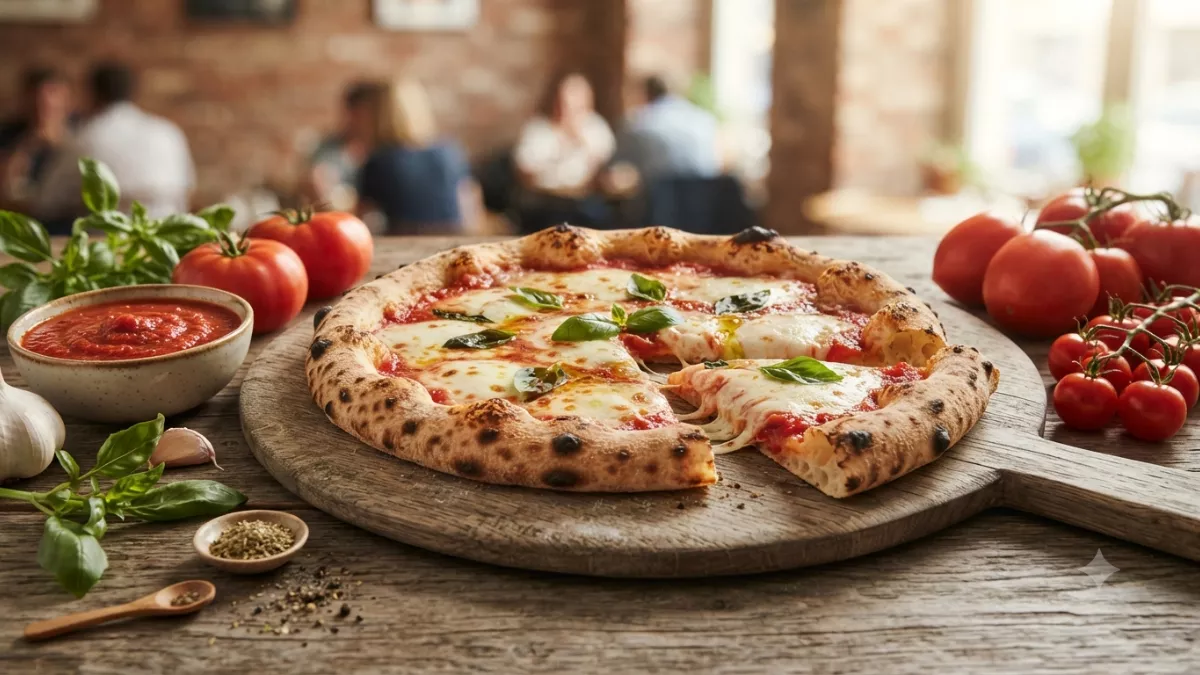
Tomato sauce may look like a simple layer between pizza dough and cheese, but it plays one of the most important roles in determining how a pizza tastes.
It adds acidity, sweetness, moisture, aroma, color, and savory depth. It also affects how the cheese tastes and how the crust behaves during baking. Even when two pizzas use the same dough and cheese, changing the tomato sauce can make them taste completely different.
A sauce made with bright, acidic tomatoes can give pizza a fresh and lively character. A sweeter sauce can create a softer, richer flavor. A heavily seasoned sauce can make herbs and spices more noticeable, while a simple tomato sauce can allow the crust and cheese to take center stage.
So, how does tomato sauce change the flavor of a pizza?
The answer involves several factors, including tomato variety, acidity, sweetness, seasoning, texture, cooking method, moisture, and the amount of sauce used.
In this guide, we’ll explore how tomato sauce influences pizza from the first bite to the last and explain how to choose and use sauce for a more balanced pizza.
Why Tomato Sauce Matters So Much on Pizza
Pizza is built around a balance of flavors.
The crust provides wheat, toasted, and sometimes slightly sweet flavors. Cheese contributes fat, salt, creaminess, and richness. Toppings add their own combination of savory, spicy, sweet, earthy, or fresh notes.
Tomato sauce acts as a bridge between these ingredients.
Its acidity can cut through the richness of cheese. Its natural sweetness can complement the browned crust. Its moisture helps keep the pizza from becoming excessively dry.
Without tomato sauce, many traditional pizzas would taste much richer and less balanced.
That’s why sauce isn’t simply a topping.
It is one of the ingredients that determines the overall character of the pizza.
1. Tomato Acidity Adds Brightness
One of the most important characteristics of tomato sauce is acidity.
Tomatoes naturally contain organic acids, including citric and malic acids.
These acids create the tangy quality associated with tomatoes.
When you eat pizza, the acidity of the sauce helps balance fatty ingredients such as cheese and meat toppings.
Imagine a pizza covered with rich mozzarella and pepperoni.
Without acidity, the combination could taste heavy.
Tomato sauce introduces a bright, slightly sharp flavor that refreshes the palate.
This is why a balanced tomato sauce can make a rich pizza feel more enjoyable.
Too much acidity can become unpleasant
Acidity is useful, but too much can dominate the pizza.
If a sauce tastes excessively sour, it can overpower the cheese and crust.
The goal isn’t maximum acidity.
The goal is balance.
A good pizza sauce should provide enough acidity to brighten the pizza without making every bite taste sharply sour.
2. Natural Tomato Sweetness Balances the Sauce
Tomatoes also contain natural sugars.
These sugars contribute sweetness, particularly when tomatoes are ripe.
Sweetness is important because it balances acidity.
A sauce that contains both natural sweetness and acidity can taste more rounded than one dominated by a single flavor.
Tomato sweetness also works well with browned pizza crust.
During baking, the crust develops toasted and roasted flavors. Slightly sweet tomato sauce can complement those flavors.
Does pizza sauce need added sugar?
Not necessarily.
Many tomato sauces can achieve good balance without added sugar, particularly when made with flavorful, ripe tomatoes.
The need for added sugar depends on the tomatoes, recipe, cooking method, and personal preference.
If a sauce tastes overly acidic, adjusting the overall recipe may be more useful than simply adding a large amount of sugar.
3. Tomato Variety Changes the Flavor
Not all tomatoes taste the same.
Different tomato varieties can vary in sweetness, acidity, texture, aroma, and water content.
This means the choice of tomatoes can have a noticeable effect on pizza sauce.
Fresh tomatoes
Fresh tomatoes can provide bright, fresh flavors when they are ripe and flavorful.
However, their quality can vary significantly depending on season and growing conditions.
Canned tomatoes
High-quality canned tomatoes offer consistency throughout the year.
They are commonly used in pizza kitchens because they provide a reliable flavor and convenient preparation.
Some canned tomatoes are whole, while others are crushed, diced, or pureed.
Each format creates a slightly different sauce texture.
San Marzano-style tomatoes
San Marzano-style tomatoes are widely associated with pizza sauce.
However, it’s important to distinguish between tomatoes grown in the San Marzano region and products simply labeled “San Marzano-style.”
The exact product, growing region, processing method, and quality can all affect flavor.
Ultimately, the best tomato is one that produces a balanced sauce for your particular pizza.
4. Tomato Sauce Adds Umami and Savory Depth
Tomatoes naturally contain glutamates, compounds associated with umami.
Umami is often described as a savory or deeply satisfying taste.
This makes tomato sauce particularly effective with cheese and meat toppings.
Cheese already contains compounds that contribute savory flavor.
When combined with tomato sauce, the result can taste deeper and more complete.
This is one reason a simple combination of dough, tomato sauce, mozzarella, and basil can taste surprisingly complex despite using only a few ingredients.
5. Seasonings Can Completely Change Pizza Sauce
Tomatoes provide the foundation, but seasonings determine much of the sauce’s personality.
Common pizza sauce ingredients include:
- Salt
- Garlic
- Oregano
- Basil
- Black pepper
- Olive oil
- Chili flakes
Each one contributes something different.
Garlic
Garlic adds a strong aromatic and savory quality.
Oregano
Oregano gives pizza sauce a distinctive herbal character, especially in many American-style preparations.
Basil
Basil provides a fresh, aromatic quality that pairs naturally with tomato and mozzarella.
Chili flakes
Chili can introduce warmth and spice without changing the basic tomato character.
Olive oil
Olive oil adds richness and can help carry aromatic compounds throughout the sauce.
The amount of seasoning matters.
Too much can hide the flavor of the tomatoes.
6. Raw Sauce and Cooked Sauce Taste Different
The way tomato sauce is prepared can change its flavor significantly.
Some pizza makers use tomatoes with minimal cooking.
Others simmer the sauce before applying it to the dough.
Raw-style sauce
A minimally cooked tomato sauce can retain a fresh, bright tomato character.
It may taste lighter and more acidic.
This approach can work particularly well with pizzas that bake very quickly at high temperatures.
Cooked sauce
Cooking tomatoes can change their flavor and texture.
A cooked sauce may become:
- Richer
- Thicker
- Sweeter-tasting
- More concentrated
- More developed in flavor
Long cooking can also reduce water content.
The ideal method depends on the pizza style.
7. Sauce Thickness Affects the Eating Experience
Tomato sauce isn’t only about flavor.
Its thickness also affects texture.
A very thin sauce spreads easily and provides even tomato flavor without adding much weight.
A thick sauce can provide a more concentrated tomato taste but may also add additional moisture and density.
If too much thick sauce is used, the pizza can feel heavy.
If too little sauce is used, the pizza may taste dry or overly dominated by cheese.
Balance is the key.
8. The Amount of Sauce Changes the Entire Pizza
Even an excellent sauce can become a problem if you use too much.
Excess sauce adds moisture.
That can make the center of the pizza softer and potentially interfere with crisping.
It can also overwhelm the cheese and toppings.
On the other hand, too little sauce can leave the pizza tasting dry.
The right amount depends on the diameter, thickness, and style of the pizza.
Thin pizzas generally benefit from controlled sauce application.
The goal is to create a thin, even layer that covers the dough without flooding it.
9. Tomato Sauce Affects the Cheese
One of the most important relationships on pizza is the relationship between sauce and cheese.
Cheese is rich, creamy, and fatty.
Tomato sauce is acidic and bright.
Together, they create balance.
Acidity can help cut through the richness of melted cheese.
Meanwhile, the cheese can soften the sharpness of the tomato sauce.
This is an example of why pizza works so well as a combination of ingredients rather than as isolated components.
10. Tomato Sauce Affects the Crust
The sauce also interacts directly with the dough.
Because tomato sauce contains water, it can influence crust texture.
If too much sauce is used, the dough may retain more moisture during baking.
This can make the center softer.
A thin layer of sauce gives the crust a better opportunity to develop crispness while still providing enough tomato flavor.
This is especially important for thin-crust pizzas.
11. Salt Makes Tomato Sauce Taste More Complete
Salt is one of the simplest but most important seasonings in pizza sauce.
Tomatoes without sufficient seasoning can taste flat.
A properly salted sauce can make the natural sweetness, acidity, and savory qualities of the tomatoes more noticeable.
Salt also affects how we perceive other flavors.
It can reduce the perception of excessive bitterness and make sweetness and aroma seem more pronounced.
But too much salt can make the sauce harsh.
As with every ingredient, moderation matters.
12. Garlic Changes the Sauce’s Personality
Garlic is common in many pizza sauces, but it doesn’t belong in every style.
Raw or lightly cooked garlic can produce a sharp, pungent flavor.
Cooked garlic becomes softer and sweeter.
This difference can significantly change the character of a pizza.
If you’re making a simple cheese pizza, a small amount of garlic may provide additional depth.
If the pizza already contains strongly seasoned toppings, however, excessive garlic may make the overall flavor too intense.
13. Herbs Can Make Pizza Taste More Aromatic
Herbs are another way to customize tomato sauce.
Oregano is particularly associated with many American pizza sauces.
Basil is strongly associated with classic Italian combinations.
Rosemary, thyme, and other herbs can also be used in creative recipes.
Fresh and dried herbs behave differently.
Dried herbs often have a concentrated aroma and can stand up well to cooking.
Fresh herbs generally provide a brighter, more delicate aroma.
The choice depends on the sauce and pizza style.
14. Why Simple Tomato Sauce Can Taste Better
Pizza sauce doesn’t necessarily need a long list of ingredients.
In fact, adding too many ingredients can make it harder to identify the tomato itself.
A simple sauce might contain only:
- Tomatoes
- Salt
- Garlic
- Herbs
- Olive oil
This can be enough to create a flavorful base.
When the tomatoes are high quality, simplicity can allow their natural character to remain noticeable.
This is especially useful for pizzas with high-quality cheese and fresh toppings.
15. Sauce and Pizza Toppings Must Work Together
The sauce should complement the toppings.
For example, a spicy pepperoni pizza already contains salt, fat, spice, and strong savory flavors.
A bright tomato sauce can balance those qualities.
A mushroom pizza has earthy flavors.
A tomato sauce with fresh herbs can provide contrast.
A vegetable pizza may benefit from a sauce with enough acidity to keep the overall flavor lively.
This is why the best pizza sauces aren’t necessarily the strongest sauces.
They’re sauces that fit the rest of the pizza.
16. Why Restaurant Pizza Sauce Can Taste Different
Restaurant pizza can taste different from homemade pizza for several reasons.
Restaurants may use:
- Specific tomato varieties
- Commercially consistent ingredients
- Large-batch recipes
- Professional ovens
- High-temperature baking
- Carefully controlled sauce quantities
- Established seasoning formulas
The oven also matters.
A pizza baked very quickly at high temperature may retain a different tomato character from a pizza baked longer in a home oven.
This means sauce cannot be evaluated separately from the baking process.
17. How to Make a Simple Pizza Tomato Sauce
A basic homemade sauce can be surprisingly easy.
Start with quality canned tomatoes or ripe fresh tomatoes.
If using whole canned tomatoes, crush them by hand or blend them lightly depending on the desired texture.
Add salt gradually.
Then consider small amounts of garlic, oregano, basil, or olive oil.
Taste the sauce before using it.
Look for balance between:
- Acidity
- Sweetness
- Saltiness
- Tomato flavor
- Herb aroma
If the sauce tastes good before baking, it provides a useful starting point for good pizza.
18. Should Pizza Sauce Be Cooked Before Baking?
It depends on the recipe and pizza style.
A simple uncooked sauce can work extremely well when the pizza will bake quickly at high temperature.
A cooked sauce may be useful when you want a thicker, more concentrated flavor.
Neither approach is automatically superior.
The important thing is to match the sauce preparation to the baking method.
A very thick cooked sauce may not be ideal for a pizza that already has a long bake and relatively dry toppings.
A very watery raw sauce may be difficult to manage on a thin crust.
19. Common Pizza Sauce Mistakes
Using too much sauce
This can create a soggy center.
Using too little seasoning
The sauce may taste flat.
Over-seasoning
Too many herbs or spices can hide the tomato flavor.
Using poor-quality tomatoes
The sauce can taste overly acidic, watery, or bland.
Making the sauce too watery
Excess moisture can interfere with crust crispness.
Making the sauce too thick
An overly concentrated layer can make the pizza heavy.
Forgetting the toppings
The sauce should complement the rest of the pizza.
How to Build a Balanced Pizza Sauce
A useful way to think about sauce is to consider five major characteristics:
Acidity: Provides brightness.
Sweetness: Balances acidity.
Salt: Enhances flavor.
Umami: Adds savory depth.
Aroma: Comes from tomatoes, herbs, garlic, and other ingredients.
A sauce doesn’t need maximum levels of all five.
It needs the right relationship between them.
That balance is what allows the sauce to support the pizza rather than dominate it.
How Tomato Sauce Changes Different Pizza Styles
Different pizza styles use tomato sauce in different ways.
New York-style pizza
Often uses a seasoned tomato sauce that provides a noticeable but balanced tomato flavor.
Neapolitan-style pizza
Typically emphasizes high-quality tomatoes and a relatively simple preparation.
Chicago-style pizza
Uses tomato sauce as part of a much deeper, layered pizza structure.
Detroit-style pizza
Often uses tomato sauce in ways that complement the thick crust and generous cheese.
The sauce therefore becomes part of the identity of each pizza style.
Frequently Asked Questions
1. Why is tomato sauce important on pizza?
Tomato sauce adds acidity, sweetness, moisture, aroma, and savory depth. It also balances the richness of cheese and toppings.
2. Should pizza sauce be sweet?
Pizza sauce does not need to be highly sweet. Good tomatoes naturally contain sugar, and the ideal sauce generally balances sweetness with acidity and savory flavors.
3. Is homemade pizza sauce better than store-bought sauce?
Not necessarily. A homemade sauce gives you more control over ingredients and seasoning, while a quality store-bought sauce can provide convenience and consistency.
4. Should tomato sauce be cooked before putting it on pizza?
It depends on the pizza style and baking temperature. Both cooked and minimally cooked sauces can work well when properly matched to the pizza.
5. How much sauce should I put on a pizza?
Use enough to create an even layer of tomato flavor without flooding the dough. Too much sauce can increase moisture and make the center soft.
6. What tomatoes are best for pizza sauce?
High-quality tomatoes with a good balance of sweetness, acidity, and flavor work well. Canned tomatoes can provide excellent consistency, especially outside tomato season.
Final Thoughts
Tomato sauce does much more than add a red layer to pizza.
It provides acidity that balances cheese, natural sweetness that complements browned crust, umami that adds depth, moisture that affects texture, and aroma that helps define the pizza’s personality.
Small changes in tomato variety, seasoning, cooking method, thickness, and quantity can create surprisingly different results.
The best pizza sauce isn’t necessarily the sweetest, richest, or most heavily seasoned.
It is the sauce that works in harmony with the dough, cheese, toppings, and oven.
Once you understand how tomato sauce changes the flavor of a pizza, you can make more deliberate choices about every part of your recipe—and create a pizza that tastes balanced from the crust to the final bite.