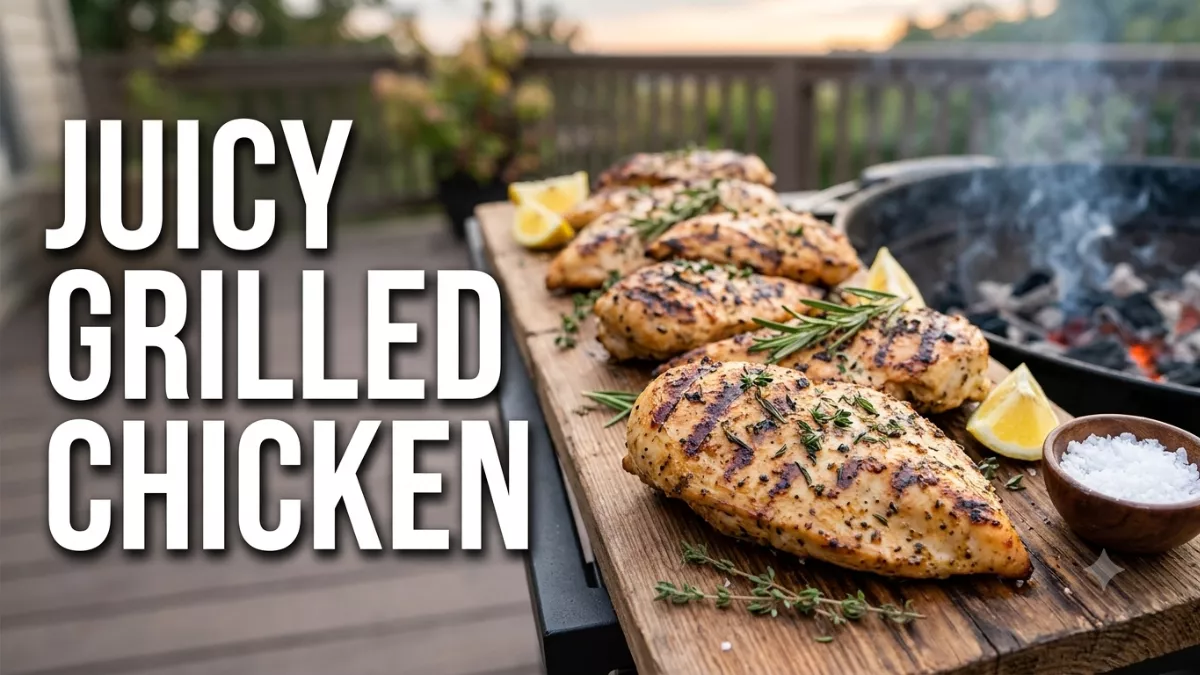
Grilled chicken is one of the most versatile meals you can prepare at home. It works perfectly for summer barbecues, family dinners, meal preparation, and casual weekend cookouts. When prepared correctly, grilled chicken has a beautifully browned exterior, a smoky flavor, and a tender, juicy center.
However, getting those results consistently can be challenging. Chicken breasts can dry out quickly, marinades sometimes fail to deliver enough flavor, and high grill temperatures can leave the outside overcooked while the inside is still underdone.
The good news is that making juicy grilled chicken does not require complicated ingredients or professional grilling equipment. The secret lies in choosing the right cut, preparing the meat properly, using an effective marinade, managing grill temperature, and knowing exactly when the chicken is done.
In this guide, you will learn how to make juicy grilled chicken every time with a simple recipe and practical techniques that work on gas grills, charcoal grills, and stovetop grill pans. Whether you are cooking for your family or hosting a backyard barbecue, these tips will help you prepare flavorful chicken with confidence.
Why Does Grilled Chicken Sometimes Turn Out Dry?
Before learning how to make juicy grilled chicken, it helps to understand why chicken becomes dry in the first place.
Chicken contains water and proteins that change as the meat heats up. When chicken is exposed to excessive heat or cooked for too long, its muscle proteins tighten and squeeze out moisture. This is especially noticeable with boneless, skinless chicken breasts because they contain relatively little fat and can overcook quickly.
Several common mistakes contribute to dry grilled chicken:
- Cooking over excessively high heat: The outside may burn before the center cooks properly.
- Using uneven pieces: Thin sections can dry out while thicker sections are still cooking.
- Skipping seasoning or preparation: Poor preparation can lead to bland, unevenly seasoned meat.
- Cooking without checking the temperature: Guessing can result in overcooking or unsafe undercooking.
- Cutting the chicken immediately: Resting briefly helps retain more of the juices during slicing.
Fortunately, each of these problems can be addressed with a few straightforward techniques.
Ingredients for Juicy Grilled Chicken
This simple recipe uses everyday ingredients that enhance the natural flavor of chicken without overpowering it.
Ingredients
- 4 boneless, skinless chicken breasts, approximately 6–8 ounces each
- 3 tablespoons olive oil
- 2 tablespoons fresh lemon juice
- 3 garlic cloves, minced
- 1 teaspoon paprika
- 1 teaspoon dried oregano
- 1 teaspoon onion powder
- 1 teaspoon salt, adjusted to taste
- ½ teaspoon freshly ground black pepper
- 1 teaspoon Dijon mustard, optional
You can use boneless chicken thighs instead of chicken breasts. Thighs generally contain more fat and tend to remain moist over a wider range of cooking conditions, although they still need to be cooked safely.
Step 1: Choose the Right Chicken Cut
The cut of chicken you select can make a significant difference in the final result.
Boneless, Skinless Chicken Breasts
Chicken breasts are lean, mild in flavor, and easy to incorporate into salads, sandwiches, wraps, and rice bowls. Their main disadvantage is that they can become dry if overcooked.
For even cooking, select breasts of similar size and thickness. If one end is much thicker than the other, gently pound the chicken to create a more uniform thickness.
Boneless Chicken Thighs
Chicken thighs are often an excellent option for beginners because their additional fat helps maintain a juicy texture. They also have a richer flavor that pairs well with barbecue sauce, garlic marinades, and smoky seasonings.
Bone-In Chicken Pieces
Bone-in thighs and drumsticks can be delicious on the grill, but they generally require longer cooking times. They are often easier to manage with a two-zone grilling setup, where one side of the grill provides direct heat and the other provides indirect heat.
Best choice for beginners: Boneless chicken thighs are forgiving and flavorful, while evenly thick chicken breasts are ideal when you prefer a leaner cut.
Step 2: Prepare the Chicken for Even Cooking
One of the simplest ways to improve grilled chicken is to prepare the meat before it reaches the grill.
First, remove the chicken from its packaging and pat it dry with paper towels if needed. Do not rinse raw chicken under running water, as splashing can spread bacteria around the sink and nearby surfaces.
If the chicken breasts are unevenly thick, place them between sheets of food-safe plastic wrap or inside a clean food-safe bag. Gently pound the thicker sections until the pieces are reasonably uniform.
This step helps the chicken cook at a more consistent rate, reducing the risk of dry edges and an undercooked center.
You can also trim excess fat or loose pieces that may burn during grilling. Keep raw chicken and its juices away from cooked food, vegetables, and clean utensils.
Step 3: Make a Flavorful Chicken Marinade
A good marinade adds flavor and can improve the surface texture of grilled chicken. The combination of oil, lemon juice, garlic, and herbs in this recipe creates a balanced flavor without requiring specialty ingredients.
How to Prepare the Marinade
In a medium bowl, whisk together the olive oil, lemon juice, minced garlic, paprika, oregano, onion powder, salt, black pepper, and optional Dijon mustard.
Place the chicken in a food-safe container or resealable bag. Add the marinade and turn the chicken until every piece is coated.
Refrigerate for at least 30 minutes. For stronger flavor, allow the chicken to marinate for approximately 2–4 hours.
Avoid leaving chicken in a highly acidic marinade for excessively long periods, as lemon juice can gradually change the texture of the surface.
Why the Ingredients Matter
- Olive oil: Helps distribute seasonings and promotes browning.
- Lemon juice: Adds brightness and balances the savory flavors.
- Garlic: Contributes a rich, aromatic taste.
- Paprika: Adds color and mild smoky notes.
- Oregano: Provides an earthy, herbaceous flavor.
- Salt: Seasons the meat and, when given sufficient time, helps improve moisture retention.
Always marinate raw chicken in the refrigerator, not on the kitchen counter. Discard marinade that has contacted raw chicken unless you boil it thoroughly before using it as a sauce. An even safer and simpler approach is to reserve a separate portion before adding the chicken.
Step 4: Preheat the Grill Properly
A properly preheated grill helps chicken brown instead of sticking to the cooking surface.
For boneless chicken breasts and thighs, aim for a medium-high cooking zone, approximately 375–450°F (190–230°C), depending on the grill and the thickness of the meat.
Preheat the grill with the lid closed. Clean the grates with an appropriate grill brush, then lightly oil the grates using a safe method suitable for your equipment.
Do not pour oil directly onto an open flame. If you use a paper towel to oil the grates, hold it with long-handled tongs and keep your hands away from the heat.
Direct and Indirect Heat
Direct heat means placing chicken above the flame or hottest part of the grill. It is useful for browning thinner, boneless cuts.
Indirect heat means cooking the chicken away from the hottest area. It is especially useful for thick breasts, bone-in pieces, and chicken that browns too quickly on the outside.
For charcoal grilling, arrange the coals to create a hotter area and a cooler area. On a gas grill, turn off one burner or use a lower-heat zone if your grill allows it.
Step 5: Grill the Chicken Without Drying It Out
Remove the chicken from the marinade and allow excess liquid to drip off. Discard the used marinade unless it is boiled thoroughly before being used as a sauce.
Place the chicken on the preheated grill. Avoid moving it repeatedly during the first few minutes, because uninterrupted contact helps develop browning.
For evenly thick boneless chicken breasts, begin checking for doneness after approximately 5–7 minutes on the first side, then turn and cook the other side. The total time may be around 10–16 minutes, but thickness, grill temperature, and the equipment can change it considerably.
Boneless thighs may take a similar amount of time or slightly longer, depending on their size. Thick or bone-in pieces require additional time and may benefit from indirect heat.
If the chicken begins browning too quickly, move it to a cooler part of the grill. Avoid pressing down on the meat with a spatula, because doing so does not make it cook more evenly and may release juices.
The Most Important Rule: Check the Internal Temperature
Use an instant-read food thermometer to check the thickest part of the chicken. Poultry should reach an internal temperature of 165°F (74°C) to be safe to eat.
For thin pieces, insert the thermometer from the side if necessary so the probe reaches the center. Avoid touching bone when measuring bone-in chicken.
Visual signs such as clear juices or a browned exterior are not reliable substitutes for temperature measurement.
Step 6: Let the Chicken Rest Before Slicing
After the chicken reaches the safe internal temperature, transfer it to a clean plate or cutting board.
Let boneless pieces rest for approximately 5 minutes before slicing. Larger pieces may benefit from a slightly longer rest.
Resting gives the meat a brief opportunity to settle after cooking. It can also reduce the amount of juice that escapes when you cut into the chicken.
When slicing chicken breasts, cut across the grain of the meat. This shortens the muscle fibers and helps each piece feel more tender.
Do not return cooked chicken to a plate that previously held raw chicken unless the plate has been thoroughly washed.
Step 7: Add Flavor After Grilling
A simple marinade is often enough, but finishing touches can make grilled chicken even more appealing.
Try one of these options:
- Lemon herb finish: Add fresh lemon juice, parsley, and a little olive oil.
- Garlic butter: Brush lightly with melted butter mixed with minced garlic and herbs.
- Barbecue glaze: Brush with barbecue sauce during the final few minutes of cooking, watching carefully to prevent burning.
- Spicy finish: Add a little hot sauce or crushed red pepper.
- Fresh salsa: Top sliced chicken with tomato salsa, chopped cilantro, or avocado.
For sugary sauces such as honey barbecue, apply them near the end of cooking because their sugar content can cause them to burn over direct heat.
Five Expert Tips for Juicy Grilled Chicken
1. Avoid Overcooking
The most important factor in juicy grilled chicken is controlling the final internal temperature. Once the chicken reaches 165°F (74°C), remove it from the heat rather than continuing to cook it unnecessarily.
2. Keep the Pieces a Similar Thickness
Uniform pieces cook more evenly. Gently pounding thick breasts or choosing chicken pieces of similar size makes timing easier.
3. Do Not Flip Constantly
Allow the chicken to develop color before turning it. You may need to adjust the timing if the chicken sticks, but repeated unnecessary flipping can make grilling less predictable.
4. Use a Two-Zone Grill for Thick Pieces
A cooler zone gives thick chicken time to cook through without burning its exterior. This is particularly helpful for bone-in thighs and drumsticks.
5. Keep the Grill Lid Closed When Appropriate
Closing the lid helps maintain a more stable cooking temperature and allows heat to circulate. Open it when you need to turn the chicken, move it between heat zones, or check its temperature.
Common Mistakes to Avoid
Even a good recipe can produce disappointing results if a few basic details are overlooked.
Using excessive heat: Extremely high heat can burn the exterior before the center is done. Adjust the chicken’s position instead of letting it scorch.
Skipping the marinade entirely: A marinade is optional, but seasoning the chicken properly makes a noticeable difference in flavor.
Using too much lemon juice for too long: Excessive acid exposure can make the surface mushy or firm. Follow reasonable marinating times.
Cutting the chicken immediately: Resting briefly helps reduce juice loss during slicing.
Guessing whether the chicken is cooked: A food thermometer is the most dependable way to verify safe doneness.
Reusing raw marinade as a finishing sauce: Marinade that contacted raw chicken must be discarded or boiled thoroughly before use. Reserving a clean portion beforehand is easier.
What to Serve with Juicy Grilled Chicken
Grilled chicken pairs well with a wide range of side dishes, making it easy to build a complete family dinner.
For a simple meal, serve it with grilled zucchini, roasted potatoes, corn on the cob, or a green salad. Rice, quinoa, couscous, and whole-wheat pasta also work well when you want a filling side.
If you are hosting a barbecue, consider adding coleslaw, baked beans, grilled peppers, and fresh bread. A yogurt-based herb sauce or lemon dressing can add freshness without overwhelming the chicken.
You can also use leftover grilled chicken in sandwiches, wraps, tacos, pasta salads, and grain bowls. Refrigerate leftovers promptly in shallow containers and use them within 3–4 days.
Frequently Asked Questions
1. How long should I grill chicken breasts?
Evenly thick boneless chicken breasts may take approximately 10–16 minutes over medium-high heat, depending on thickness and grill temperature. Always verify that the thickest part reaches 165°F (74°C).
2. Should I grill chicken with the lid open or closed?
For most gas and charcoal grills, keeping the lid closed helps maintain stable heat and cook the chicken more evenly. Open it when turning the pieces or checking their temperature.
3. What is the best marinade for juicy grilled chicken?
Olive oil, lemon juice, garlic, salt, pepper, paprika, and dried herbs make a versatile marinade. Refrigerate the chicken while marinating, and adjust the time based on the cut and acidity of the mixture.
4. Is chicken breast or chicken thigh better for grilling?
Chicken breast is leaner and works well when you want a mild flavor and easy slicing. Chicken thighs contain more fat and are often more forgiving, making them a good choice for beginners.
5. How can I prevent chicken from sticking to the grill?
Preheat the grill, clean the grates, lightly oil the cooking surface using a safe method, and allow the chicken to develop a seared surface before turning it. Avoid forcing the chicken off the grate if it has not released naturally.
6. Can I prepare grilled chicken ahead of time?
Yes. You can marinate the chicken in the refrigerator ahead of cooking. Cooked chicken can also be refrigerated promptly and used for meals over the next few days. Reheat leftovers to 165°F (74°C).
Conclusion
Learning how to make juicy grilled chicken every time comes down to a few reliable techniques: choose the right cut, prepare evenly thick pieces, use a flavorful marinade, preheat the grill, manage the heat, and check the internal temperature with a thermometer.
The biggest mistake to avoid is cooking chicken for longer than necessary. Once it reaches 165°F (74°C), let it rest briefly before slicing and serving. These simple steps help produce chicken that is flavorful, tender, and suitable for everything from a quick weeknight dinner to a weekend barbecue.
With the right preparation, you do not need an elaborate recipe or expensive equipment to make excellent grilled chicken. Start with the basic marinade in this guide, experiment with your favorite herbs and sauces, and develop a grilling routine that works for your kitchen and your family.