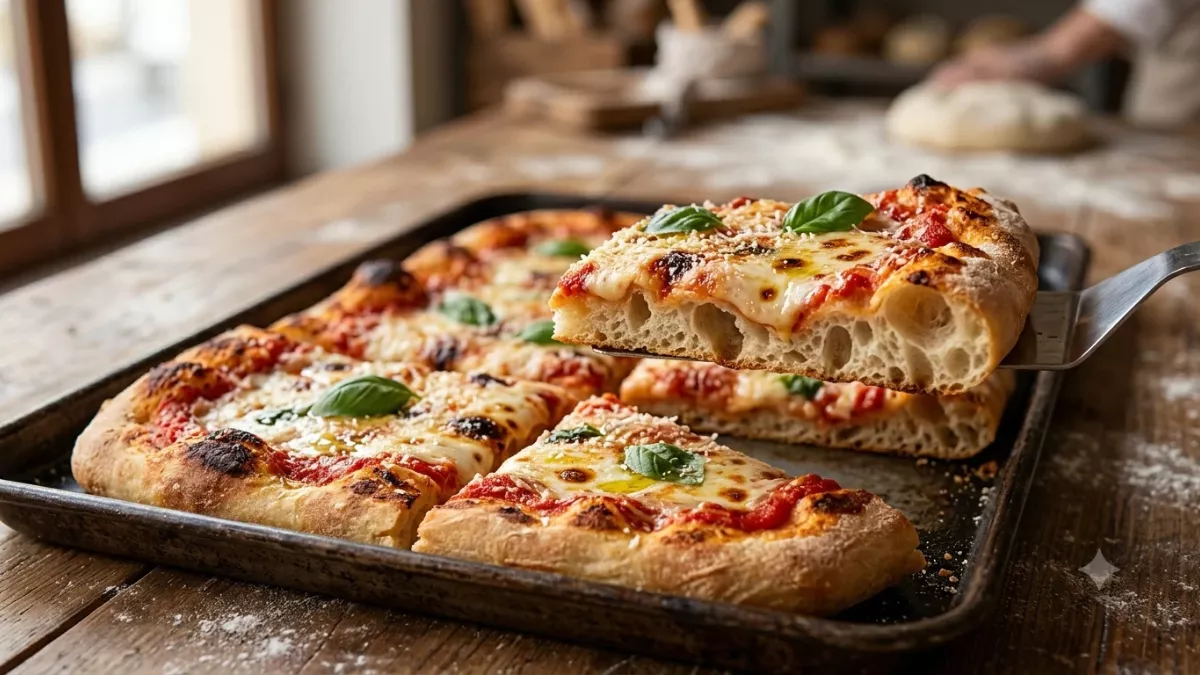
Pizza comes in many shapes, sizes, and textures, but Sicilian pizza stands out for its thick, airy crust and distinctive rectangular shape. Unlike thin Neapolitan pizza or the large, foldable slices associated with New York, Sicilian pizza often has a substantial base with a soft interior and a golden, crisp bottom. Its generous structure makes it ideal for holding flavorful toppings without losing its shape.
Although Sicilian pizza is closely associated with the Italian island of Sicily, the term can describe several related styles. Traditional Sicilian preparations vary by location, while the thick, pan-baked version popular in American pizzerias developed its own identity.
The secret behind its texture lies in the dough, fermentation, baking pan, and preparation method. These elements work together to produce a pizza that feels hearty yet remains light and pleasant to eat.
Whether you are exploring regional Italian food, choosing a new pizza style, or learning to bake pizza at home, understanding Sicilian pizza reveals why it has become a favorite among people who enjoy thick crusts and rich flavors.
In this guide, we will explore seven features that make Sicilian pizza different, from its history and dough preparation to its toppings, baking techniques, and serving style.
What Is Sicilian Pizza?
Sicilian pizza is a regional pizza tradition associated with Sicily, an island in southern Italy. It is known for preparations that can feature a thick base, a generous topping of tomato sauce, and a rustic appearance. However, Sicilian pizza is not one single recipe, and its characteristics vary across the island and in places influenced by Sicilian immigrants.
The version familiar to many American diners is a rectangular, pan-baked pizza with a thick, bread-like crust. The dough rises in an oiled baking tray, producing a soft interior and a browned underside. Depending on the recipe, the crust may be light and airy or slightly denser and chewier.
Traditional Sicilian pizza can look different. In Palermo, for example, sfincione is a well-known baked specialty with a soft base, tomato, onions, and toppings that may include anchovies, cheese, and breadcrumbs. American Sicilian pizza often uses mozzarella and other toppings in combinations that reflect local preferences.
What connects these preparations is their relationship to regional baking traditions and the use of dough as a substantial foundation for flavorful toppings.
1. The Thick, Airy Crust Makes Sicilian Pizza Special
The crust is one of the most recognizable features of Sicilian pizza, especially the American pan-baked version. Instead of creating a very thin base, the dough is allowed to rise into a thicker layer that can develop an airy interior.
This texture depends on several factors, including hydration, fermentation, gluten development, and how the dough is handled.
A relatively high-hydration dough contains more water, which can help create an open crumb when properly fermented and baked. Yeast produces gas during fermentation, and the gluten network helps retain that gas. As the pizza bakes, the dough expands and sets into a soft, structured crust.
Oil in the pan also contributes to the final texture. It helps prevent sticking and can encourage the bottom of the pizza to develop a crisp, golden surface.
The result is a satisfying contrast: a crunchy underside, a tender center, and a substantial outer edge. This combination allows Sicilian pizza to feel hearty without necessarily becoming heavy or dry.
Not every Sicilian pizza has the same thickness. Some traditional versions have a more rustic, bread-like texture, while others are lighter and more open inside.
2. Its Rectangular Shape Comes From Pan Baking
Many people associate pizza with a large round pie, but Sicilian pizza is frequently rectangular. This shape comes from the use of a rectangular baking tray rather than the flat round surface commonly used for Neapolitan or New York pizza.
The dough is stretched or pressed into the pan and allowed to rise. As it bakes, it fills the available space and develops a crust that follows the tray’s shape.
Pan baking offers several practical advantages:
- Consistent thickness: The pan helps the dough maintain a relatively even depth.
- Crisp bottom: Oil and direct contact with the heated metal encourage browning.
- Easy portioning: Rectangular pizzas can be divided into square or rectangular pieces.
- Efficient preparation: A single tray can produce several servings at once.
This format works particularly well for family meals, parties, and gatherings where pizza needs to be divided among several people.
The rectangular shape is common rather than universal. Sicilian food traditions include other shapes and preparations, and the specific style depends on the region and recipe.
3. Sicilian Pizza Uses Dough That Benefits From Fermentation
The dough is central to Sicilian pizza’s flavor and structure. Although recipes vary, common ingredients include flour, water, yeast, salt, and sometimes olive oil or other fats.
One important technique is allowing enough time for fermentation. During this process, yeast produces gas and contributes to the dough’s flavor. The dough becomes more extensible, and its texture changes as it rests.
Some recipes use a same-day fermentation, while others allow the dough to rise slowly in the refrigerator. Longer fermentation can develop additional flavor, but the ideal duration depends on the yeast quantity, dough temperature, flour strength, and hydration.
A few practical principles can help when preparing Sicilian pizza at home:
- Measure ingredients accurately to maintain a consistent dough.
- Give the dough enough time to rise rather than rushing the process.
- Handle it gently when transferring it to the pan to preserve some of the gas bubbles.
- Allow a final rise in the tray when the recipe calls for it.
- Bake until the center is cooked and the underside is golden.
These techniques help produce the soft, open texture associated with many Sicilian-style pizzas.
4. The Toppings Reflect Regional Italian Traditions
Sicilian pizza toppings vary considerably depending on whether the pizza follows a traditional Sicilian recipe or an American interpretation.
In Palermo, sfincione commonly features a flavorful tomato and onion topping. Depending on the recipe, it may also include anchovies, local cheese, oregano, olive oil, and breadcrumbs. These ingredients create a savory combination with sweetness from the onions and depth from the tomato sauce.
American Sicilian pizza often resembles other familiar American pizza styles. Mozzarella, tomato sauce, sausage, pepperoni, mushrooms, onions, and peppers are common options.
The thick crust provides a sturdy base for these ingredients. However, adding too much moisture can prevent the bottom from becoming crisp, particularly when using watery vegetables or a thin sauce.
Traditional preparations often focus on balancing a few ingredients rather than piling on every available topping. The quality of the tomato sauce, the flavor of the olive oil, and the character of the cheese can all influence the final result.
This flexibility is part of Sicilian pizza’s appeal: it can preserve regional flavors or adapt to different tastes while retaining its substantial crust.
5. Sicilian Pizza Is Usually Baked Differently From Thin-Crust Pizza
The baking method has a direct impact on the final texture.
Thin Neapolitan pizza is traditionally baked in a very hot oven for a short period. Sicilian pan pizza generally requires a longer bake because its dough is thicker and its toppings may be more substantial.
The exact temperature and timing depend on the recipe, pan material, dough thickness, and oven. Many home recipes use temperatures around 425–475°F (220–245°C), with baking times often ranging from roughly 15 to 30 minutes.
During baking, several changes happen at once:
- The dough expands as trapped gases heat up.
- The gluten and starch structure sets, giving the crust its shape.
- The bottom browns through contact with the hot, oiled pan.
- The toppings heat through and release their flavors.
- Moisture evaporates, helping the crust develop a firmer texture.
A thick pizza needs enough time for the center to cook without burning the underside. If the top browns too quickly, the oven temperature or rack position may need adjusting.
Allowing the pizza to rest briefly after baking also helps the toppings settle and makes cutting easier.
6. Sicilian Pizza Has a Different Texture From Neapolitan and New York Pizza
Although all three styles use familiar pizza ingredients, their textures are noticeably different.
Sicilian pizza usually emphasizes a thick, bread-like foundation. Its interior may contain visible air pockets, while the bottom becomes crisp from baking in an oiled pan.
Neapolitan pizza has a thin center and an airy outer rim. Its traditional high-temperature baking produces rapid expansion and characteristic dark spots on the crust.
New York pizza generally features a thin, flexible base with a chewy center and a crisp underside. The crust is designed to support a triangular slice that can be folded for eating.
These differences influence the entire eating experience.
Sicilian pizza offers a more substantial bite and is often satisfying with a single square or rectangular piece. Neapolitan pizza highlights the contrast between its soft center and puffy edge. New York pizza is convenient for eating on the go.
No style is automatically better. The ideal choice depends on whether you prefer a thick, airy crust, a delicate Italian base, or a thin and foldable slice.
7. Sicilian Pizza Has a Rich Culinary History
Sicilian pizza is connected to the island’s long tradition of baking flatbreads and preparing simple foods from locally available ingredients. Sicily’s culinary history reflects influences from different Mediterranean cultures, and its regional food traditions include a wide range of breads, pastries, and savory baked dishes.
Sfincione, particularly associated with Palermo, is one of the best-known relatives of Sicilian pizza. Its name is often linked to a sponge-like texture, reflecting the soft, substantial base. Traditional versions combine bread dough with a savory topping of tomato, onions, and other regional ingredients.
As Sicilian immigrants settled in the United States, they brought food traditions that evolved in new surroundings. Local flour, ovens, cheeses, and customer preferences influenced how these pizzas were prepared.
The thick rectangular pizza sold in American pizzerias became a recognizable style in its own right. It shares important features with Sicilian baking traditions but should not be treated as identical to every pizza made on the island.
Understanding this history helps explain why the term Sicilian pizza can refer to different preparations depending on the restaurant or region.
Sicilian Pizza vs. Other Popular Pizza Styles
| Feature | Sicilian Pizza | Neapolitan Pizza | New York Pizza |
|---|---|---|---|
| Common shape | Rectangular | Round | Round |
| Crust | Thick, often airy | Thin center, puffy rim | Thin and flexible |
| Baking method | Usually pan-baked | Traditionally baked at very high heat | Often baked in a deck oven |
| Bottom texture | Often crisp and golden | Tender with charred spots | Crisp and chewy |
| Typical toppings | Vary by regional tradition | Often simple and balanced | Wide variety |
| Serving style | Squares or rectangles are common | Usually a whole individual pizza | Often triangular slices |
| Main appeal | Airy crust and substantial base | Fresh flavors and light rim | Foldable slices and versatility |
These are general comparisons. Traditional Sicilian sfincione, American Sicilian pizza, and other regional versions can differ significantly.
How to Make Sicilian Pizza at Home
You do not need a professional pizzeria to try Sicilian-style pizza. A home oven and a suitable rectangular metal baking pan are enough to get started.
Choose a suitable dough recipe. Look for a recipe designed for pan pizza, particularly one with enough hydration to produce a soft interior.
Prepare the pan. Lightly coat the baking tray with oil according to the recipe. This helps prevent sticking and encourages a golden bottom.
Allow time for rising. Let the dough ferment and rise as directed. Once transferred to the pan, it may need additional time to spread and relax.
Add toppings thoughtfully. Use a balanced amount of sauce, cheese, and toppings. Drain ingredients that release a lot of water to reduce the risk of a soggy crust.
Bake until fully cooked. Follow the recipe’s temperature and timing, checking that the underside is browned and the center is cooked through.
Rest before slicing. Give the pizza a few minutes to settle before cutting it into squares or rectangles.
For a more traditional Sicilian flavor, try a tomato-and-onion topping inspired by sfincione. For an American-style version, mozzarella and your preferred pizza toppings are a practical starting point.
Frequently Asked Questions
1. Why is Sicilian pizza so thick?
Many Sicilian-style pizzas are made with dough that rises in a deep or rectangular pan. Fermentation creates air pockets, while the pan supports the dough as it expands, producing a thick, substantial crust.
2. Is Sicilian pizza always rectangular?
No. Rectangular shapes are common in Sicilian-style pizza sold in the United States, but traditional Sicilian preparations vary. The shape depends on the regional recipe and baking method.
3. What is the difference between Sicilian pizza and sfincione?
Sfincione is a traditional Sicilian baked specialty, particularly associated with Palermo. It often features a soft base topped with tomato, onions, and ingredients such as anchovies, cheese, or breadcrumbs. American Sicilian pizza may instead use mozzarella and toppings more familiar from American pizzerias.
4. Is Sicilian pizza thicker than New York pizza?
Generally, yes. Sicilian pizza is usually baked in a pan with a thick dough base, while New York pizza is known for its thinner, flexible crust. However, individual recipes and restaurants can vary.
5. What makes Sicilian pizza crust airy?
Adequate hydration, yeast fermentation, gluten development, and careful dough handling help create an airy crust. The dough’s rise and the oven’s heat allow trapped gas to expand before the structure sets.
Final Thoughts
Sicilian pizza stands apart because its crust is more than a simple base for toppings. Its thick, airy structure, rectangular pan-baked shape, and crisp underside create a distinctive texture that separates it from many other pizza styles. Its toppings can range from the tomato, onion, and breadcrumb combinations of traditional sfincione to the mozzarella-rich varieties popular in American pizzerias.
The secret lies in the relationship between dough, fermentation, the baking pan, and cooking time. These elements create a pizza that is substantial yet can remain soft and light inside. Whether you try a traditional Sicilian preparation or a modern American version, Sicilian pizza offers a delicious way to explore the diversity of regional pizza traditions.