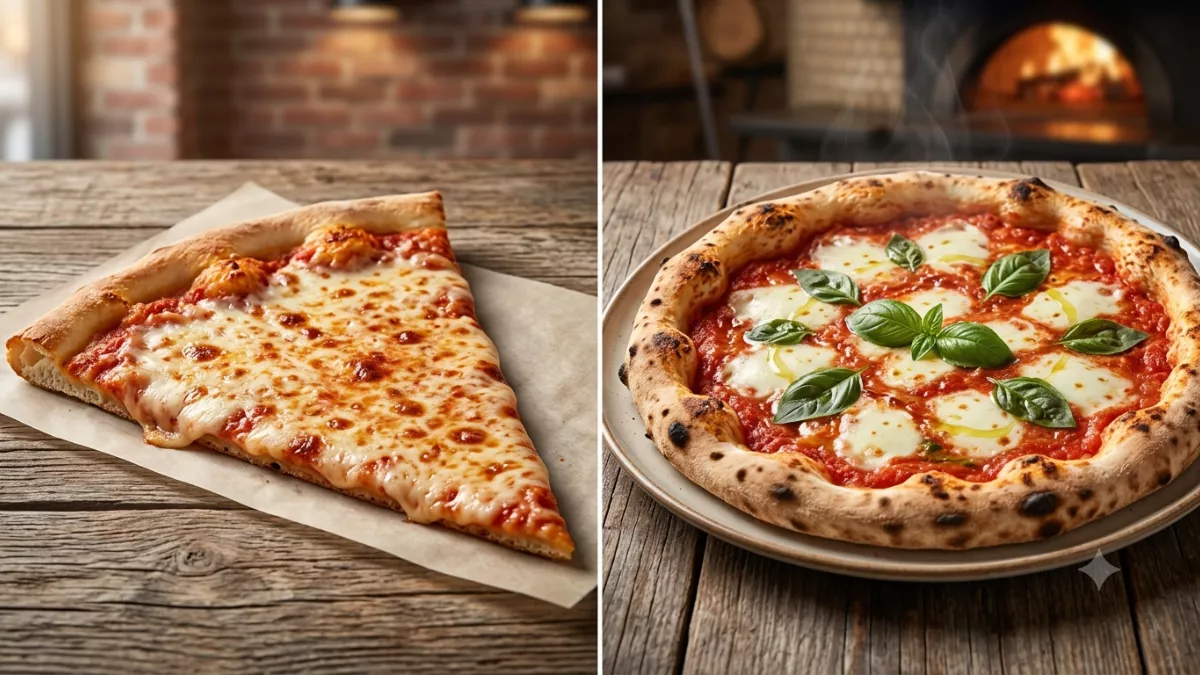
Pizza is one of the world’s most popular foods, but not every pizza delivers the same experience. Some slices are wide, crisp, and easy to fold, while others have soft centers, airy crusts, and a delicate balance of fresh ingredients. These differences become especially clear when comparing New York Pizza vs. Neapolitan Pizza.
Although both styles share Italian roots and rely on familiar ingredients such as flour, tomatoes, cheese, and olive oil, they developed different traditions. New York pizza reflects the evolution of Italian-American cooking in a busy American city, while Neapolitan pizza preserves a distinctive style associated with Naples, Italy.
Understanding these two approaches can help pizza lovers choose the right slice, appreciate regional food traditions, and even make better pizza at home. From dough preparation and oven temperatures to toppings and serving methods, each style has characteristics that make it special.
In this guide, we will explore seven important differences between New York pizza and Neapolitan pizza, including their histories, textures, flavors, cooking techniques, and ideal occasions for enjoying them.
What Is New York Pizza?

New York pizza is a famous American pizza style known for its large, round pies, thin crusts, generous triangular slices, and balanced combination of tomato sauce and mozzarella cheese. It developed through Italian-American culinary traditions and became closely associated with New York City’s neighborhood pizzerias.
A traditional New York pizza is generally baked until the bottom becomes firm and lightly crisp while the inside remains flexible. This texture allows people to fold a slice lengthwise and eat it comfortably without losing all the toppings.
The dough is typically made with wheat flour, water, yeast, and salt. Many recipes also include a small amount of oil and sugar, although ingredients and methods vary between pizzerias. The dough often undergoes a longer fermentation period to develop flavor and structure.
New York pizza is commonly cooked in a deck oven at a lower temperature than a traditional Neapolitan pizza oven, often around 500–600°F (260–315°C), depending on the oven and recipe. Baking usually takes several minutes rather than just a minute or two.
Mozzarella with relatively low moisture is commonly used because it melts evenly without releasing excessive water. The sauce is usually tomato-based and seasoned simply, allowing the cheese, crust, and sauce to work together.
New York pizza is especially popular as a casual meal, a quick lunch, or a late-night snack. Its large portions, convenient serving style, and satisfying texture have helped make it a recognizable part of American food culture.
What Is Neapolitan Pizza?

Neapolitan pizza originates in Naples, a historic city in southern Italy. It is widely regarded as one of the foundational styles of modern pizza and is particularly known for its simple ingredients, soft center, and tall, airy outer crust.
Traditional Neapolitan pizza dough generally contains flour, water, salt, and yeast. It does not require added oil or sugar in the classic preparation. Careful fermentation and dough handling help create a light interior with an appealing texture.
One of its most recognizable features is the cornicione, the raised outer rim of the pizza. During baking, the rim expands and develops pockets of air, producing a soft, puffy crust that may have dark spots from intense heat.
Authentic Neapolitan pizza is traditionally baked in a very hot wood-fired oven, commonly around 800–900°F (425–480°C), for approximately 60–90 seconds, depending on the oven and the specific method.
The classic Margherita combines tomatoes, mozzarella, basil, and olive oil. Other traditional versions may use ingredients such as garlic, oregano, and anchovies. The emphasis is on quality ingredients rather than a large number of toppings.
Neapolitan pizza is typically smaller than a New York pie and is often served whole, intended to be eaten with a knife and fork or by hand, depending on local custom and preference. Its soft center and delicate structure make it different from the firmer, foldable American slice.
The style also has a strong cultural identity. The traditional art of Neapolitan pizza-making is recognized by UNESCO as intangible cultural heritage, reflecting its importance to local culinary traditions.
New York Pizza vs. Neapolitan Pizza: 7 Key Differences
While the two styles share many ingredients, their preparation and final results differ significantly. Here are the seven most important distinctions.
1. Crust Thickness and Texture
The crust is often the first difference people notice.
New York pizza generally has a thin center and a moderately developed outer edge. The base is sturdy enough to support cheese and toppings, with a crisp underside and a chewy interior. The outer crust is usually less inflated than its Neapolitan counterpart.
Neapolitan pizza has a soft, thin center and a noticeably raised, airy rim. Its outer edge can develop large bubbles and dark spots during rapid baking. Rather than being uniformly crisp, the crust is valued for its tenderness, elasticity, and light texture.
These differences come from dough formulation, fermentation, shaping, hydration, and oven conditions.
Which is better? Choose New York pizza if you enjoy a crisp, chewy base. Choose Neapolitan pizza if you prefer a light, soft crust with a puffy edge.
2. Dough Ingredients and Preparation
Both styles begin with relatively simple dough, but their recipes and techniques can differ.
New York pizza recipes often use bread flour or another wheat flour capable of developing a strong gluten structure. Some include oil and sugar to influence browning, flavor, and texture. The dough may be refrigerated for extended fermentation, although methods vary by pizzeria.
Neapolitan pizza traditionally uses flour suited to producing an extensible, elastic dough. Water, salt, and yeast are the primary additional ingredients. The dough is fermented and shaped carefully to preserve air within the outer rim.
Neither style has only one universal recipe. Flour strength, yeast quantity, fermentation time, room temperature, and the baker’s technique can all affect the final result.
The essential distinction is that New York dough is commonly designed to create a flexible, supportive slice, while Neapolitan dough is designed to produce a delicate center and a light, expanded rim.
3. Baking Temperature and Cooking Time

The oven plays a major role in determining the flavor and texture of each pizza.
New York pizza is commonly baked in a deck oven at approximately 500–600°F (260–315°C), although commercial ovens and home recipes can fall outside this range. Baking often takes several minutes, giving the base time to become firm and develop a golden-brown surface.
Traditional Neapolitan pizza is cooked at a much higher temperature, typically around 800–900°F (425–480°C), in a specialized oven. The intense heat cooks the pizza rapidly, expands the air in the rim, and creates characteristic spotting.
The difference is not simply about speed. High-temperature baking changes how moisture moves through the dough and how quickly the crust develops color. A Neapolitan pizza can retain a tender center even as the rim browns rapidly.
Home cooks can make either style in a domestic oven, but the results may differ from those produced by professional equipment. A standard kitchen oven generally cannot reproduce the full temperature profile of a traditional Neapolitan pizza oven.
4. Sauce and Cheese Choices
The sauce and cheese help define each pizza’s personality.
New York pizza typically features tomato sauce spread across the dough, followed by a generous layer of mozzarella. The sauce may include salt, herbs, garlic, or other seasonings, depending on the recipe. Low-moisture mozzarella is especially common because it melts well and helps the pizza maintain a consistent texture.
Neapolitan pizza generally uses a lighter layer of tomato sauce, often made from crushed or prepared tomatoes with minimal seasoning. Depending on the recipe, mozzarella di bufala or fior di latte may be used. These fresh cheeses contain more moisture than low-moisture mozzarella, so proper quantities and draining are important.
A traditional Margherita brings together tomato, mozzarella, basil, and olive oil. Its appeal lies in the contrast between sweet-tart tomatoes, creamy cheese, aromatic basil, and soft dough.
New York pizza tends to offer a more substantial cheese layer, while Neapolitan pizza often places greater emphasis on the relationship between fresh ingredients and the crust.
5. Size, Shape, and Serving Style
New York pizza is famous for its large, round pies, which are cut into wide triangular slices. A whole pie is often around 18 inches across, though sizes vary considerably. Individual slices are a common way to order, making the style convenient for people who want a quick meal.
Neapolitan pizza is usually smaller, commonly around 10–12 inches in diameter. It is traditionally served as an individual pizza rather than a large pie intended for several people.
The serving experience is different, too. New York slices are designed to be held in one hand and are often folded slightly for easier eating. Neapolitan pizza has a more delicate center that may bend under the weight of its toppings, so some diners prefer using a knife and fork.
Neither approach is inherently superior. New York pizza prioritizes convenience and portability, while Neapolitan pizza emphasizes an individual dining experience rooted in traditional preparation.
6. Toppings and Flavor Profiles
New York pizza is adaptable. Along with classic cheese and pepperoni, pizzerias commonly offer mushrooms, sausage, onions, peppers, olives, and many other toppings. These additions work well with a crust designed to support a substantial layer of cheese and sauce.
Neapolitan pizza traditionally uses fewer toppings. Popular choices include Margherita and Marinara, the latter generally featuring tomato, garlic, oregano, and olive oil without cheese.
Using fewer toppings helps preserve the balance of flavors and prevents excess moisture from overwhelming the thin center. Traditional preparation emphasizes restraint and ingredient quality.
In terms of flavor, New York pizza often delivers a combination of toasted crust, melted cheese, tangy tomato sauce, and savory toppings. Neapolitan pizza tends to highlight the aroma of fresh tomatoes, the character of the cheese, the slight char of the crust, and the natural flavor of the dough.
Both styles can be delicious; the difference lies in how each balances its components.
7. Tradition, History, and Cultural Identity
New York pizza developed through the growth of Italian-American communities during the late nineteenth and early twentieth centuries. As Italian immigrants brought pizza-making traditions to the United States, the food evolved to reflect local ingredients, commercial ovens, customer preferences, and the city’s fast-paced lifestyle.
Lombardi’s, established in New York City in the early twentieth century, is frequently associated with the early history of American pizzerias. Over time, New York pizza became a recognizable local food tradition, with neighborhood shops and by-the-slice counters playing an important role in its popularity.
Neapolitan pizza has roots in Naples, where pizza developed as an accessible food sold to residents across different social backgrounds. Its identity is closely linked to local techniques, traditional recipes, and the city’s culinary heritage.
The two styles illustrate how food evolves when traditions travel. New York pizza adapted Italian techniques to American conditions, while Neapolitan pizza remains strongly associated with the culinary culture of its birthplace.
New York Pizza vs. Neapolitan Pizza: Comparison Table
| Feature | New York Pizza | Neapolitan Pizza |
|---|---|---|
| Origin | New York City, USA | Naples, Italy |
| Crust | Thin, chewy, crisp underneath | Thin center, soft and airy rim |
| Typical oven temperature | 500–600°F | 800–900°F |
| Baking time | Several minutes | Around 60–90 seconds |
| Dough ingredients | Flour, water, yeast, salt; sometimes oil and sugar | Traditionally flour, water, yeast, salt |
| Cheese | Commonly low-moisture mozzarella | Often fresh mozzarella |
| Toppings | Classic and varied combinations | Traditionally simple toppings |
| Typical size | Large pie, often sold by the slice | Smaller individual pizza |
| Eating style | Often folded and eaten by hand | Eaten by hand or with knife and fork |
| Main appeal | Portability, crispness, and chew | Fresh ingredients, airy crust, and tenderness |
These are general characteristics rather than universal rules. Recipes, oven temperatures, and serving practices vary among pizzerias.
Which Pizza Is Better: New York or Neapolitan?
The answer depends on personal preference, the occasion, and the kind of eating experience you enjoy.
New York pizza may be the better choice if you want a substantial slice that is easy to carry, has a crisp base, and supports generous cheese and toppings. It works particularly well for casual lunches, sharing with friends, or grabbing a quick meal while exploring a city.
Neapolitan pizza may appeal more if you appreciate a soft, airy crust and fresh ingredients that are allowed to stand out. Its smaller size and traditional preparation can make it an excellent choice for a sit-down meal focused on the details of the dough, sauce, and cheese.
You do not necessarily have to choose one style forever. Trying both is a good way to discover how different baking techniques and regional traditions transform similar ingredients into very different foods.
For home cooks, New York pizza may be easier to approximate with a standard oven and pizza stone or steel. Neapolitan pizza can also be made at home, but achieving the characteristic rapid bake and spotted crust is easier with equipment designed to reach higher temperatures.
Tips for Choosing the Right Pizza
Before ordering, consider the following practical points:
- For a crisp, foldable slice: Look for a classic New York-style cheese pizza.
- For a soft, airy crust: Try a traditional Neapolitan Margherita.
- For many toppings: New York pizza is generally a practical option because its crust can support heavier combinations.
- For fresh, simple ingredients: Neapolitan pizza is an excellent starting point.
- For sharing: A large New York pie often works well for groups, while individual Neapolitan pizzas let everyone choose their own toppings.
- For home baking: Consider your oven’s maximum temperature and whether you have a pizza stone or steel before selecting a recipe.
When comparing restaurants, remember that ingredient quality and preparation matter as much as the style. A well-made pizza should have balanced seasoning, properly cooked dough, and toppings that complement rather than overwhelm the base.
Frequently Asked Questions
1. What is the main difference between New York pizza and Neapolitan pizza?
The biggest difference is the crust and baking method. New York pizza usually has a firmer, chewier base designed for folding, while Neapolitan pizza has a soft center and a light, airy outer crust baked rapidly at very high temperatures.
2. Is Neapolitan pizza healthier than New York pizza?
Neither style is automatically healthier. Nutritional value depends on serving size, dough ingredients, cheese quantity, toppings, and the overall meal. Comparing similar portions and ingredients provides a more useful assessment than comparing styles alone.
3. Why is Neapolitan pizza cooked so quickly?
Traditional Neapolitan ovens reach very high temperatures, allowing the dough to expand and the toppings to cook rapidly. This creates a tender center and a puffed, browned rim in roughly 60–90 seconds under suitable conditions.
4. Can you make New York and Neapolitan pizza at home?
Yes. New York pizza can be approximated using a hot household oven and a pizza stone or steel. Neapolitan pizza is also possible, although a specialized high-temperature oven generally makes it easier to reproduce the traditional texture and crust spotting.
Final Thoughts
New York Pizza vs. Neapolitan Pizza is more than a comparison between two popular meals. It is a look at how ingredients, cooking techniques, and cultural traditions shape the food people love. New York pizza offers a crisp, chewy base, generous toppings, and the convenience of a foldable slice. Neapolitan pizza celebrates a soft, airy crust, fresh ingredients, and rapid, high-temperature baking.
Neither style is the universal winner. The best choice depends on whether you prefer a substantial American-style slice or a delicate Italian classic. By understanding their differences, you can order with confidence, appreciate each tradition, and enjoy a wider range of pizza experiences.