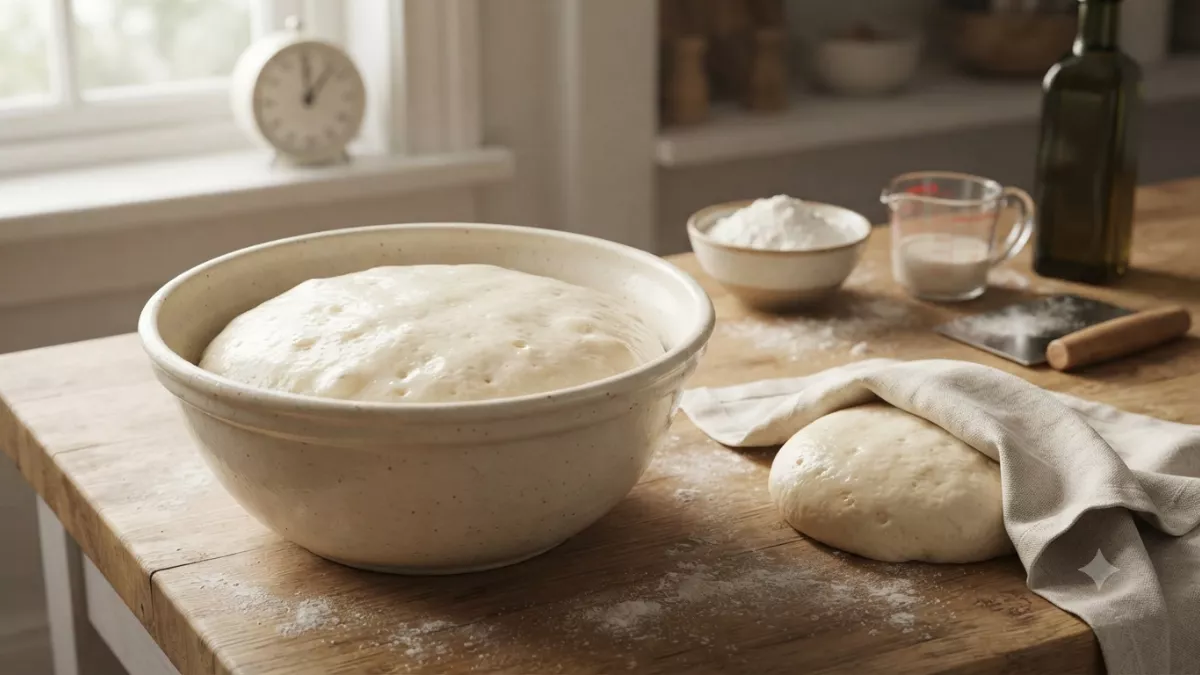
Making great pizza at home starts long before the dough reaches the oven. One of the most important steps is also one of the easiest to overlook: letting the pizza dough rest.
If you have ever made dough that keeps shrinking when you stretch it, feels unusually tight, tears easily, or produces a dense crust, the dough may simply need more time to rest.
So, how long should pizza dough rest?
The answer depends on what kind of rest you mean. Pizza dough may need a short rest after mixing, a longer fermentation while it develops flavor and structure, and another period of relaxation after dividing and shaping the dough into balls.
For many home cooks, a basic pizza dough can benefit from about 1 to 2 hours of room-temperature fermentation, while an overnight refrigerated fermentation can provide additional flavor and texture. The ideal timing depends on the recipe, yeast quantity, flour, dough temperature, and the temperature of your kitchen.
This practical guide explains how long pizza dough should rest, what happens during each stage, how to tell when dough is ready, and how to adjust the process for your schedule.
Why Does Pizza Dough Need to Rest?
Resting allows the dough to change physically and chemically.
Immediately after mixing, the dough can be tight and difficult to stretch. Gluten proteins are developing, and the dough has not yet had enough time to relax.
As the dough rests, several things happen:
- Gluten becomes more organized and relaxed.
- Yeast begins fermenting available sugars.
- Gas develops inside the dough.
- Flavor compounds develop.
- The dough becomes easier to shape.
- Texture changes gradually.
This is why rushing directly from mixing to shaping can produce disappointing pizza.
Resting is not wasted time. It is part of the pizza-making process.
How Long Should Pizza Dough Rest?
There is no single resting time that works for every pizza dough.
A useful general guide is:
Short room-temperature rest: 15–30 minutes
Standard room-temperature fermentation: 1–2 hours
Overnight refrigerator fermentation: 12–24 hours
Long cold fermentation: 24–72 hours
These are general ranges rather than strict rules.
A dough made with more yeast and kept in a warm kitchen may ferment much faster than dough made with less yeast and stored in a cool refrigerator.
The dough itself is usually a better indicator of readiness than the clock.
The Difference Between Resting and Fermentation
The terms “resting” and “fermentation” are sometimes used interchangeably, but they are not exactly the same.
A short rest allows the dough to relax and become easier to work with.
Fermentation is the biological process in which yeast consumes available sugars and produces carbon dioxide and other compounds.
During a longer fermentation, the dough is not simply sitting. It is actively changing.
This distinction is useful because a dough can rest for a short period without being fully fermented.
A 15- to 30-Minute Rest After Mixing
Some pizza recipes recommend allowing the dough to rest shortly after mixing.
This can be particularly useful when the dough feels tight.
During this short period, the flour continues absorbing water, while the gluten network begins to organize.
After the rest, you may notice that the dough feels smoother and easier to handle.
This short rest can be especially helpful before additional kneading or folding.
The 1- to 2-Hour Room-Temperature Rise
For a relatively quick pizza dough, a room-temperature rise of around 1 to 2 hours is a common approach.
During this period, yeast becomes active and begins producing carbon dioxide.
The dough gradually expands and develops a lighter structure.
The exact timing depends heavily on temperature.
A warm kitchen can accelerate fermentation, while a cooler kitchen can slow it down.
Instead of waiting for an exact number of minutes, look for visible changes in the dough.
It should generally appear:
- More relaxed
- Slightly expanded
- Smoother
- Airier
- Easier to handle
Why Room Temperature Makes a Difference
Temperature has a major influence on yeast activity.
Warmer conditions generally speed fermentation, while cooler conditions slow it.
This means a pizza dough that takes two hours in a cool kitchen might reach a similar stage much sooner in a warm environment.
If your kitchen is particularly warm, reduce the amount of yeast or shorten the fermentation time if your recipe allows.
If your kitchen is cool, the dough may need additional time.
What Happens During an Overnight Rest?
An overnight refrigerator rest is one of the easiest ways for home cooks to develop more flavor without spending more time actively working with the dough.
After mixing and an initial stage of fermentation, the dough can be placed in the refrigerator.
The cold temperature slows yeast activity.
Over the next 12 to 24 hours, the dough continues to develop gradually.
This can contribute to:
- More developed flavor
- Improved dough handling
- More complex aroma
- A desirable crust texture
The process also makes pizza preparation easier because much of the work can be completed the day before.
Is 24 Hours Better Than 2 Hours?
Not automatically.
A longer fermentation can produce different flavor and texture characteristics, but more time is not always better.
If a dough is left fermenting too long under unsuitable conditions, it can become over-fermented.
The dough may become:
- Weak
- Excessively sticky
- Difficult to shape
- Less elastic
- Sour or overly fermented in flavor
- Unable to hold its structure properly
The goal is controlled fermentation, not simply maximum fermentation time.
How Long Should Pizza Dough Rest in the Refrigerator?
For many home recipes, 12 to 24 hours is a practical starting point for cold fermentation.
Some dough formulas can be refrigerated for 48 or even 72 hours, but longer fermentation requires more careful control of yeast quantity, temperature, flour strength, and dough development.
If you are new to cold fermentation, starting with an overnight rest is easier to manage.
Should Pizza Dough Rest Before Stretching?
Yes.
After the dough has been divided and shaped into dough balls, allowing it to rest again can make stretching considerably easier.
This stage is often called a bench rest or dough-ball fermentation, depending on the process.
The dough relaxes, allowing you to stretch it without excessive resistance.
If your dough repeatedly shrinks back after stretching, it may not have rested long enough.
Why Does Pizza Dough Shrink Back?
Dough that immediately pulls back after being stretched is often too tight.
The gluten network is resisting the stretching force.
Instead of forcing it, cover the dough and allow it to rest for another 10 to 20 minutes.
After relaxing, the dough should usually become easier to shape.
This is one of the simplest pizza-making problems to solve.
More pressure is not always the answer. Sometimes the dough simply needs more time.
How Long Should Dough Rest After Refrigeration?
Cold pizza dough should usually be allowed to warm and relax before shaping.
A practical approach is to remove the dough from the refrigerator and allow it to sit at room temperature for roughly 1 to 2 hours, depending on dough temperature and recipe.
The goal is not necessarily to make the dough warm throughout.
Instead, you want it to become relaxed enough to stretch without tearing or aggressively shrinking.
If the dough remains very cold and tight, shaping can be difficult.
How Do You Know When Pizza Dough Is Ready?
The clock is useful, but appearance and texture are more reliable.
Look for several signs.
The Dough Has Expanded
The dough should show noticeable fermentation rather than remaining exactly the same size.
It Feels Airy
A fermented dough often feels lighter and contains visible or subtle bubbles.
It Stretches Easily
When gently handled, the dough should stretch without immediately snapping back.
It Looks Relaxed
The surface may become smoother and slightly puffy.
It Has a Pleasant Fermented Aroma
A properly fermented dough can have a mild, yeasty or slightly sweet aroma.
The exact appearance depends on the recipe and fermentation method.
The Finger-Poke Test
Some home cooks use a finger-poke test to judge fermentation.
Gently press the surface of the dough with a fingertip.
If the indentation slowly springs back, the dough may be appropriately fermented.
If it immediately returns completely, it may need more time.
If the indentation remains and the dough feels extremely weak, the dough may be over-fermented.
This test is useful, but it should not be treated as an absolute measurement. Dough hydration, flour, temperature, and fermentation style all affect the result.
What Happens If Pizza Dough Does Not Rest Long Enough?
Under-rested dough can be difficult to work with.
Common signs include:
- Tight texture
- Strong resistance when stretching
- Dough that keeps shrinking
- Difficulty forming a round pizza
- Less developed flavor
- Dense crust texture
The most obvious symptom for many home cooks is dough that refuses to stay stretched.
If this happens, cover it and let it rest.
What Happens If Pizza Dough Rests Too Long?
Over-fermentation can also create problems.
The dough may become:
- Very soft
- Sticky
- Weak
- Difficult to shape
- Excessively gassy
- Less able to hold its structure
The exact symptoms depend on the recipe and conditions.
If you suspect over-fermentation, handle the dough gently and consider using it sooner rather than allowing it to ferment even longer.
How Yeast Changes Resting Time
Yeast quantity has a direct influence on fermentation speed.
More yeast generally means faster fermentation under comparable conditions.
Less yeast can support longer fermentation.
This is why a recipe designed for a 1–2 hour dough may use a different yeast quantity from one intended for a 24- to 72-hour cold fermentation.
You should not simply take the yeast amount from a quick dough and apply it to a long fermentation.
How Flour Affects Dough Resting
Flour also influences fermentation and dough handling.
Different flours have different protein contents, absorption characteristics, and strength.
A stronger flour can provide more gluten-forming potential, which can be useful for doughs undergoing longer fermentation.
However, flour strength is only one factor.
Hydration, kneading, fermentation temperature, yeast quantity, and time all interact.
Why Salt Matters
Salt does more than add flavor.
It also affects yeast activity and gluten behavior.
Because of this, changing the salt quantity can influence the dough’s fermentation and handling characteristics.
For a consistent pizza dough, keep the ingredient ratios stable when experimenting with resting times.
Change one major variable at a time so you can understand its effect.
Should You Rest Dough Before or After Dividing It?
Both stages can be useful.
A common process looks like this:
- Mix the ingredients.
- Develop the dough.
- Allow an initial fermentation.
- Divide the dough.
- Form dough balls.
- Allow the dough balls to rest.
- Shape and bake.
Other recipes divide the dough earlier and allow the individual dough balls to ferment for a longer period.
The best method depends on the pizza style and recipe.
A Simple Same-Day Pizza Dough Schedule
If you want pizza on the same day, you can use a straightforward schedule.
Morning
Mix your dough and allow it to rest.
Late Morning
Allow the dough to ferment at room temperature.
Early Afternoon
Divide and shape the dough into balls.
Afternoon
Let the dough balls rest and ferment.
Before Dinner
Preheat the oven and baking surface.
Dinner Time
Shape, top, and bake the pizzas.
The exact schedule can be adjusted according to room temperature and dough behavior.
A Simple Overnight Pizza Dough Schedule
For an overnight dough, preparation can be even easier.
Evening
Mix the dough and allow a short initial rest.
Later That Evening
Place the dough in the refrigerator.
Next Day
Remove the dough from refrigeration and allow it to relax at room temperature.
Before Baking
Shape, top, and bake.
This approach works well for planned pizza nights because most of the fermentation happens while you are sleeping.
How to Speed Up Pizza Dough Resting
If you need pizza sooner, temperature can be used carefully to accelerate fermentation.
A slightly warmer environment can increase yeast activity.
However, avoid placing dough somewhere excessively hot.
Very high temperatures can create uncontrolled fermentation and may negatively affect the dough.
A consistent, moderately warm environment is easier to manage.
How to Slow Down Pizza Dough Fermentation
The refrigerator is the simplest tool for slowing fermentation.
Cold temperatures reduce yeast activity, allowing you to extend the fermentation window.
This gives home cooks greater scheduling flexibility.
You can prepare dough in advance, refrigerate it, and then bring it out when you are ready to make pizza.
How Dough Resting Affects Flavor
Time allows fermentation to create more complex aromas and flavors.
A quick dough can still produce delicious pizza, but a longer fermentation can introduce additional depth.
This is one reason many pizza makers prefer overnight or longer cold fermentation.
However, flavor development must remain balanced with dough strength and structure.
Longer is not automatically superior.
How Resting Affects Crust Texture
Resting and fermentation influence the final crust.
A properly fermented dough can produce a crust with:
- Better chew
- More developed flavor
- A lighter interior
- Improved browning
- More interesting texture
The exact result depends on the entire dough formula and baking process.
Resting alone cannot compensate for poor baking or an unbalanced recipe.
Does Pizza Dough Need a Second Rest?
Often, yes.
After dividing and shaping the dough into balls, another rest allows the gluten to relax.
This makes the final shaping stage easier.
For many home cooks, this second rest is one of the most noticeable improvements they can make.
Instead of fighting the dough, you allow time to do some of the work.
How to Store Resting Pizza Dough
If you are refrigerating pizza dough, place it in a covered container.
The dough should be protected from drying out and absorbing unwanted refrigerator odors.
Dough balls should have enough space to expand.
A lightly oiled container can also make handling easier depending on the recipe.
When ready to use, remove the dough and allow it to relax before shaping.
Common Pizza Dough Resting Mistakes
Following the Clock Too Strictly
A recipe might say two hours, but your kitchen may be warmer or cooler than the recipe author’s kitchen.
Using Too Much Yeast for Long Fermentation
A dough designed for a quick rise may over-ferment if refrigerated for several days.
Skipping the Dough-Ball Rest
This can make stretching unnecessarily difficult.
Letting Dough Dry Out
Uncovered dough can develop a dry surface that makes shaping harder.
Ignoring Dough Temperature
Temperature changes fermentation speed significantly.
Assuming Longer Is Always Better
Fermentation needs balance. Excessive fermentation can weaken dough structure.
A Practical Pizza Dough Resting Guide
For home cooks, the following framework is a useful starting point:
15–30 minutes: Short relaxation after mixing
1–2 hours: Same-day room-temperature fermentation
4–8 hours: Extended room-temperature fermentation with a suitable formula and cool conditions
12–24 hours: Practical overnight refrigerator fermentation
24–48 hours: Longer cold fermentation requiring more careful control
48–72 hours: Advanced long fermentation that depends heavily on the dough formula and refrigerator temperature
These are not rigid rules. Your recipe and dough behavior should guide the final decision.
Final Thoughts
Pizza dough needs time because dough is constantly changing.
A short rest helps gluten relax and allows flour to fully hydrate. Longer fermentation allows yeast to develop gas, flavor, and texture. Refrigeration slows the process and gives home cooks more control over timing.
For a simple same-day pizza, a 1- to 2-hour room-temperature fermentation can be a practical starting point. For more developed flavor and easier scheduling, an overnight refrigerator fermentation of roughly 12 to 24 hours is another useful approach.
The most important lesson is to pay attention to the dough rather than blindly following the clock. Temperature, yeast quantity, flour, hydration, and fermentation all influence how quickly pizza dough reaches the right stage.
Once you learn to recognize relaxed, airy, properly fermented dough, you can adjust your pizza schedule with much greater confidence.
Frequently Asked Questions
How long should pizza dough rest before baking?
For a same-day pizza, dough may ferment for around 1 to 2 hours at room temperature, followed by a shorter rest after dividing. Exact timing depends on the recipe and kitchen temperature.
Can pizza dough rest overnight?
Yes. An overnight refrigerator fermentation of around 12 to 24 hours is a practical method for many pizza dough recipes and can develop additional flavor and texture.
Why does my pizza dough keep shrinking?
The dough may be too tight and need additional resting time. Allow it to relax for another 10 to 20 minutes before trying to stretch it again.
Can pizza dough rest too long?
Yes. Excessive fermentation can weaken the dough, making it sticky, difficult to shape, and less capable of holding its structure.
Should pizza dough come to room temperature before stretching?
Usually, allowing refrigerated dough to sit at room temperature for roughly 1 to 2 hours can make it easier to stretch. The exact time depends on dough temperature and the recipe.