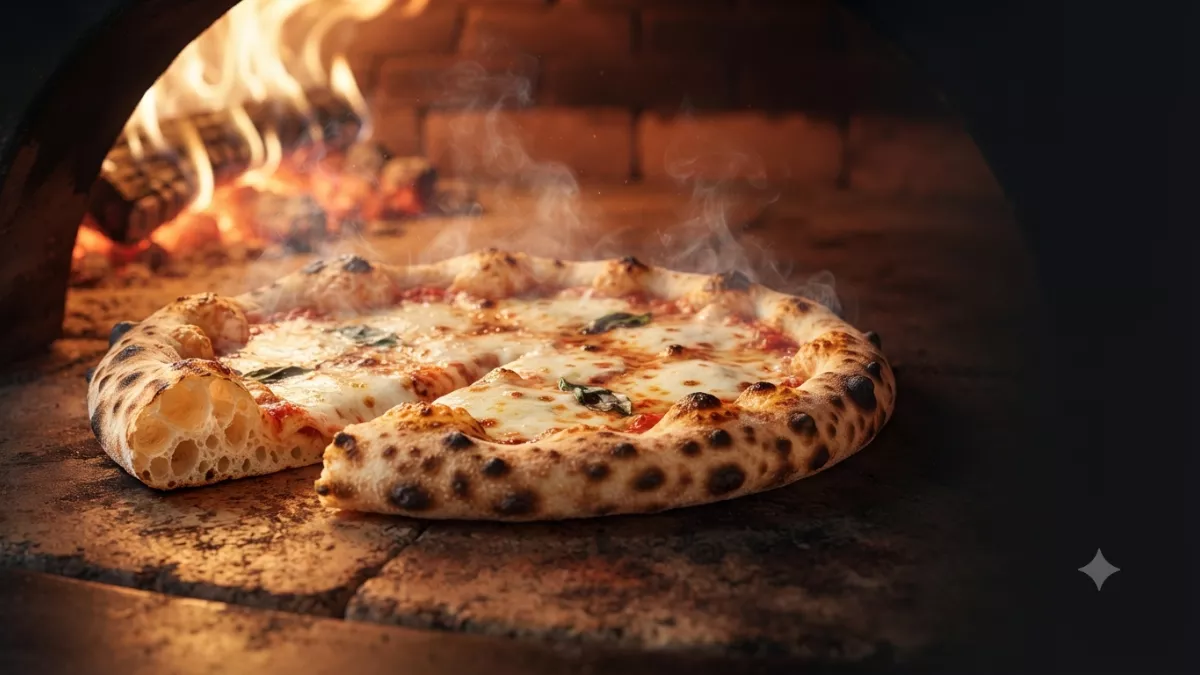
A great pizza crust can be one of the most satisfying parts of the entire pizza.
The outside is crisp and lightly browned, while the inside remains chewy, tender, and full of flavor. But what actually makes that transformation happen?
It isn’t simply a matter of putting dough into a hot oven.
As pizza bakes, heat moves through the dough, water turns into steam, gluten changes structure, starch gelatinizes, gases expand, and the surface begins to brown. These processes happen quickly, often within just a few minutes.
Understanding what happens inside the oven can help explain why some pizzas develop a beautifully crisp crust while others remain pale, soft, or even soggy.
In this guide, we’ll explore the science behind a crispy pizza crust, including the role of heat, moisture, gluten, starch, browning, oven temperature, baking surfaces, and toppings.
What Makes a Pizza Crust Crispy?
Crispiness is largely about moisture, heat, and structure.
When pizza dough enters a hot oven, its water content begins heating rapidly. Some of that water eventually turns into steam and escapes from the dough.
As moisture leaves the outer layers, the crust becomes drier.
At the same time, heat causes chemical and structural changes in the dough.
The proteins and starches change, the crust sets, and the surface begins to brown.
The combination of reduced surface moisture and high heat is one of the main reasons pizza crust becomes crisp.
However, the process is more complicated than simply “baking until dry.”
The goal of good pizza is usually to create a crust where the exterior is crisp while the interior retains enough moisture to remain tender or chewy.
1. Heat Starts the Transformation
The oven is where pizza dough changes from a soft, flexible mixture into a finished crust.
When the pizza enters the oven, heat begins transferring from the surrounding air and, importantly, from the baking surface into the dough.
The hotter the environment and baking surface, the faster energy moves into the dough.
This is why a thoroughly preheated oven is so important.
A pizza placed into a cold or poorly heated oven may take much longer to cook. During that extended baking period, the crust can lose moisture differently and the toppings may cook before the bottom develops the desired texture.
A hot oven allows the crust to develop quickly.
2. Water Turns Into Steam
Water is one of the most important ingredients involved in crust texture.
Pizza dough contains a significant amount of water.
As the dough heats, that water becomes increasingly energetic. Eventually, some of it changes from liquid water into steam.
Steam expands and contributes to the early expansion of the dough.
At the same time, steam must eventually escape.
As water leaves the outer portion of the crust, the surface becomes drier.
A dry surface can become crisp when exposed to sufficient heat.
This explains an important principle:
Crispness requires the surface to lose enough moisture.
However, you don’t want all of the water to disappear.
If the entire crust becomes excessively dry, the result may be hard rather than pleasantly crisp.
The ideal pizza has a carefully controlled moisture gradient.
3. The Outside and Inside of the Crust Behave Differently
A pizza crust isn’t the same throughout.
The outer surface can become relatively dry and crisp while the interior remains softer.
This difference is essential.
Imagine biting into a well-baked pizza.
The first sensation might be a slight crunch from the bottom or edge.
Then you encounter a softer, chewy interior.
This contrast is created because heat and moisture behave differently at different points in the crust.
The surface receives intense heat and loses moisture.
The interior remains more insulated by surrounding dough and water.
That is why a good pizza can have both crispness and chewiness at the same time.
4. Gluten Gives the Crust Structure
Gluten plays an important role long before the pizza reaches the oven.
When flour is mixed with water, gluten-forming proteins create a network that gives the dough strength and elasticity.
During baking, this structure changes.
As the dough heats, the gluten network begins to set.
The structure helps determine whether the finished crust is:
- Flexible
- Chewy
- Airy
- Dense
- Crisp
- Tender
A strong but appropriately developed gluten network can trap gases produced during fermentation.
Those gases expand rapidly in the oven.
This contributes to the characteristic bubbles and air pockets found in many pizza crusts.
5. Oven Spring Creates a Bigger, Airier Crust
One of the most noticeable changes during the first stage of baking is called oven spring.
Oven spring refers to the rapid expansion of dough during the early stages of baking.
Several things contribute to this expansion.
Gas already trapped inside the dough expands as it gets hotter.
Water also begins turning into steam.
The combination can cause the dough to expand dramatically.
This is one reason a pizza crust that looks relatively flat before baking can develop a puffier edge in the oven.
The amount of oven spring depends on factors such as:
- Dough fermentation
- Gluten development
- Hydration
- Dough temperature
- Oven temperature
- Dough thickness
- Shaping technique
If you want an airy outer crust, handling the dough carefully can help preserve some of the gas developed during fermentation.
6. Starch Gelatinization Changes the Dough
Starch is another major component of flour.
When starch absorbs water and is heated, it undergoes a process known as gelatinization.
This is one reason raw dough becomes firm and set during baking.
The starch absorbs available water and changes its physical structure.
Without these changes, the dough would remain soft and raw in the center.
Gelatinization therefore contributes to the transformation from flexible dough into a stable baked crust.
It also influences the texture of the finished pizza.
The relationship between starch, water, and heat helps determine whether the crust feels tender, chewy, crisp, or hard.
7. Browning Creates Flavor and Color
A pizza crust doesn’t just become crisp.
It also becomes brown and aromatic.
Two important processes are associated with browning in baked foods: the Maillard reaction and caramelization.
The Maillard reaction occurs when amino acids and reducing sugars react under suitable heat conditions.
It contributes to many of the roasted, toasted, and savory aromas associated with baked foods.
Caramelization involves the thermal breakdown of sugars and can contribute sweetness, color, and complex aromas.
Together, these processes help produce the familiar golden-brown appearance of a well-baked pizza crust.
This is why a pale pizza can taste very different from one with deep golden or lightly charred areas.
Why Does a Brown Crust Taste Better?
Color isn’t just cosmetic.
The browning process creates new flavor compounds.
These compounds can produce aromas reminiscent of:
- Toasted grain
- Roasted nuts
- Caramel
- Toast
- Baked bread
- Light smokiness
The exact flavor depends on the flour, dough formula, baking temperature, oven environment, and degree of browning.
A properly browned crust therefore offers much more than visual appeal.
8. Baking Surface Makes a Major Difference
The surface underneath your pizza can strongly influence crust texture.
A metal baking sheet, pizza stone, pizza steel, or specialized pizza oven surface transfers heat differently.
Pizza stone
A pizza stone stores heat and transfers it into the bottom of the dough.
This can help produce a crisp underside.
Pizza steel
Steel generally transfers heat very efficiently.
A thoroughly preheated steel can deliver intense heat to the bottom of the pizza and encourage rapid browning.
Baking sheet
A standard baking sheet can still make excellent pizza, but its thermal behavior differs from a stone or steel.
The exact result depends on the material, thickness, oven temperature, and whether the sheet is preheated.
The important principle is simple:
The hotter the surface, the more rapidly heat can enter the bottom of the pizza.
9. Why Preheating Matters So Much
A common mistake is putting pizza into an oven before it has reached the desired temperature.
Preheating is particularly important if you’re using a pizza stone or steel.
These surfaces need time to absorb heat.
If the oven display says it has reached the target temperature but the baking surface is still relatively cool, the pizza may not receive the intense bottom heat you expect.
For this reason, many pizza makers allow their baking surface to preheat for significantly longer than the oven’s basic preheat cycle.
Always follow the manufacturer’s instructions when using specialized equipment.
10. High Heat Helps Create Crispness
Pizza generally benefits from high baking temperatures.
Higher temperatures increase the rate at which heat enters the dough and encourage rapid browning.
They also reduce the total baking time.
This can be especially useful because you want the crust to brown before the interior becomes excessively dry.
Different pizza styles require different temperatures.
A very thin pizza can tolerate or benefit from extremely high heat and short baking.
A thicker pizza may require a different balance.
There isn’t one perfect oven temperature for every pizza.
The ideal temperature depends on:
- Dough thickness
- Hydration
- Toppings
- Cheese
- Baking surface
- Pizza style
- Oven design
11. Why Thin Crusts Tend to Become Crispier
Thickness strongly affects moisture loss.
A thin dough layer has less distance for heat to travel through.
Water can escape more quickly.
This makes it easier for a thin crust to become crisp.
A thick crust contains more moisture and has a larger interior.
It can remain soft and airy even while the exterior becomes browned.
This explains why a thin New York-style slice can have a crisp bottom while a thicker pizza may have a softer interior.
Neither texture is inherently better.
They simply result from different dough structures and baking methods.
12. Toppings Can Make a Crust Less Crisp
Toppings aren’t just about flavor.
They also affect how pizza cooks.
Vegetables such as mushrooms, tomatoes, spinach, and zucchini contain significant amounts of water.
During baking, that moisture can migrate onto the pizza.
If a pizza contains too many wet toppings, the center may struggle to become crisp.
This is especially noticeable when ingredients are piled heavily in the middle.
How to control topping moisture
You can improve crust crispness by:
- Using moderate amounts of wet toppings
- Pre-cooking mushrooms
- Draining fresh mozzarella
- Using thin tomato slices
- Cooking watery vegetables before adding them
- Avoiding excessive sauce
Good pizza is often about balance rather than maximum topping quantity.
13. Sauce Also Affects Crust Texture
Pizza sauce contains water.
If too much sauce is applied, the dough has to deal with additional moisture during baking.
This can make the center softer.
A thin, even layer of sauce is usually sufficient.
The goal is to provide tomato flavor without soaking the dough.
This is particularly important for thin pizzas where the center has less structural thickness.
14. Cheese Contains Water and Fat
Cheese also influences how pizza cooks.
Mozzarella contains both water and fat.
As the pizza heats, the cheese melts and releases some moisture and fat.
This contributes to the characteristic texture of pizza.
However, using an excessive amount of cheese can increase the moisture and weight on the dough.
A balanced amount allows the cheese to melt beautifully without preventing the crust from cooking properly.
Different cheeses behave differently.
Fresh mozzarella tends to contain more moisture than many low-moisture mozzarella varieties.
This doesn’t make one universally better.
It simply means they require different handling.
15. Steam Can Help and Hurt Crispness
Steam is essential during the early stages of baking because it contributes to dough expansion.
But too much retained moisture can work against crispness.
This is why pizza needs a balance.
Early in baking:
Steam helps expansion.
Later in baking:
Moisture loss helps create crispness.
The finished crust therefore depends on managing both processes.
This is one reason pizza baked at a high temperature can develop an airy interior and crisp exterior at the same time.
16. Why Pizza Sometimes Comes Out Soft
If your pizza is consistently soft instead of crisp, several factors may be responsible.
The oven isn’t hot enough
A lower temperature can extend baking time and alter moisture loss.
The baking surface isn’t hot
A cold tray doesn’t transfer heat to the bottom as effectively.
Too many toppings
Heavy toppings can trap moisture.
Too much sauce
Excess sauce can make the center wet.
High-moisture cheese
Very wet cheese can release significant moisture during baking.
Dough is too thick
Thicker dough takes longer to dry and set.
Pizza was removed too early
The crust may simply need more time to brown and dry.
Identifying the exact cause is usually easier than simply increasing the oven temperature without changing anything else.
17. How to Make Pizza Crust Crispier at Home
If you want a crispier homemade pizza, start with the fundamentals.
Preheat thoroughly
Give your oven and baking surface enough time to become hot.
Use a pizza stone or steel
These can improve heat transfer to the bottom of the dough.
Avoid excessive toppings
Keep the center relatively light.
Control moisture
Drain wet ingredients and pre-cook watery vegetables when appropriate.
Stretch the dough appropriately
A thinner center will generally become crispier.
Use enough heat
Follow a reliable recipe designed for your oven and pizza style.
Bake until properly browned
Don’t remove the pizza while the crust is still pale.
18. Crispy Does Not Mean Dry
This distinction is extremely important.
A good crispy pizza crust should not necessarily be hard or brittle.
The ideal texture often combines:
Crisp exterior + tender interior
or:
Crisp bottom + chewy center
A pizza that is completely dry may technically be crisp, but it won’t necessarily be enjoyable.
The goal is controlled moisture loss.
You want the surface dry enough to create crispness while retaining enough moisture inside for a pleasant texture.
19. The Importance of Dough Fermentation
The oven gets most of the attention when discussing crispy pizza, but the process begins much earlier.
Fermentation influences the structure and flavor of the dough.
Properly fermented dough can develop better gas retention and a more interesting texture.
Under-fermented dough may be dense and resistant.
Over-fermented dough may become weak and difficult to handle.
The right fermentation schedule depends on:
- Yeast quantity
- Dough temperature
- Flour
- Hydration
- Fermentation time
- Refrigeration
A well-fermented dough gives the oven better material to work with.
20. The Complete Journey From Dough to Crispy Crust
To understand pizza baking, imagine the process step by step.
Before the oven
Flour is hydrated.
Gluten develops.
Yeast ferments the dough.
Gas accumulates.
The dough becomes elastic and airy.
When the pizza enters the oven
Heat begins moving into the dough.
Gases expand.
Water begins moving toward vaporization.
The crust starts expanding.
During baking
Gluten sets.
Starch gelatinizes.
Moisture escapes.
The surface dries.
Browning begins.
Toward the end
The exterior becomes crisp.
The interior retains some moisture.
The crust develops deeper color and aroma.
The final pizza emerges with a combination of textures.
This entire transformation can happen remarkably quickly in a hot pizza oven.
The Ideal Crispy Pizza Crust
The ideal crust depends on personal preference, but many pizza lovers enjoy a crust that provides several characteristics at once.
It should have:
- A browned exterior
- Crispness underneath
- Some chewiness
- A light interior
- Good structural strength
- Pleasant toasted aromas
- Enough moisture to avoid becoming dry
The secret is balance.
Too much moisture produces softness.
Too little moisture produces hardness.
Too little heat creates pale crust.
Too much baking can produce excessive dryness.
The best crust exists somewhere between these extremes.
Frequently Asked Questions
What makes pizza crust crispy?
Pizza crust becomes crispy primarily when heat causes moisture to leave the outer layers of the dough. High heat, appropriate dough thickness, a hot baking surface, and controlled toppings can all contribute to crispness.
Why is my pizza crust not crispy?
A low oven temperature, insufficient preheating, a cold baking surface, excessive sauce, wet toppings, high-moisture cheese, or overly thick dough can all contribute to a soft crust.
Does a pizza stone make crust crispier?
A properly preheated pizza stone can improve heat transfer to the bottom of the pizza, which may help create a crispier underside.
Does pizza steel make pizza crispier?
A thoroughly heated steel can transfer heat very efficiently to the bottom of the dough and can help produce strong bottom browning and crispness.
What temperature makes pizza crispy?
The ideal temperature depends on the pizza style, dough thickness, oven, and baking surface. In general, sufficiently high heat encourages rapid cooking, moisture loss, and browning.
Does more flour make pizza crust crispier?
Not necessarily. Adding excessive flour to dough can change its hydration and texture and may produce a dry or tough crust rather than a pleasantly crisp one.
How do I make the bottom of my pizza crispy?
Use a thoroughly preheated baking surface, avoid excessive moisture from sauce and toppings, stretch the dough appropriately, and bake until the underside is properly browned.
Final Thoughts
The science behind a crispy pizza crust is really the science of heat, moisture, structure, and time.
When pizza enters a hot oven, water begins turning into steam, gases expand, gluten sets, starch gelatinizes, and the surface starts losing moisture. As the crust dries and heats further, browning reactions create the deep color and roasted flavors associated with well-baked pizza.
The best results come from balancing all of these processes.
A hot oven alone isn’t enough. You also need properly fermented dough, suitable hydration, controlled toppings, an appropriate baking surface, and enough time for the crust to develop.
Once you understand what is actually happening in the oven, crispy pizza becomes much easier to reproduce.
Instead of simply asking, “How do I make my pizza crispy?” you can look at the entire process: How much moisture is in the dough? How hot is the baking surface? How thick is the crust? How wet are the toppings? Has the dough fermented properly?
Those questions lead to better answers—and ultimately, better pizza.