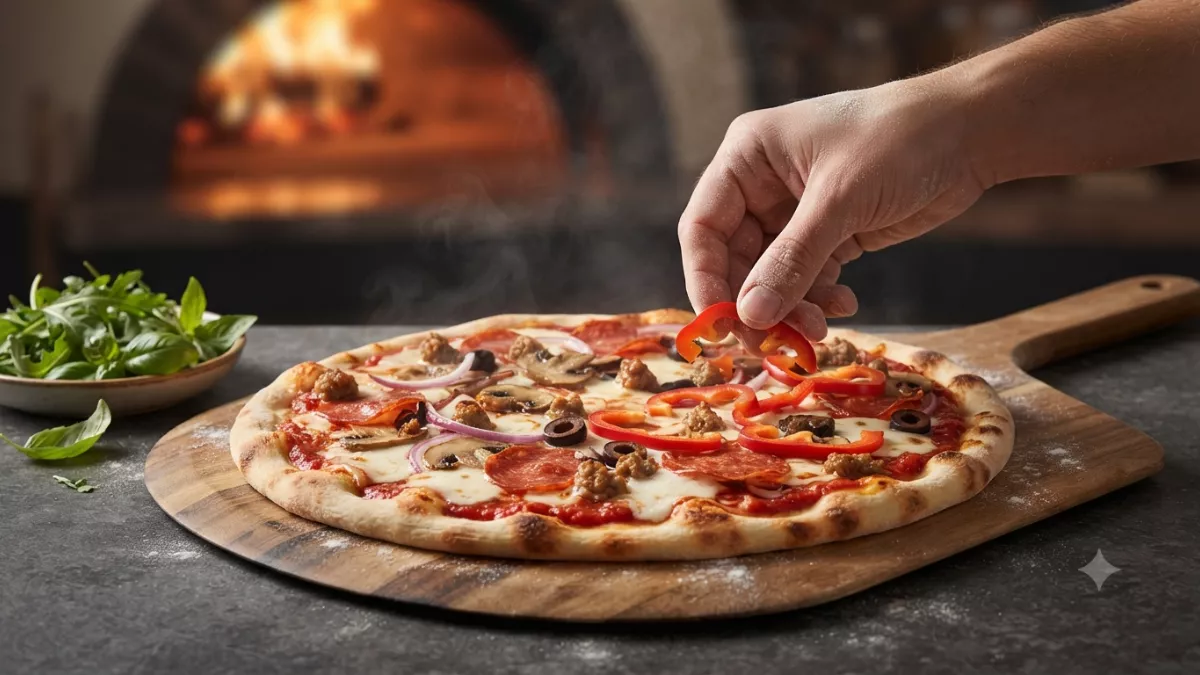
Pizza toppings may seem simple, but when you add them can have a major effect on the final pizza. The order, timing, moisture level, and preparation of each ingredient can influence whether your pizza comes out crisp and flavorful or heavy and soggy.
A great pizza is not simply dough covered with sauce, cheese, and toppings. Every ingredient interacts with heat differently. Some toppings need the full baking time to cook properly, while others can become dry, burnt, or lose their fresh flavor if exposed to intense oven heat for too long.
Understanding when to add pizza toppings can help you improve both homemade and restaurant-style pizza. It can also help you create better combinations without overwhelming the crust.
Whether you are making a classic pepperoni pizza, a vegetable-loaded pie, a fresh mozzarella pizza, or something more creative, topping timing is an important part of the process.
In this guide, we will explain when to add pizza toppings, which ingredients should go on before baking, which are better added afterward, and how to control moisture, texture, flavor, and browning.
Why Does Topping Timing Matter?
Different pizza ingredients contain different amounts of water, fat, sugar, and protein.
They also react differently to high heat.
For example, sliced mushrooms release water during cooking. Fresh basil can lose its delicate aroma if baked for too long. Pepperoni releases flavorful oils as it heats, while fresh mozzarella needs careful handling because of its relatively high moisture content.
Putting every ingredient on the pizza at the same time may work for some combinations, but it is not always the best approach.
Topping timing can affect:
- Crust crispness
- Cheese browning
- Vegetable texture
- Meat doneness
- Moisture levels
- Aroma
- Freshness
- Flavor balance
- Overall appearance
The goal is to make sure every ingredient reaches its ideal texture without damaging the crust.
The Basic Pizza Topping Order
For most homemade pizzas, a simple starting order is:
- Pizza dough
- Sauce
- Cheese
- Main toppings
- Finishing ingredients after baking
This sequence works because sauce creates the flavor base, cheese provides coverage and richness, and most toppings can cook directly with the pizza.
However, some ingredients need to be prepared before they are added, while others are best added after baking.
That distinction is what separates a basic pizza from a carefully balanced one.
Should Sauce Go on Before the Toppings?
Yes.
Pizza sauce normally goes directly onto the stretched dough before cheese and toppings.
Use a thin, even layer rather than covering the entire surface with a thick amount of sauce.
Too much sauce introduces excess moisture and can prevent the crust from becoming crisp.
A good sauce layer should provide:
- Tomato flavor
- Acidity
- Sweetness
- Seasoning
- Moisture
But it should not dominate the crust.
For most pizzas, leaving a small border around the edge also helps create a well-defined crust.
When Should You Add Cheese?
For most pizzas, cheese goes on before the main toppings.
This allows the cheese to melt and integrate with the toppings during baking.
For example, a classic pizza can be assembled with:
Dough → Sauce → Mozzarella → Pepperoni → Mushrooms → Onions
However, the exact order can vary.
Some ingredients perform better above the cheese, while others may benefit from being partially protected underneath it.
Cheese also acts as a kind of moisture and heat buffer. Ingredients placed directly on top can brown more quickly.
Should Toppings Go Under or Over the Cheese?
There is no universal rule.
The position of the topping changes its exposure to heat.
Toppings Under the Cheese
Placing toppings beneath the cheese gives them some protection from direct oven heat.
This can help ingredients remain softer and retain moisture.
It can work well for:
- Thinly sliced onions
- Small pieces of mushrooms
- Cooked vegetables
- Some meats
- Ingredients that you do not want to brown too aggressively
However, putting too many wet ingredients under the cheese can trap moisture.
Toppings Over the Cheese
Toppings placed above the cheese receive more direct heat.
This can encourage:
- Browning
- Crisping
- Caramelization
- Roasting
- Flavor development
Pepperoni is a classic example.
When placed on top of the cheese, it can develop browned edges and release flavorful oils across the pizza.
When Should You Add Pepperoni?
Pepperoni is usually added before baking.
It can go directly over the cheese or between the cheese and sauce depending on the style you prefer.
Placing pepperoni on top allows the slices to become crisp around the edges while releasing flavorful fat during baking.
If you prefer softer pepperoni, placing it partially underneath the cheese can reduce direct exposure to heat.
For a crispy pepperoni pizza, however, keeping the slices visible on top is usually the better approach.
When Should You Add Sausage?
Raw sausage should generally not be treated exactly like pepperoni.
For homemade pizza, cooking sausage before adding it can provide better control over food safety and texture.
Cooked sausage can then be distributed over the cheese before the pizza goes into the oven.
This has several advantages:
- More predictable cooking
- Better fat control
- More even pieces
- Reduced risk of undercooked meat
- Easier topping distribution
Small pieces of pre-cooked sausage can develop excellent browning during the pizza bake.
Should Bacon Be Cooked Before Going on Pizza?
In most cases, yes.
Cooking bacon partially or fully before putting it on pizza allows you to control the amount of rendered fat and ensures the meat reaches a desirable texture.
Raw bacon can release a significant amount of fat during baking.
That can make the pizza greasy and interfere with the crust.
Partially cooked bacon is particularly useful when you want it to finish crisping in the oven.
When Should You Add Mushrooms?
Mushrooms are one of the toppings where preparation matters greatly.
Raw mushrooms contain a significant amount of water. When placed on pizza, they release that moisture as they cook.
If you use too many raw mushrooms, the pizza can become wet.
For better results, you can:
- Slice mushrooms thinly
- Use a moderate quantity
- Cook them briefly before adding
- Allow them to release some moisture
- Place them strategically across the pizza
Pre-cooked mushrooms are especially useful when making a heavily topped pizza.
They can develop deeper flavor while contributing less excess moisture during the final bake.
When Should You Add Fresh Tomatoes?
Fresh tomatoes can be tricky because they contain a lot of water.
If you add thick tomato slices before baking, they can release moisture and make the surrounding crust softer.
For a baked tomato pizza, use thin slices and avoid overcrowding.
Another option is to add fresh tomato pieces after baking.
This works particularly well when you want a bright, juicy tomato flavor.
The choice depends on the result you want.
For roasted tomato flavor, bake them.
For fresh tomato flavor, add them after baking.
When Should You Add Fresh Basil?
Fresh basil is usually best added after baking or during the final moments of baking.
Long exposure to intense heat can darken basil and reduce some of its fresh aroma.
Adding basil after the pizza comes out of the oven provides:
- Fresh herbal aroma
- Bright color
- Clean flavor
- A pleasant contrast with rich cheese
This is especially effective with fresh mozzarella and tomato-based pizzas.
A small amount of basil added immediately after baking can make a significant difference.
When Should You Add Arugula?
Arugula is another topping that is often better added after baking.
Its peppery flavor and delicate leaves can become overly wilted if exposed to high oven heat for too long.
Bake the pizza first, then add fresh arugula immediately afterward.
You can also add a small drizzle of olive oil or a light balsamic glaze for additional contrast.
When Should You Add Fresh Mozzarella?
Fresh mozzarella can be added before baking, but it requires some moisture management.
Because fresh mozzarella contains more water than many low-moisture pizza cheeses, excess moisture can make the crust soft.
For better results:
- Drain the cheese well
- Pat it dry
- Tear or slice it into manageable pieces
- Avoid using excessive amounts
- Distribute it evenly
Fresh mozzarella works particularly well when paired with a high-temperature bake.
It can develop creamy melted areas while retaining a soft, delicate texture.
When Should You Add Parmesan?
Parmesan can be used before or after baking.
Adding it before baking allows it to develop deeper roasted and savory notes.
Adding finely grated Parmesan after baking creates a sharper, more pronounced cheese flavor.
For many pizzas, using a small amount both before and after baking creates excellent depth.
When Should You Add Ricotta?
Ricotta is often added in small spoonfuls before baking.
Instead of spreading it across the entire pizza, place small pockets of ricotta around the surface.
This creates creamy bites throughout the pizza.
Ricotta can work particularly well with:
- Spinach
- Garlic
- Mushrooms
- Roasted vegetables
- Fresh herbs
- Mozzarella
Because ricotta is relatively soft, using too much can make the pizza feel heavy.
When Should You Add Onions?
Onions can be added either raw or pre-cooked.
Thin raw onions can become tender and lightly caramelized during baking.
If you want a deeper sweetness, caramelize the onions before adding them to the pizza.
Pre-cooked onions are especially useful when you want soft, sweet, concentrated onion flavor without relying on the pizza bake to fully cook them.
When Should You Add Bell Peppers?
Thinly sliced bell peppers can usually go directly onto the pizza before baking.
They will soften and develop roasted edges as the pizza cooks.
If you prefer very soft and sweet peppers, sauté them beforehand.
For a crispier vegetable texture, add thin slices raw and avoid using too many.
When Should You Add Jalapeños?
Jalapeños can be added before or after baking depending on the type of heat and texture you want.
Before Baking
They become softer and more roasted.
The heat can become slightly more mellow while the peppers develop deeper flavor.
After Baking
They retain more crunch and fresh pepper flavor.
For maximum contrast, you can use some jalapeños before baking and a few fresh slices afterward.
When Should You Add Pineapple?
Pineapple can be added before baking, but it should be drained well.
Excess pineapple juice can introduce unwanted moisture.
Pat the pieces dry before adding them to the pizza.
Baking pineapple allows its sugars to caramelize slightly, producing a sweeter and more concentrated flavor.
It pairs especially well with:
- Ham
- Bacon
- Pepperoni
- Jalapeños
- Mozzarella
When Should You Add Pesto?
Pesto can be used before or after baking.
However, adding pesto after baking often preserves more of its fresh basil, garlic, cheese, and olive oil character.
A few small spoonfuls drizzled over a hot pizza can provide a strong burst of flavor.
You can also use pesto as a base instead of tomato sauce for certain pizza combinations.
When Should You Add Hot Honey?
Hot honey is usually a finishing ingredient.
Bake the pizza first, then drizzle a small amount of hot honey over the finished pie.
This preserves its sweet-spicy character and prevents excessive burning.
Hot honey works particularly well with:
- Pepperoni
- Sausage
- Bacon
- Jalapeños
- Spicy chicken
- Calabrian chile flavors
A small drizzle is often enough.
Why Wet Toppings Can Make Pizza Soggy
One of the biggest problems with pizza toppings is excess moisture.
Ingredients such as:
- Fresh tomatoes
- Mushrooms
- Fresh mozzarella
- Pineapple
- Spinach
- Zucchini
- Certain sauces
can release water during baking.
That water can migrate into the crust and reduce crispness.
This is why ingredient preparation matters.
Drain, dry, roast, sauté, or otherwise control high-moisture toppings before adding them when necessary.
Why You Should Not Overload Your Pizza
More toppings do not automatically mean more flavor.
An overloaded pizza can create several problems:
- Longer baking time
- Uneven cooking
- Soggy crust
- Heavy slices
- Poor cheese browning
- Toppings sliding off
- Confused flavors
A balanced pizza usually performs better than an overloaded one.
Give each ingredient enough space to cook and contribute its flavor.
A Simple Topping Timing Guide
Here is a practical guide for common ingredients.
Add before baking:
- Pepperoni
- Cooked sausage
- Pre-cooked bacon
- Mushrooms
- Onions
- Bell peppers
- Fresh mozzarella
- Ricotta
- Pineapple
- Jalapeños
- Roasted vegetables
Usually better after baking:
- Fresh basil
- Arugula
- Hot honey
- Fresh herbs
- Some pesto
- Olive oil
- Parmesan for finishing
- Fresh greens
- Chili oil
Some ingredients can be used either way depending on the desired texture.
Build Your Pizza in the Right Order
For a balanced homemade pizza, try this basic workflow:
Step 1: Prepare the Dough
Stretch the dough gently while preserving the structure around the edge.
Step 2: Add Sauce
Spread a thin, even layer.
Step 3: Add Cheese
Distribute mozzarella evenly without creating excessively thick areas.
Step 4: Add Main Toppings
Place meats and vegetables strategically across the pizza.
Step 5: Check Moisture
Remove excess liquid from wet ingredients before baking.
Step 6: Bake Immediately
Once the pizza is assembled, transfer it to the hot oven.
Step 7: Finish After Baking
Add fresh herbs, greens, hot honey, pesto, olive oil, or other finishing ingredients.
This simple process can dramatically improve consistency.
How Topping Placement Changes Texture
Where you place an ingredient can matter almost as much as when you add it.
Toppings near the center are surrounded by more sauce and cheese and may receive slightly different heat exposure than toppings near the edge.
Ingredients placed near the outer area can brown more aggressively.
This can be useful for pepperoni or roasted vegetables.
Moist ingredients may be better distributed rather than concentrated in one area.
Good topping distribution helps the entire pizza bake more evenly.
Should You Add Extra Cheese After Baking?
Usually, if you want additional cheese, it is better to add it before or during the final stage of baking.
However, certain cheeses can be excellent finishing ingredients.
Finely grated Parmesan, Pecorino Romano, or a small amount of crumbled cheese can be added after baking for a stronger flavor.
The key is choosing a cheese that benefits from remaining relatively fresh.
How to Create Better Flavor With Topping Timing
Timing can be used to create contrast.
For example, consider a pepperoni pizza.
Bake the pepperoni with the pizza so its fat renders and its edges crisp.
Then finish with:
- Fresh basil
- Parmesan
- Hot honey
- Chili flakes
Now the pizza contains multiple layers of flavor:
Savory + salty + spicy + sweet + fresh
This is more interesting than simply adding every ingredient before baking.
Common Pizza Topping Mistakes
Using Too Many Wet Ingredients
Excess moisture is one of the fastest ways to create a soggy crust.
Adding Fresh Herbs Too Early
Delicate herbs can lose their aroma and color.
Using Raw Meat Without Considering Cooking Time
Ingredients such as sausage should be handled carefully to ensure they cook safely.
Overloading the Cheese
Too much cheese can trap moisture and make the center heavy.
Adding Finishing Ingredients Before Baking
Hot honey, fresh greens, and delicate herbs often perform better after baking.
Uneven Topping Distribution
Large piles of toppings can create undercooked or soggy sections.
Forgetting to Drain Ingredients
Fresh mozzarella, pineapple, mushrooms, and other wet ingredients may need preparation before use.
The Best Rule for Pizza Toppings
When deciding whether an ingredient should go on before or after baking, ask three questions:
Does it need to cook?
If yes, add it before baking or partially cook it first.
Does it contain a lot of water?
If yes, drain or pre-cook it to control moisture.
Does it have a delicate fresh flavor?
If yes, consider adding it after baking.
This simple framework works for most pizza ingredients.
Frequently Asked Questions
When should you add toppings to pizza?
Most toppings are added after the sauce and cheese but before baking. Ingredients that are delicate, fresh, or easily burned are often better added after the pizza comes out of the oven.
Should cheese go on pizza before toppings?
Usually, yes. Cheese can be placed over the sauce and toppings can then be distributed across it. However, some toppings can also be placed underneath the cheese depending on the desired texture.
Should pepperoni go under or over the cheese?
For crispier pepperoni, place it over the cheese. For softer pepperoni with less direct browning, place some or all of it underneath the cheese.
What pizza toppings should be added after baking?
Fresh basil, arugula, hot honey, fresh herbs, some pesto, olive oil, and certain finishing cheeses are excellent choices for adding after baking.
How do you keep pizza toppings from making the crust soggy?
Control moisture. Drain wet ingredients, use moderate amounts of sauce and toppings, avoid overcrowding, pre-cook watery vegetables when necessary, and bake the pizza on a thoroughly heated surface.
Final Thoughts
Knowing when to add pizza toppings is one of the simplest ways to improve homemade pizza.
The best pizzas are built around balance. Ingredients that need cooking should receive enough heat, while delicate ingredients should be protected from excessive heat. Moisture should be controlled, toppings should be distributed evenly, and finishing ingredients should be added at the right moment.
Think of pizza assembly as a sequence rather than simply putting everything on the dough at once.
Start with sauce and cheese, add toppings that benefit from baking, and finish with fresh ingredients that can provide brightness and contrast.
Once you understand how timing affects flavor and texture, you can make better decisions with almost any topping combination. The result is a pizza with a crispier crust, better-cooked ingredients, stronger flavor, and a more satisfying bite.