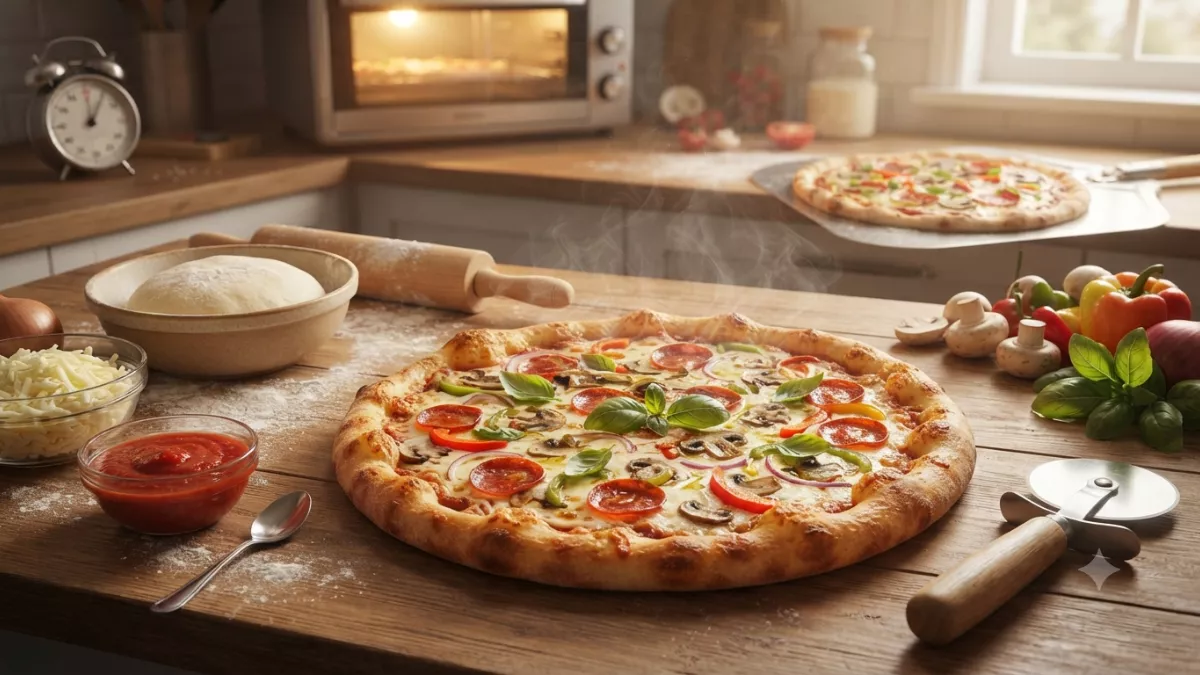
Pizza night at home sounds simple: make some dough, add sauce and toppings, bake, and enjoy. But a truly successful pizza night depends on more than having the right ingredients.
Timing matters. Dough preparation matters. Topping choices matter. Oven temperature matters. Even the order in which you prepare everything can make the experience easier and the final pizza better.
A little planning can turn homemade pizza from a rushed dinner into a relaxed meal that everyone can enjoy.
Whether you are cooking for your family, hosting friends, preparing individual pizzas, or simply trying to make a better homemade pie, a good pizza-night system makes all the difference.
The goal is not to make the process complicated. Instead, it is about preparing the important components in advance so that once pizza night begins, you can focus on shaping, topping, baking, and eating.
This practical guide explains how to plan pizza night at home, including dough preparation, fermentation, sauce, cheese, toppings, oven setup, timing, serving, and cleanup.
Why Planning Makes Pizza Night Better
Pizza dough needs time.
Your oven needs time to preheat.
Toppings need to be prepared.
Cheese needs to be grated or portioned.
Sauce needs to be ready.
If you try to do everything at the same moment, pizza night can quickly become stressful.
Planning allows you to separate preparation into manageable stages.
You can make the dough earlier in the day or even the day before. Sauce can be prepared ahead of time. Vegetables can be sliced in advance. Cheese can be grated and stored until needed.
Then, when it is time to cook, most of the work is already finished.
That is the secret behind a relaxed pizza night.
Start With the Dough
The dough is the foundation of the pizza.
A great topping combination cannot completely compensate for a poorly prepared crust.
A basic pizza dough usually contains flour, water, yeast, and salt. Some recipes also include olive oil, sugar, or other ingredients depending on the desired style.
The exact formula matters, but fermentation is equally important.
Same-Day Pizza Dough
If you decide to make pizza on the same day, allow enough time for the dough to rise and develop.
A typical same-day process might look like this:
- Mix the ingredients.
- Knead or develop the dough.
- Allow the first fermentation.
- Divide the dough.
- Form dough balls.
- Allow them to rest again.
- Shape the dough shortly before baking.
Depending on the recipe and room temperature, the process can take several hours.
Overnight Pizza Dough
If you have more time, preparing dough the day before can make pizza night easier.
After mixing and initial development, place the dough in the refrigerator for a controlled fermentation.
The slower fermentation can help develop flavor and change the texture of the dough.
On pizza day, allow the dough to come toward room temperature before shaping, depending on your recipe.
This approach also reduces the amount of work you need to do immediately before dinner.
How Long Should Pizza Dough Rest?
There is no single correct resting time for every pizza dough.
A short rest can make freshly mixed dough easier to handle, while longer fermentation can develop more flavor and texture.
For a same-day pizza, you may work with a few hours of fermentation.
For a more developed dough, refrigerated fermentation can last approximately 12 to 72 hours depending on the recipe, yeast level, flour, and temperature.
The important thing is to judge the dough rather than relying only on the clock.
Well-fermented dough should generally feel more relaxed, extensible, and aerated.
Prepare the Sauce Ahead of Time
Pizza sauce does not need to be complicated.
A simple tomato sauce can contain tomatoes, salt, herbs, garlic, olive oil, or other seasonings.
The sauce should complement the dough and toppings rather than overpower them.
For pizza night, prepare the sauce before you begin shaping the dough.
This creates one less task during the busiest part of the cooking process.
How Much Sauce Should You Use?
Avoid spreading an excessively thick layer.
Too much sauce can add unnecessary moisture and make the center of the pizza difficult to crisp.
Spread the sauce evenly, leaving a small border around the edge for the crust.
The exact amount depends on the size and style of pizza, but moderation is usually the safest approach.
Choose Your Cheese
Cheese is one of the defining elements of pizza.
Mozzarella is widely used because it melts well and provides a mild, creamy flavor.
Low-moisture mozzarella can provide good melting and browning, while fresh mozzarella offers a softer and more delicate texture.
You can also combine cheeses.
Parmesan can add salty, nutty flavor.
Provolone can add additional richness.
Ricotta can create creamy pockets.
Goat cheese can provide tanginess.
The best choice depends on the style and toppings you are planning.
Prepare Toppings Before Pizza Night Begins
One of the easiest ways to make pizza night smoother is to prepare toppings before the oven gets hot.
Slice vegetables.
Cook meats that require pre-cooking.
Drain high-moisture ingredients.
Grate cheese.
Portion everything into separate containers.
This turns the final assembly process into a simple sequence.
Good Toppings for Pizza Night
Some dependable choices include:
- Pepperoni
- Italian sausage
- Mushrooms
- Onions
- Bell peppers
- Black olives
- Bacon
- Ham
- Chicken
- Spinach
- Fresh basil
- Jalapeños
- Roasted vegetables
- Pineapple
You do not need to use all of them.
A few well-matched ingredients are often better than a pizza overloaded with toppings.
Build a Balanced Topping Menu
If you are hosting a pizza night with several people, give everyone variety without creating excessive preparation.
A practical menu might include:
Classic Pizza
Tomato sauce, mozzarella, and pepperoni.
Vegetable Pizza
Mozzarella, mushrooms, onions, peppers, and olives.
Spicy Pizza
Pepperoni, jalapeños, mozzarella, and a spicy finishing sauce.
White Pizza
Ricotta, mozzarella, Parmesan, garlic, and spinach.
Simple Cheese Pizza
Tomato sauce, mozzarella, and Parmesan.
This gives guests different flavor profiles without requiring dozens of ingredients.
Think About Moisture
Moisture is one of the biggest challenges when making pizza at home.
Too much water can prevent the crust from becoming crisp.
Fresh mozzarella can release moisture.
Mushrooms can release water.
Fresh tomatoes can become juicy.
Spinach can release moisture as it cooks.
Sauce itself adds water.
That does not mean you should avoid these ingredients.
Instead, prepare them appropriately.
Drain fresh mozzarella.
Cook or sauté mushrooms when appropriate.
Use a moderate amount of sauce.
Blot particularly wet ingredients.
Avoid covering the entire pizza with thick layers of high-moisture toppings.
Set Up Your Pizza Station
Before you begin shaping dough, organize your workspace.
A simple pizza station might include:
- Dough balls
- Flour or semolina
- Pizza sauce
- Grated cheese
- Prepared toppings
- Olive oil
- Pizza peel
- Pizza cutter
- Baking parchment if your method requires it
- Plates or cutting boards
Keep ingredients within easy reach.
This is especially useful when several people are assembling their own pizzas.
Preheat the Oven Early
Do not wait until the pizza is ready to bake before turning on the oven.
Start preheating well in advance.
If you are using a pizza stone or steel, place it in the oven during preheating.
These surfaces need time to absorb heat.
Many home ovens can reach approximately 475°F to 550°F, depending on the appliance.
Always follow the temperature limits and safety instructions for your specific equipment.
The hotter and more stable the baking surface, the easier it is to achieve strong crust development.
Pizza Stone vs. Pizza Steel
Both tools can improve homemade pizza.
A pizza stone absorbs and transfers heat effectively and has been a popular choice for home pizza makers for years.
A pizza steel is typically more conductive and can transfer heat aggressively to the bottom of the dough.
Either can produce excellent results when fully preheated.
If you do not have either, a heavy baking sheet can still work.
The key is learning how to maximize the equipment available to you.
Shape the Dough Carefully
When it is time to make the pizza, take a dough ball and place it on a lightly floured work surface.
Press gently from the center outward.
Try to preserve some of the gas around the outer edge.
Gradually stretch the dough into your desired shape.
Avoid forcing it.
If the dough repeatedly shrinks back, let it rest for several minutes and try again.
A relaxed dough is generally much easier to shape.
The Correct Order for Building Pizza
Once your dough is shaped, the assembly process should be quick.
A useful order is:
- Dough
- Sauce
- Cheese
- Main toppings
- Finishing ingredients
Spread the sauce first.
Add an even layer of cheese.
Distribute toppings without creating large piles.
If using delicate finishing ingredients such as fresh basil, consider adding them after baking or near the end.
Don’t Overload the Pizza
One of the biggest pizza-night mistakes is trying to put everything on one pizza.
Heavy toppings make the pizza harder to transfer and bake.
They can also create a wet center.
Instead, think about flavor combinations.
For example:
Pepperoni + mushrooms
Sausage + peppers + onions
Spinach + ricotta + garlic
Tomato + fresh mozzarella + basil
Ham + pineapple
Mushrooms + onions + olives
These combinations use a relatively small number of ingredients while creating distinct flavors.
A Practical Pizza Night Timeline
A little scheduling can make everything easier.
Here is an example of a simple overnight-dough pizza-night schedule.
The Day Before
Prepare the dough.
Allow it to begin fermenting.
Divide and ball it according to your recipe.
Refrigerate the dough.
Prepare the sauce.
Store the sauce properly.
Several Hours Before Dinner
Remove the dough from the refrigerator according to your recipe.
Prepare toppings.
Grate cheese.
Slice vegetables.
Cook any ingredients that need pre-cooking.
About One Hour Before Baking
Start preheating the oven.
Place the pizza stone or steel inside.
Organize your pizza station.
15 to 30 Minutes Before Baking
Allow the dough balls to relax if necessary.
Set out the toppings.
Prepare your pizza peel or baking surface.
During Pizza Assembly
Shape one dough ball.
Add sauce.
Add cheese.
Add toppings.
Transfer the pizza to the hot baking surface.
Bake immediately.
After Baking
Let the pizza rest briefly.
Add finishing ingredients if desired.
Slice and serve.
Then begin the next pizza.
How Long Does Homemade Pizza Take to Bake?
Baking time depends heavily on temperature, crust thickness, toppings, and oven design.
At high temperatures, some thin pizzas may bake in only a few minutes.
Thicker pizzas require more time.
Instead of depending entirely on a timer, watch the pizza.
Look for:
- Golden or browned crust
- Melted cheese
- Properly cooked toppings
- A firm bottom
- Slight browning or blistering where appropriate
The pizza should look baked rather than simply heated.
Make Pizza Night Interactive
Pizza night can be more enjoyable when everyone participates.
A build-your-own pizza station allows each person to choose their own toppings.
This works particularly well for families.
Children can select ingredients and create small personal pizzas.
Adults can experiment with more complex combinations.
It also makes it easier to accommodate different preferences without making several completely different meals.
Make Smaller Personal Pizzas
Instead of making one large pizza, divide the dough into smaller portions.
Personal pizzas bake quickly and are easier to customize.
They can also be useful when several people have different topping preferences.
Make sure each pizza is not overloaded.
Smaller pizzas can become difficult to handle if too many toppings are added.
Plan for Appetizers and Sides
Pizza does not have to be served alone.
A simple pizza-night menu could include:
- Green salad
- Garlic bread
- Roasted vegetables
- Antipasto
- Fresh fruit
- Simple pasta salad
Keep the sides relatively light if pizza is the main meal.
You want the sides to complement the pizza rather than make the meal unnecessarily heavy.
Add a Simple Dessert Pizza
If you want to make pizza night more memorable, finish with dessert pizza.
You can use a smaller piece of dough and add ingredients such as:
- Cinnamon sugar
- Chocolate
- Strawberries
- Bananas
- Ricotta
- Nut or seed butter
- Powdered sugar
Keep dessert toppings relatively simple.
Bake the crust until cooked, then add delicate ingredients after baking when appropriate.
Pizza Night for a Crowd
If you are feeding many people, preparation becomes even more important.
Make several dough balls in advance.
Prepare toppings in separate containers.
Use a simple menu rather than offering dozens of ingredients.
Bake pizzas continuously.
Keep finished pizzas on a cutting board or serving surface.
For larger gatherings, consider making smaller pizzas so people can sample different combinations.
How to Keep Pizza Warm
Pizza is best immediately after baking, but if you need to hold it briefly, avoid trapping too much steam.
Excessive covering can soften the crust.
A warm oven set to a safe low temperature can sometimes help for short periods, depending on your equipment and food-safety practices.
For the best texture, serve pizzas as close to baking time as possible.
Common Pizza Night Mistakes
Rushing the Dough
Under-fermented dough can be difficult to stretch and may lack flavor.
Not Preheating the Oven
A cold oven makes it harder to achieve strong crust development.
Adding Too Much Sauce
Excess sauce can create a wet center.
Overloading Toppings
Heavy toppings can prevent even baking.
Using Wet Ingredients Without Preparation
High-moisture toppings can soften the crust.
Shaping the Dough Too Aggressively
Aggressive handling can remove valuable gas and make the dough difficult to work with.
Waiting Too Long Between Assembly and Baking
Once the pizza is assembled, bake it promptly when possible.
How to Make Pizza Night Less Stressful
The easiest way to reduce stress is to separate preparation from cooking.
Prepare the dough ahead.
Prepare the sauce ahead.
Prepare toppings ahead.
Heat the oven ahead.
Then the final cooking process becomes straightforward.
Instead of trying to cook and prepare everything simultaneously, you are simply assembling and baking.
This also gives you more time to spend with family or guests.
How to Make Better Pizza Every Time
Keep notes about your pizza.
Record:
- Dough hydration
- Flour type
- Fermentation time
- Room temperature
- Oven temperature
- Baking time
- Topping combinations
- Final texture
If a pizza turns out especially well, you can repeat the process.
If something goes wrong, you can identify what changed.
Pizza making becomes much easier when you treat it as a repeatable process rather than guessing every time.
A Simple Pizza Night Checklist
Before starting, make sure you have:
Dough
- Flour
- Water
- Yeast
- Salt
- Optional olive oil
Sauce
- Tomato sauce or crushed tomatoes
- Salt
- Herbs
- Garlic or other seasonings
Cheese
- Mozzarella
- Optional Parmesan, provolone, ricotta, or other cheese
Toppings
- Meat options
- Vegetables
- Fresh herbs
- Optional spicy or sweet finishing ingredients
Equipment
- Oven
- Pizza stone, steel, or baking sheet
- Pizza peel if needed
- Cutting board
- Pizza cutter
- Mixing bowls
- Kitchen scale
Having everything ready before you begin can make the entire evening much smoother.
Frequently Asked Questions
How far in advance should I make pizza dough?
For a same-day pizza, you can prepare the dough several hours before baking. For more developed flavor and texture, many pizza makers prefer refrigerating dough for approximately 12 to 72 hours depending on the recipe.
What is the best temperature for homemade pizza?
The ideal temperature depends on the pizza style and oven. Many home pizza recipes work well at approximately 475°F to 550°F, while specialized pizza ovens can operate at much higher temperatures.
How many toppings should I put on a pizza?
There is no fixed number, but using two or three main toppings often makes it easier to maintain good flavor and texture. Too many toppings can add excessive weight and moisture.
Should pizza dough be room temperature before shaping?
Many recipes benefit from allowing refrigerated dough to warm and relax before shaping. The exact timing depends on the dough formula, fermentation method, and room temperature.
Can I prepare pizza toppings the day before?
Yes. Many toppings can be prepared in advance. Vegetables can be sliced, meats can be cooked when necessary, and cheese can be grated and stored properly until pizza night.
Conclusion
A successful pizza night at home is less about complicated cooking and more about smart preparation.
Start with good dough and give it enough time to ferment. Prepare the sauce and toppings before the oven gets hot. Use balanced amounts of ingredients and avoid excessive moisture. Preheat your oven and baking surface thoroughly. Then assemble and bake each pizza efficiently.
The more organized your process becomes, the more enjoyable pizza night becomes.
Instead of rushing between the refrigerator, countertop, and oven, you can create a simple rhythm: shape, sauce, cheese, toppings, bake, slice, and enjoy.
Whether you are cooking for two people or an entire family, that rhythm can turn homemade pizza into a regular food tradition.
The best pizza night is not necessarily the one with the most toppings or the most complicated recipe.
It is the one where good dough, thoughtful ingredients, proper timing, and good company come together around a hot pizza.