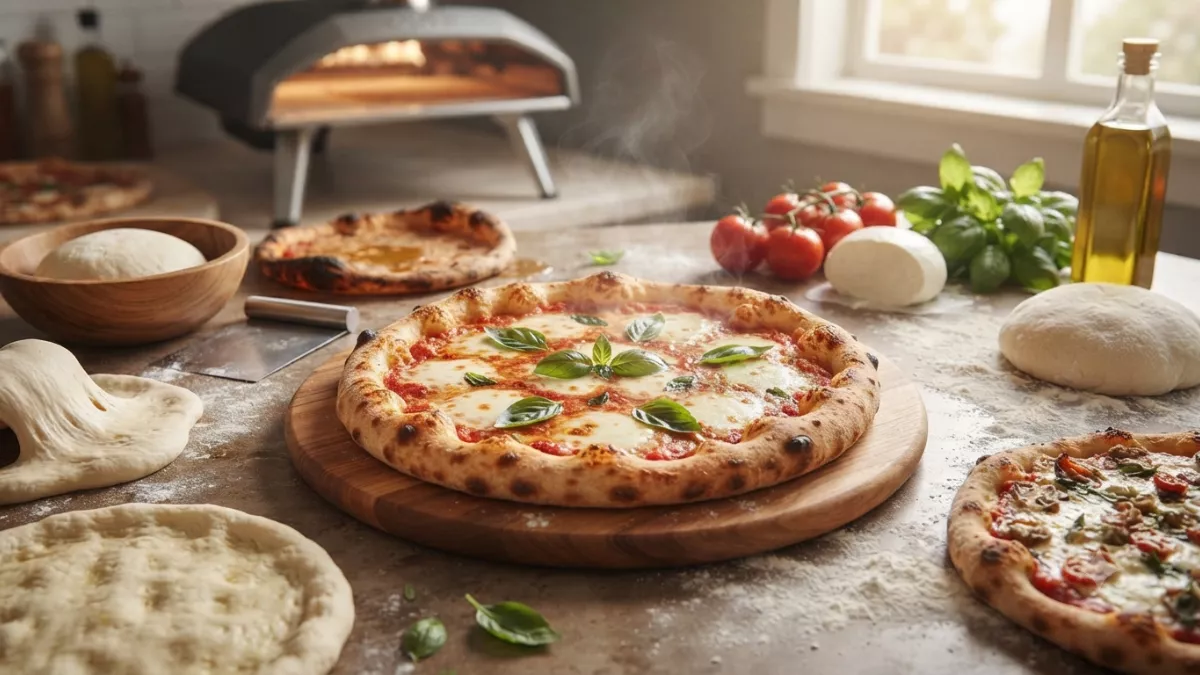
Making pizza at home can be surprisingly simple, but getting consistently great results takes more than putting dough, sauce, cheese, and toppings together. Small mistakes can turn an otherwise promising pizza into a soggy, tough, bland, burnt, or unevenly baked meal.
The good news is that most pizza-making mistakes are easy to understand and even easier to prevent once you know what causes them.
Whether you are making pizza for the first time or trying to improve your homemade pizza skills, understanding the fundamentals can make a noticeable difference. From dough preparation and fermentation to oven temperature, sauce quantity, cheese, toppings, and baking time, every stage affects the final slice.
In this guide, we will cover eight common pizza-making mistakes and explain exactly how to avoid them. By making a few simple adjustments, you can produce a crust that is crisp on the outside, tender inside, flavorful sauce, properly melted cheese, and toppings that complement rather than overwhelm the pizza.
1. Using Dough That Has Not Rested Long Enough
One of the most common pizza-making mistakes is rushing the dough.
After mixing flour, water, yeast, and salt, many home cooks immediately try to stretch the dough. This can make the dough difficult to work with and may result in a crust that is dense or tough.
Resting gives the dough time to relax and allows fermentation to develop.
During fermentation, yeast consumes sugars in the dough and produces carbon dioxide and flavor compounds. Gluten also develops and changes over time, helping the dough become more extensible and easier to shape.
How to Avoid It
Give your dough enough time to rest based on your recipe and schedule.
For a same-day pizza, a few hours of fermentation can produce good results. For greater flavor and a more developed texture, you can refrigerate the dough for approximately 12 to 72 hours, depending on the recipe and yeast quantity.
If the dough keeps shrinking after you stretch it, let it rest for another 10 to 20 minutes before trying again.
The dough should feel relaxed rather than tight and resistant.
2. Using Too Much Flour When Shaping
Flour is essential for preventing dough from sticking, but using too much can create another problem.
Excess flour incorporated into the dough or left heavily on the bottom can make the crust taste dry, dusty, or bitter. It can also burn in a very hot oven.
A heavily floured work surface can also change the texture of the dough.
How to Avoid It
Use only enough flour to prevent sticking.
If your dough is properly fermented and handled correctly, it should be relatively easy to work with. A small amount of flour or semolina can help with shaping and transferring the pizza.
Instead of continuously adding flour, consider lightly dusting your hands and work surface and using a dough scraper when necessary.
For very wet dough, some cooks prefer a small amount of semolina or coarse flour for transferring the pizza.
The goal is not to cover the dough in flour. The goal is simply to prevent sticking.
3. Stretching the Dough Too Aggressively
Pizza dough contains a network of gluten that gives it strength and elasticity.
If you aggressively roll, pull, or press the dough, you can damage the structure or push too much gas out of the fermented dough.
A rolling pin can be useful for certain pizza styles, but hand stretching is often preferred when you want to preserve some of the air developed during fermentation.
How to Avoid It
Handle the dough gently.
Start by placing the dough on a lightly floured surface. Press the center gently with your fingertips while leaving a slightly thicker border around the edge.
Then gradually stretch the dough outward.
Rotate the dough as you work instead of forcing it into shape all at once.
If the dough keeps snapping back, stop stretching and let it rest.
That resistance is often a sign that the gluten needs more time to relax.
4. Adding Too Much Sauce
More sauce does not automatically mean more flavor.
One of the most common pizza-making mistakes is spreading a thick layer of tomato sauce across the dough.
Too much sauce increases moisture and can prevent the crust from becoming crisp. The center may remain soft or soggy even when the edges appear properly baked.
Heavy sauce can also overpower the flavor of the cheese and toppings.
How to Avoid It
Use a relatively thin, even layer of sauce.
Start in the center and spread the sauce toward the edge with the back of a spoon, leaving a small border for the crust.
The exact amount depends on the size and style of your pizza, but the sauce should complement the dough rather than completely cover it with a thick layer.
If you are using very wet fresh tomatoes or a thin sauce, you may need even less.
A balanced pizza allows the crust, sauce, cheese, and toppings to remain recognizable.
5. Overloading the Pizza With Toppings
This is one of the easiest mistakes to make because toppings are one of the most enjoyable parts of pizza.
It is tempting to add extra cheese, several types of meat, vegetables, sauces, and other ingredients to a single pizza.
Unfortunately, too many toppings can make the pizza difficult to bake properly.
Heavy toppings add weight and moisture. They can prevent the center from cooking evenly and may make the crust difficult to keep crisp.
How to Avoid It
Think about balance rather than quantity.
Choose two or three primary toppings and build around them.
For example, pepperoni and mushrooms can create a flavorful combination without overwhelming the pizza. Sausage and peppers offer another balanced pairing.
If you want to use vegetables with high water content, consider preparing them first.
Mushrooms, spinach, zucchini, fresh tomatoes, and some other vegetables can release substantial moisture during baking.
Roasting, sautéing, draining, or briefly cooking certain ingredients can help reduce excess water.
6. Not Preheating the Oven Enough
Pizza needs intense heat.
One of the biggest differences between restaurant pizza and many homemade pizzas is oven temperature.
A home oven may take significantly longer to reach its maximum temperature than expected. Putting pizza into an oven before it is fully heated can result in pale crust, poor oven spring, uneven browning, and cheese that melts before the crust develops the desired texture.
How to Avoid It
Preheat your oven thoroughly.
If you are using a pizza stone or pizza steel, allow it to heat for a substantial amount of time before baking. The exact time depends on your oven, but 30 to 60 minutes is common for many home setups.
Use the highest temperature your recipe and equipment safely allow.
A pizza stone or steel can also help transfer intense heat directly to the bottom of the dough.
The goal is to create a strong initial burst of heat so the crust can expand and bake efficiently.
7. Using a Cold Pizza Stone or Steel
A pizza stone or steel can dramatically improve homemade pizza, but only if it is properly heated.
Putting dough onto a cold or insufficiently heated surface defeats much of its purpose.
Pizza needs immediate heat underneath the crust to encourage rapid baking and browning.
How to Avoid It
Place the pizza stone or steel inside the oven during preheating.
Give it enough time to absorb heat.
When the pizza is transferred onto the hot surface, the bottom should immediately begin cooking.
A properly heated baking surface can help produce a firmer, crispier bottom while allowing the top to brown quickly.
Always follow the manufacturer’s safety and temperature instructions for your specific equipment.
8. Cutting the Pizza Immediately After It Comes Out
It is understandable to want to slice a pizza immediately.
However, cutting straight into an extremely hot pizza can release steam and moisture from the center. Depending on the crust and toppings, this can affect the texture.
Cheese can also slide more easily when it is extremely hot.
How to Avoid It
Give the pizza a short rest before cutting.
You do not need to wait a long time. A couple of minutes can be enough for the cheese to settle and some steam to escape.
Use a sharp pizza cutter or suitable knife and make clean cuts rather than repeatedly pressing down on the crust.
This small step can make the finished pizza easier to serve and eat.
Other Pizza-Making Problems to Watch For
The eight mistakes above are among the most common, but several smaller details can also affect your results.
Using Old or Inactive Yeast
If your yeast is inactive, the dough may not rise properly.
If you are unsure about the yeast, check its expiration date and storage conditions. Some recipes also recommend proofing certain types of yeast before use.
Measuring Ingredients Inaccurately
Pizza dough depends on the relationship between flour and water.
Using measuring cups inconsistently can produce different hydration levels every time you make the recipe.
A kitchen scale provides much more consistent measurements.
Ignoring Dough Temperature
Temperature affects fermentation.
Warm environments generally speed up fermentation, while refrigeration slows it down.
If your kitchen is particularly warm, dough may ferment faster than expected.
Choosing the Wrong Cheese
Different cheeses behave differently in a hot oven.
Low-moisture mozzarella is commonly used when you want strong melting and browning characteristics. Fresh mozzarella can provide a softer, creamier result but may release more water.
The best choice depends on your pizza style and desired texture.
Adding Delicate Ingredients Too Early
Some ingredients can become bitter, dry, or burnt if exposed to high heat for too long.
Fresh basil, delicate greens, certain cheeses, and finishing oils may work better when added after baking or near the end.
How to Build a Better Homemade Pizza
Once you understand the common mistakes, making pizza becomes much more predictable.
Start with good dough.
Give it enough time to ferment.
Handle it gently.
Use a moderate amount of sauce.
Add toppings thoughtfully.
Preheat the oven and baking surface thoroughly.
Then bake the pizza until the crust is properly browned and the toppings are cooked.
The process is relatively simple, but each step contributes to the final result.
A Simple Pizza-Making Workflow
For a reliable homemade pizza, try following this general sequence.
Step 1: Prepare the Dough
Combine your flour, water, yeast, and salt according to your recipe. Mix until the ingredients form a cohesive dough.
Step 2: Allow Fermentation
Let the dough ferment according to your recipe. For more developed flavor, consider a longer refrigerated fermentation.
Step 3: Divide and Ball
If making multiple pizzas, divide the dough into individual portions and form smooth dough balls.
Step 4: Rest the Dough Balls
Allow the dough balls to relax before shaping.
Step 5: Prepare the Oven
Place your pizza stone or steel in the oven and preheat thoroughly.
Step 6: Shape the Dough
Gently stretch the dough while preserving the outer edge.
Step 7: Add Sauce
Spread a thin layer of sauce evenly across the dough.
Step 8: Add Cheese and Toppings
Use enough ingredients to provide flavor without making the pizza excessively heavy.
Step 9: Bake
Transfer the pizza onto the hot baking surface and bake until the crust and toppings reach the desired level of doneness.
Step 10: Rest and Slice
Allow the pizza to rest briefly before cutting and serving.
How to Tell When Homemade Pizza Is Done
Visual signs are often more useful than simply following a timer.
Look for a crust that has developed a golden-brown color.
The bottom should be firm enough to support the slice.
Cheese should be melted and, depending on the style, lightly browned or blistered.
The edge should have developed color and structure.
If the bottom remains pale while the toppings are already heavily browned, your oven setup may need adjustment.
If the top is pale and the crust is already very dark, the pizza may need a different rack position or baking strategy.
How to Make a Crispy Pizza at Home
If you prefer a crispy crust, focus on heat and moisture control.
Use a properly preheated baking surface.
Avoid excessive sauce.
Do not overload the pizza with wet toppings.
Use a dough hydration level appropriate for your recipe and style.
Bake at a sufficiently high temperature.
Also remember that a crispy crust is not necessarily a completely hard crust.
Many excellent pizzas have a crisp exterior with a soft, chewy interior.
The ideal texture depends on the pizza style you are trying to create.
Common Mistakes With Pizza Toppings
Toppings deserve special attention because they affect both flavor and baking.
Too Many Ingredients
A crowded pizza can become heavy and difficult to bake.
Too Much Cheese
Excess cheese can create a greasy surface and hide the flavors of the other ingredients.
Wet Vegetables
High-moisture vegetables can release water during baking.
Uneven Distribution
Large piles of toppings in one area can create uneven cooking.
Oversized Ingredients
Very large pieces may not cook properly before the crust is finished.
Cut toppings into reasonably sized pieces and distribute them evenly.
The Importance of Balance
Great pizza is not simply about avoiding mistakes.
It is about creating balance.
The crust provides structure and texture.
The sauce provides acidity, sweetness, and seasoning.
The cheese provides richness and creaminess.
The toppings provide additional flavor, texture, and contrast.
If one component becomes too dominant, the pizza can feel unbalanced.
For example, an extremely salty topping may need a mild cheese and lightly seasoned sauce. Sweet toppings can work well with salty or spicy ingredients.
Thinking about contrast can help you create better combinations.
Homemade Pizza Mistakes vs. Restaurant Pizza
Restaurants have several advantages that home cooks may not have.
Professional pizza ovens can reach extremely high temperatures. Restaurants also use specialized equipment, carefully controlled dough recipes, experienced pizza makers, and commercial preparation systems.
But home cooks can still achieve excellent results.
The key is understanding how to work with the equipment you have.
A home oven may not reach the same temperature as a commercial pizza oven, but a pizza steel, properly heated stone, careful dough fermentation, and good ingredient preparation can significantly improve the result.
8 Quick Rules for Better Homemade Pizza
If you want to remember only the most important lessons, keep these eight rules in mind:
- Give your dough enough time to rest and ferment.
- Use only as much flour as necessary when shaping.
- Stretch the dough gently.
- Avoid excessive sauce.
- Do not overload the pizza with toppings.
- Preheat your oven thoroughly.
- Heat your pizza stone or steel before baking.
- Let the pizza rest briefly before slicing.
These simple habits can eliminate many of the problems that frustrate home pizza makers.
Frequently Asked Questions
Why does my homemade pizza become soggy?
Soggy pizza is often caused by too much sauce, wet toppings, excessive cheese, insufficient oven heat, or an inadequately heated baking surface. Reducing moisture and increasing the amount of direct heat reaching the dough can help.
Why is my pizza crust tough?
Tough pizza crust can result from under-fermented dough, excessive flour, aggressive kneading or shaping, incorrect hydration, or overbaking. Allowing the dough to ferment properly and handling it gently can improve texture.
Why does my pizza dough keep shrinking?
Dough that repeatedly shrinks during shaping may have tight gluten. Let it rest for 10 to 20 minutes and then try stretching it again. Longer fermentation can also make dough easier to work with.
How hot should an oven be for homemade pizza?
The ideal temperature depends on the pizza style and equipment. Many home pizza recipes benefit from temperatures around 475°F to 550°F, while specialized pizza ovens can operate at considerably higher temperatures.
Should I use a pizza stone or pizza steel?
Both can work well. A pizza steel generally transfers heat very efficiently and can produce a strongly browned bottom, while a pizza stone provides excellent heat retention and is widely used for homemade pizza.
Conclusion
Making great pizza at home does not require eliminating every imperfection. It requires understanding the small details that influence dough, moisture, heat, texture, and flavor.
The most common pizza-making mistakes usually come from rushing the dough, using too much flour, adding excessive sauce or toppings, failing to preheat the oven properly, or cutting the pizza immediately after baking.
Once you recognize these problems, they become much easier to avoid.
Give your dough enough time, handle it gently, use balanced amounts of toppings, and give your oven and baking surface plenty of time to heat. These simple changes can help you create pizza with a better crust, more balanced flavor, properly melted cheese, and a more satisfying texture.
The more pizzas you make, the easier it becomes to recognize what the dough and finished pizza are telling you.
And that is one of the most enjoyable parts of homemade pizza: every bake gives you another opportunity to improve.