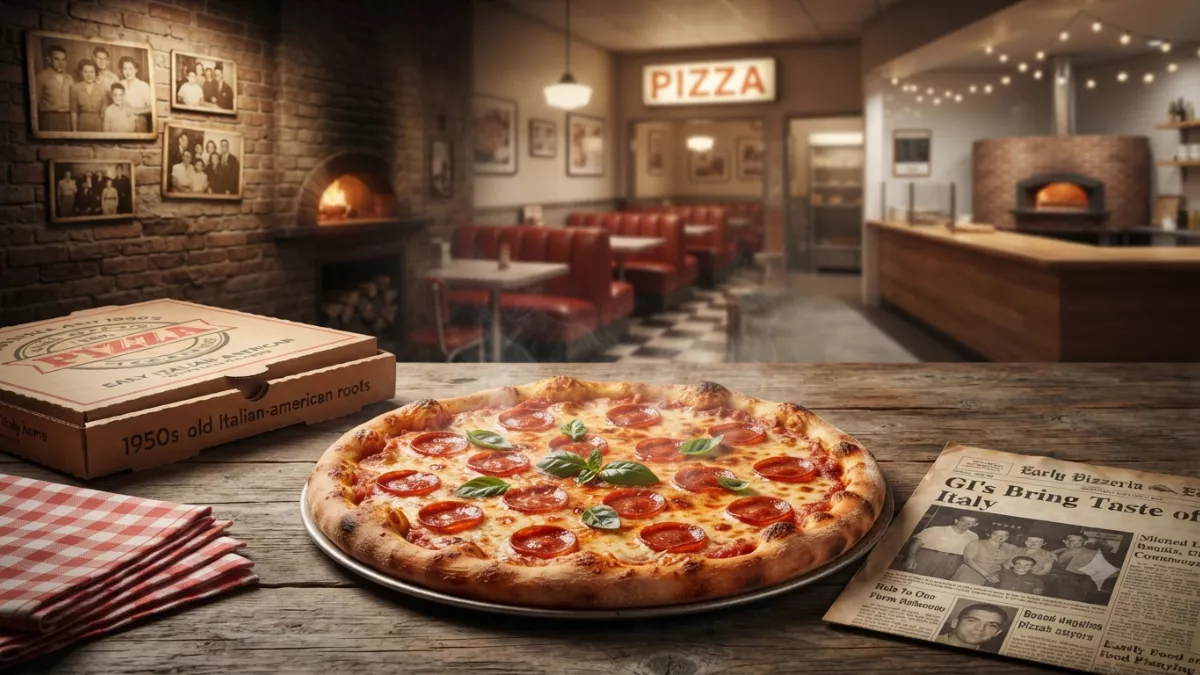
Pizza is one of the most recognizable foods in America. It appears on family dinner tables, at birthday parties, during sporting events, on college campuses, and at neighborhood restaurants across the country. From a classic cheese pizza to creative specialty pies, Americans have turned pizza into much more than a meal. It has become part of everyday food culture.
But how did pizza become such an important part of American life?
The story of pizza in America is a fascinating journey involving immigration, entrepreneurship, changing tastes, new technology, and regional food traditions. What began as a relatively simple Italian dish eventually developed into an enormous American food category with countless styles and flavors.
Understanding the history of American pizza also helps explain why there are so many different ways to enjoy it today.
Where Did Pizza Begin?
Before pizza became an American favorite, it was closely associated with the food traditions of Italy, particularly Naples.
Early versions of pizza were simple flatbreads topped with ingredients such as tomatoes, cheese, herbs, olive oil, and other local foods. For working-class Neapolitans, pizza was practical, inexpensive, flavorful, and easy to eat.
The combination of bread, tomato, cheese, and seasonings eventually became the foundation for the pizza that would travel beyond Italy.
However, pizza did not arrive in America as the enormous restaurant industry we know today. Its transformation happened gradually.
How Pizza Came to America
Italian immigration played a major role in introducing pizza to American communities.
During the late 19th and early 20th centuries, large numbers of Italian immigrants came to the United States. Many settled in cities such as New York, Boston, Philadelphia, Chicago, and other urban areas.
Immigrants brought their cooking traditions with them, including recipes and techniques for making breads, pasta, sauces, and eventually pizza.
At first, pizza was strongly connected to Italian-American neighborhoods. It was not yet the nationwide food phenomenon it would eventually become.
Small bakeries, markets, cafés, and restaurants helped introduce local customers to Italian foods. Over time, pizza began developing its own identity in America.
The Rise of New York-Style Pizza
New York City played an important role in the development of American pizza.
One of the most commonly cited early American pizzerias was Lombardi’s, which opened in Manhattan in the early 1900s. Its history is closely associated with the development of New York pizza culture.
As pizza became more popular in New York, local bakers and pizza makers adapted the dish to American ingredients, ovens, customer preferences, and serving habits.
New York-style pizza became known for its large, relatively thin slices with a crisp yet foldable crust. The combination of tomato sauce, melted mozzarella, and a baked crust created a format that was easy to serve and convenient to eat.
The famous New York slice also helped turn pizza into an affordable everyday food.
Instead of sitting down for an elaborate meal, customers could walk into a neighborhood pizzeria, order a slice, and continue with their day.
That simple idea became extremely influential.
Pizza Becomes Popular in Chicago
While New York developed its own pizza tradition, Chicago created another distinctly American style.
Chicago became famous for deep-dish pizza, which is dramatically different from a thin New York slice.
Deep-dish pizza uses a deep pan and a substantial crust that creates room for generous amounts of cheese, sauce, and toppings. Some versions are built with cheese beneath the tomato sauce, helping protect the cheese during the longer baking process.
Chicago pizza demonstrated something important about American food culture: pizza could evolve according to local preferences.
New York did not have to define what pizza should be everywhere.
Different cities could create their own interpretations.
Pizza After World War II
The period following World War II was extremely important for pizza’s growth in America.
As American cities expanded and transportation improved, people became increasingly interested in convenient foods. Restaurants, diners, and food businesses were able to reach larger customer bases.
Pizza also benefited from changing lifestyles.
Families increasingly looked for meals that were convenient, affordable, and enjoyable for groups. Pizza naturally fit these needs because a single large pie could feed several people.
The development of frozen pizza and other convenient food products also helped introduce pizza to households that did not have access to traditional pizzerias.
Pizza was no longer limited to Italian-American neighborhoods.
It was becoming an American food.
The Birth of the Modern Pizza Industry
Pizza’s popularity created opportunities for entrepreneurs.
Independent pizzerias began appearing throughout the country, while larger restaurant companies developed standardized pizza-making systems.
Chain restaurants played a major role in making pizza available in communities across the United States.
Companies such as Pizza Hut, Domino’s, and Little Caesars helped transform pizza from a primarily neighborhood food into a nationally distributed restaurant product.
Standardization made it possible for customers to recognize certain pizza styles and flavors regardless of where they lived.
At the same time, independent restaurants continued experimenting with their own recipes.
This created two parallel pizza cultures in America: large-scale commercial pizza and locally crafted pizza.
Both became important.
Why Pizza Became Perfect for American Families
One reason pizza became such a strong food tradition is its flexibility.
A pizza can be shared by an entire family, customized for different tastes, and ordered in different sizes.
One person might want pepperoni while another prefers mushrooms, vegetables, sausage, or extra cheese.
This customization makes pizza especially useful for groups.
Pizza also works for almost any occasion.
It can be a quick weeknight dinner, a birthday-party meal, a game-day food, a casual restaurant meal, or a late-night snack.
Few foods are as adaptable.
The Evolution of Pizza Toppings
American pizza culture also changed the way people thought about toppings.
Traditional Italian pizza often emphasizes a relatively small number of carefully selected ingredients. American pizza developed a broader approach to customization.
Pepperoni became one of the country’s most recognizable pizza toppings. Other popular choices include Italian sausage, mushrooms, onions, green peppers, black olives, bacon, ham, chicken, and various cheeses.
Over time, restaurants began creating specialty pizzas that combined multiple ingredients.
Some combinations became classics, while others reflected local tastes or changing food trends.
The result is an enormous variety of American pizza.
Hawaiian Pizza and the American Love of Experimentation
One of the best examples of pizza’s ability to evolve is Hawaiian pizza.
Despite its name, Hawaiian pizza was created in Canada rather than Hawaii. The combination of ham and pineapple became a recognizable pizza style and remains one of the more debated topping combinations.
Its popularity demonstrates an important characteristic of pizza in North America: experimentation is part of the tradition.
American pizza does not have to remain limited to a fixed list of ingredients.
Sweet, salty, spicy, smoky, creamy, and savory flavors can all appear on the same pizza.
Regional Pizza Styles Across America
There is no single American pizza.
Instead, the United States has developed numerous regional approaches.
New York-Style Pizza
New York-style pizza is known for large, thin slices with a crust that can be crisp underneath while remaining flexible enough to fold.
Chicago Deep-Dish Pizza
Chicago deep-dish pizza is built in a deep pan and has a thick structure capable of holding substantial amounts of cheese, sauce, and toppings.
Detroit-Style Pizza
Detroit-style pizza is traditionally baked in a rectangular pan and is recognized for its thick, airy crust and caramelized edges.
New Haven-Style Pizza
New Haven-style pizza, often called apizza, is known for a thin, chewy crust and strong baking character. It is commonly cooked at very high temperatures.
California-Style Pizza
California-style pizza became associated with creative toppings and combinations influenced by broader culinary trends.
These styles demonstrate how American pizza continued changing from one region to another.
Pizza and American Pop Culture
Pizza eventually became more than restaurant food.
It became part of American popular culture.
Pizza appears in movies, television shows, advertisements, sports events, school cafeterias, office lunches, and social gatherings.
The pizza box itself became a familiar part of American life.
Ordering pizza became associated with convenience and socializing. Friends could gather around a table, choose different slices, and share a meal without much preparation.
This social quality helped strengthen pizza’s cultural importance.
The Role of Delivery
Pizza delivery changed the industry dramatically.
Instead of customers traveling to a restaurant, restaurants could bring freshly baked pizza directly to homes.
Delivery became especially valuable for families, students, office workers, and groups hosting gatherings.
Advances in insulated delivery bags, transportation, ordering systems, and eventually online technology made delivery even easier.
Today, customers can order pizza through websites and mobile apps, customize toppings, select a pickup or delivery option, and track their order.
The basic product remains recognizable, but the way Americans purchase pizza has changed considerably.
The Rise of Frozen Pizza
Restaurant pizza was not the only reason pizza became an American household staple.
Frozen pizza also played a major role.
Frozen pizza offered convenience for households that wanted a quick meal without preparing dough, sauce, cheese, and toppings from scratch.
Over time, frozen pizza became available in supermarkets across the country.
This helped make pizza accessible even in places without a local pizzeria.
It also reinforced the idea that pizza could fit into almost any lifestyle.
Pizza in American Family Traditions
Food traditions are often created through repetition.
Families order pizza on Friday nights. Parents introduce children to their favorite toppings. Friends share pizza after watching a game. Students order pizza during study sessions.
These small moments can turn an ordinary food into a tradition.
Pizza’s role in American family life is therefore not only about taste.
It is also about convenience, memories, celebration, and togetherness.
A pizza night can become something people look forward to every week.
How Technology Changed Pizza
Technology has transformed nearly every part of the pizza experience.
Modern commercial ovens allow restaurants to produce consistent pizzas at high temperatures. Food-processing technology provides restaurants with reliable ingredients. Refrigeration and transportation systems make ingredients available across large geographic areas.
Then came digital ordering.
Customers can now browse menus, customize pizzas, pay online, and receive delivery updates without making a phone call.
Social media has also changed pizza culture.
Restaurants can showcase new pizzas, customers can share photographs, and visually impressive pizzas can spread quickly online.
The basic dish may be centuries old, but the pizza industry continues to adopt modern technology.
Why Americans Love Pizza
There is no single explanation for America’s love of pizza.
Its popularity comes from several qualities working together.
Pizza is convenient.
It is customizable.
It can be inexpensive or premium.
It works for individuals and large groups.
It can be traditional or experimental.
It can be simple or heavily topped.
It can be eaten at a restaurant, ordered for delivery, purchased frozen, or prepared at home.
Most importantly, pizza combines familiar flavors in a format that is easy to share.
That flexibility has allowed it to remain relevant as American eating habits have changed.
American Pizza vs. Traditional Italian Pizza
It is important to understand that American pizza and Italian pizza are not necessarily the same thing.
Traditional Italian pizza includes many regional styles and traditions, just as American pizza does.
American pizza often emphasizes larger portions, broader topping choices, different crust styles, and customization.
Italian pizza traditions may place greater emphasis on specific ingredients, regional methods, and simplicity.
Neither approach needs to replace the other.
Instead, they demonstrate how food changes when it moves between cultures.
Pizza in America is an example of culinary adaptation: a dish with Italian roots that developed new forms through American communities, businesses, ingredients, and tastes.
The Modern Craft Pizza Movement
In recent decades, American pizza has experienced another transformation.
Many independent restaurants and chefs have returned attention to dough fermentation, high-quality ingredients, specialty cheeses, seasonal vegetables, and carefully designed toppings.
Long fermentation has become popular among pizza makers who want greater flavor and texture.
Restaurants may use wood-fired ovens, pizza steels, high-temperature gas ovens, or specialized electric ovens.
This modern craft movement does not necessarily reject traditional American pizza.
Instead, it adds another layer to the country’s already diverse pizza culture.
Pizza Is Still Evolving
The history of pizza in America is not finished.
New ingredients continue to influence pizza menus. Restaurants experiment with regional ingredients, international flavors, plant-based toppings, spicy sauces, specialty cheeses, and new cooking techniques.
Customers also continue changing their preferences.
Some want thin and crispy crusts. Others prefer thick, airy dough. Some enjoy classic pepperoni while others want unusual combinations.
This constant evolution is one reason pizza has remained so successful.
There is always room for another interpretation.
How to Appreciate a Great Pizza
Understanding pizza history can also change the way you enjoy a slice.
Pay attention to the crust first. Is it crisp, chewy, airy, or soft?
Then consider the sauce. Does it provide acidity and flavor without overpowering the other ingredients?
Look at the cheese. Does it melt evenly? Does it provide richness without making the pizza excessively greasy?
Finally, consider the toppings.
Good toppings should complement the crust, sauce, and cheese rather than simply adding more ingredients.
A great pizza is usually about balance.
The Future of Pizza in America
Pizza has already traveled an extraordinary distance from its Italian roots.
It became a neighborhood food, a regional specialty, a national restaurant category, a frozen supermarket product, a delivery staple, and a cultural tradition.
The future will likely bring even more experimentation.
Technology may continue changing ordering and restaurant operations. New dietary preferences may influence ingredients. Independent pizza makers may continue exploring fermentation and cooking techniques.
But one thing is unlikely to change: people will continue gathering around pizza.
That is perhaps the most important part of the story.
Conclusion
The story of pizza in America is really a story about adaptation.
Italian immigrants helped introduce pizza traditions to American communities. Cities such as New York and Chicago developed distinctive styles. Restaurant chains expanded access. Delivery and frozen foods made pizza even more convenient. Independent pizza makers continued experimenting with ingredients, dough, ovens, and techniques.
Through all these changes, pizza remained recognizable while constantly evolving.
Today, pizza is not simply an imported Italian dish. It has become a major part of American food culture, with regional styles, family traditions, neighborhood restaurants, national chains, and countless personal preferences.
From a simple cheese pie to a carefully crafted specialty pizza, every slice reflects part of a much larger culinary story.
And that story continues every time someone orders a pizza, shares a slice with friends, or gathers around the table for pizza night.
Frequently Asked Questions
When did pizza become popular in America?
Pizza became increasingly popular in the United States during the early and mid-20th century. Italian-American communities helped establish pizzerias, while changing lifestyles, restaurant expansion, and eventually delivery and frozen pizza helped make it a nationwide food.
Who introduced pizza to America?
Pizza came to America through Italian immigrants and communities rather than through one single person. Italian-American entrepreneurs and restaurant owners helped establish pizza businesses, particularly in cities with large Italian immigrant populations.
Why is New York famous for pizza?
New York developed a distinctive pizza tradition featuring large, thin, foldable slices. The city’s pizzerias helped make the slice an affordable and convenient part of everyday urban food culture.
What are the most popular American pizza styles?
Some well-known American styles include New York-style, Chicago deep-dish, Detroit-style, New Haven-style, and California-style pizza. Each has its own approach to crust, toppings, baking, and presentation.
Why did pizza become so popular in America?
Pizza combines convenience, affordability, customization, and shareability. It can serve one person or an entire group, making it suitable for everyday meals, parties, celebrations, and casual gatherings.