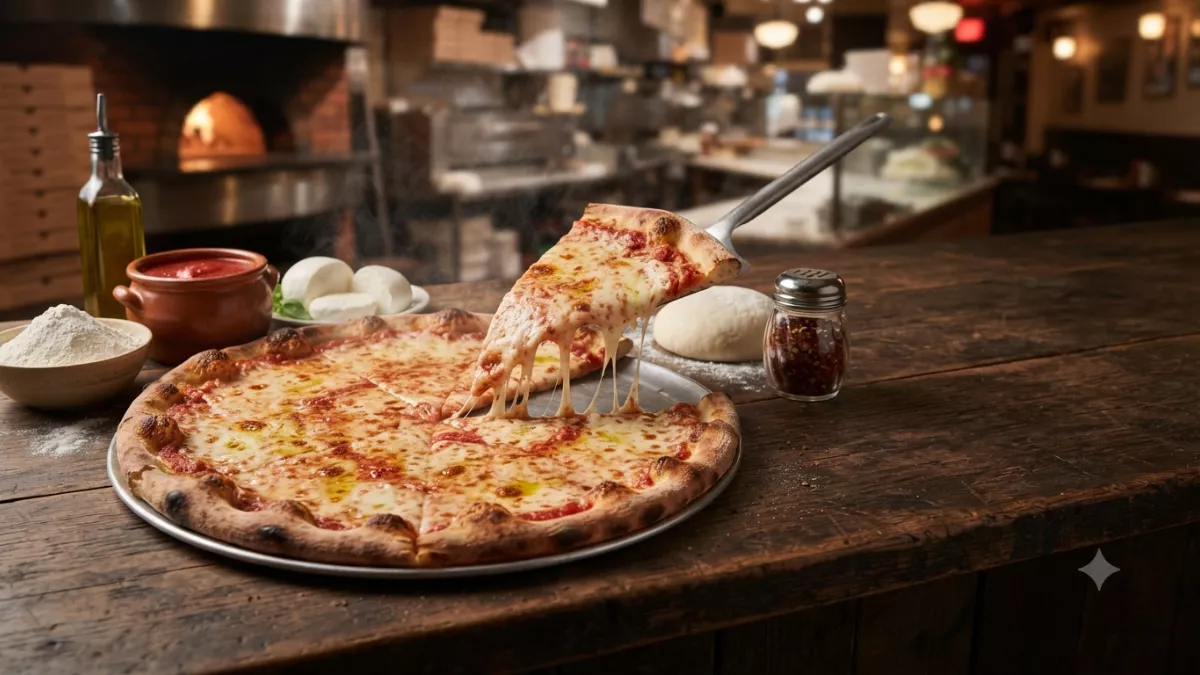
New York-style pizza has a flavor and texture that many pizza lovers can recognize after just one bite. The crust is thin but sturdy, the sauce is flavorful without being overwhelming, the cheese melts into a rich layer, and each slice has enough structure to fold while you eat it.
But why does New York-style pizza taste different from other types of pizza?
The answer is not just one ingredient. The distinctive flavor comes from a combination of pizza dough, fermentation, sauce, cheese, toppings, baking temperature, and cooking technique. Even small differences in these elements can change the final taste, aroma, texture, and overall eating experience.
New York-style pizza also developed around the needs of a busy city. Large pizzas, wide slices, relatively thin crusts, simple toppings, and fast baking created a style that became closely associated with New York City and eventually became popular throughout the United States.
In this guide, we’ll explore 7 key factors that make New York-style pizza taste different, along with tips for recognizing authentic characteristics and creating similar results at home.
1. The Thin, Foldable Crust Creates a Unique Texture
One of the most noticeable characteristics of New York-style pizza is its crust.
Traditional New York-style pizza generally has a relatively thin center with a thicker, airy outer edge. The bottom should provide enough strength to support sauce, cheese, and toppings while remaining flexible enough to fold.
That texture affects flavor more than you might expect.
A crust that is crisp on the bottom but slightly chewy inside creates a combination of textures with every bite. You get a light crunch first, followed by the chewiness of properly developed dough.
The crust also contributes a mild toasted flavor. During baking, the dough develops browned areas that add roasted, slightly nutty notes.
Why the crust matters
The crust provides several important elements:
- Crispness on the bottom
- Chewiness in the center
- A lightly charred or toasted flavor
- A soft, airy outer edge
- A sturdy base for toppings
- A satisfying contrast with melted cheese and sauce
This balance is one reason New York-style pizza can taste different even when the basic ingredients appear similar to those used in other pizzas.
2. Pizza Dough Fermentation Builds Flavor
Another major factor is the way pizza dough is prepared and fermented.
Pizza dough is usually made from a relatively simple combination of flour, water, yeast, and salt. However, the preparation process can dramatically influence the finished product.
Fermentation gives yeast time to work through the dough. During this process, the dough develops gases that help create its structure while also producing compounds that contribute to aroma and flavor.
A dough that receives adequate fermentation can develop a more complex taste than dough that is mixed and baked immediately.
Longer fermentation can add complexity
Many pizza makers use longer fermentation periods, sometimes including refrigerated fermentation. Cold fermentation slows yeast activity and gives the dough more time to develop flavor.
Depending on the recipe and process, properly fermented dough may have:
- More developed wheat flavor
- A subtle fermented aroma
- Better browning
- Improved texture
- More complex flavor
This doesn’t mean that longer fermentation automatically makes every pizza better. The final result depends on flour, yeast quantity, temperature, hydration, fermentation time, and baking conditions.
Still, fermentation is an important reason two pizzas made from similar ingredients can taste surprisingly different.
3. The Sauce Has a Bright, Savory Tomato Flavor
New York-style pizza sauce is another important part of its distinctive flavor.
Rather than using an extremely thick or heavily seasoned sauce, New York-style pizza generally relies on tomato flavor combined with herbs, salt, garlic, and other seasonings.
The goal is to complement the crust and cheese rather than completely cover them.
Tomatoes provide acidity and natural sweetness. Herbs and seasonings add aroma and savory depth, while salt helps bring the different flavors together.
Tomato acidity creates balance
Cheese and dough contain rich, savory flavors. Tomato sauce introduces acidity that helps balance that richness.
This creates a familiar flavor progression:
crispy crust + tangy tomato sauce + creamy cheese + savory toppings
If the sauce is too sweet, it can make the pizza taste unbalanced. If it is too acidic, it can dominate the other ingredients. If too much sauce is used, the crust may also become soft.
That’s why sauce quantity matters almost as much as the sauce recipe.
A well-balanced New York-style pizza typically allows you to taste the tomato sauce without losing the flavor of the crust and cheese.
4. Melted Cheese Creates Richness and Saltiness
Cheese is one of the first things people notice when biting into a slice of pizza.
New York-style pizza commonly uses mozzarella, often combined with other ingredients or cheese varieties depending on the recipe. The cheese melts across the pizza, creating a creamy layer that connects the sauce, crust, and toppings.
As the cheese heats, its fat and proteins change texture. The result is a combination of stretchiness, creaminess, browning, and savory flavor.
Cheese does more than add flavor
Cheese also changes the way the other ingredients taste.
The richness of melted cheese can soften the acidity of tomato sauce. Its saltiness enhances the flavor of the crust. Its fat carries aromas from herbs, spices, and toppings.
This is why the ratio between cheese and sauce matters.
Too little cheese can leave a pizza tasting overly acidic or dry. Too much cheese can make the pizza heavy and overwhelm the crust.
A balanced layer allows each component to remain recognizable.
5. High-Temperature Baking Changes the Flavor
The oven is one of the biggest reasons pizza tastes different from other baked foods.
New York-style pizza is typically baked at a high temperature, allowing the crust to cook relatively quickly while the cheese melts and toppings heat through.
High-temperature baking encourages browning and creates the characteristic combination of crispness and chewiness.
The Maillard reaction matters
When the surface of the dough becomes hot enough, complex chemical reactions occur during browning. One important group of reactions is known as the Maillard reaction.
These reactions contribute to the brown color and roasted, toasted flavors associated with baked foods.
That’s why a properly baked pizza crust can taste dramatically more flavorful than pale, underbaked dough.
High heat can also create small browned areas around the crust and toppings. These spots add additional roasted flavors and aroma.
Why home ovens can produce different results
Many home ovens do not reach or maintain the same temperatures as commercial pizza ovens.
A home pizza may therefore require a different baking strategy.
Pizza stones and pizza steels can help transfer intense heat to the dough, improving bottom browning and crust texture. Preheating them thoroughly is important because placing cold dough onto a cold surface does not create the same thermal environment.
The oven’s heat distribution also matters. A pizza baked in a very hot environment can develop a different crust than one baked slowly at a lower temperature.
6. Simple Toppings Let the Core Flavors Stand Out
New York-style pizza is often associated with relatively straightforward topping combinations.
Classic examples include:
- Pepperoni
- Sausage
- Mushrooms
- Onions
- Peppers
- Extra cheese
- Fresh basil
The simplicity is important because the pizza doesn’t need dozens of toppings to create a complex flavor.
Instead, each ingredient contributes something recognizable.
Pepperoni brings saltiness, spice, fat, and a crisp edge when baked. Mushrooms contribute earthy flavors. Onions provide sweetness and aroma. Peppers add freshness and mild sweetness or heat.
Topping quantity matters
One common mistake when making pizza at home is adding too many toppings.
Heavy toppings can release moisture during baking. They can also prevent the crust from becoming crisp and make it difficult for the pizza to cook evenly.
A balanced New York-style pizza generally allows the crust, sauce, cheese, and toppings to work together.
The goal isn’t simply to put as much food as possible on the pizza. It’s to create a balanced bite.
7. The Classic Slice-Eating Experience Changes How It Tastes
There is another factor that is easy to overlook: how New York-style pizza is eaten.
The large, thin slice is part of the style’s identity.
A typical slice can be picked up and folded lengthwise. This creates a compact bite containing crust, sauce, cheese, and toppings at the same time.
That combination changes the eating experience.
Instead of tasting each component separately, you get multiple textures and flavors together.
The crisp underside provides structure. The soft interior adds chewiness. Tomato sauce brings acidity and sweetness. Cheese adds richness and saltiness. Toppings provide additional flavor and texture.
The fold also makes the slice convenient to eat, especially when enjoying pizza on the go.
What Makes New York-Style Pizza Different From Other Pizza Styles?
New York-style pizza is only one part of America’s diverse pizza culture.
Different pizza styles use different approaches to crust thickness, sauce, cheese, toppings, and baking.
New York-style pizza
Generally characterized by:
- Thin, flexible crust
- Large slices
- Crisp bottom
- Chewy interior
- Tomato-forward sauce
- Generous melted cheese
- Classic toppings
- High-temperature baking
Chicago deep-dish pizza
Chicago-style deep dish typically has a much thicker structure and uses a deep pan. Its substantial crust and layered ingredients create a very different eating experience.
Neapolitan-style pizza
Neapolitan pizza generally has a thin, soft center with a puffy edge and is traditionally associated with very high-temperature, fast baking. Its texture and ingredient philosophy differ from the classic New York slice.
Detroit-style pizza
Detroit-style pizza is known for its rectangular shape, thicker crust, caramelized cheese edges, and distinctive layering.
These differences demonstrate why pizza can taste dramatically different even though many styles share the same basic ingredients.
Is New York Water Really Responsible for the Taste?
New York City’s water is frequently mentioned when people discuss the flavor of New York-style pizza.
Water chemistry can influence dough because minerals affect yeast activity, gluten development, and other aspects of dough behavior.
However, saying that New York water alone creates authentic New York pizza oversimplifies the process.
Flour selection, fermentation, hydration, yeast, mixing, dough handling, sauce, cheese, oven temperature, and baking technique all contribute to the final result.
Some pizza makers outside New York have successfully created New York-style pizza using local water and carefully controlled recipes.
The water may be one variable, but it is not the entire explanation.
How to Make New York-Style Pizza at Home
You don’t need a commercial pizza shop to recreate some of the characteristics of New York-style pizza.
Start with a reliable dough recipe and allow enough time for fermentation.
Step 1: Prepare the dough
Combine flour, water, yeast, and salt. Mix until the ingredients form a cohesive dough.
Knead or mix until the dough develops enough strength to become smooth and elastic.
Step 2: Ferment the dough
Allow the dough to rise at the appropriate temperature.
For more developed flavor, consider a refrigerated fermentation period. Bring the dough back toward room temperature before shaping.
Step 3: Prepare a simple sauce
Use quality tomatoes and season them with salt, herbs, garlic, or other ingredients according to your preference.
Avoid making the sauce excessively thick.
Step 4: Shape the dough
Stretch the dough carefully while preserving some air around the outer edge.
Avoid using excessive force on the rim because you want the crust to develop a lighter outer structure.
Step 5: Add sauce and cheese
Spread a relatively thin layer of sauce over the dough.
Add mozzarella and your chosen toppings without overloading the pizza.
Step 6: Bake at high heat
Preheat your oven thoroughly.
If using a pizza stone or steel, allow it to heat for sufficient time before baking.
Bake until the crust is browned, the cheese is fully melted, and the underside has developed a crisp texture.
8 Common Mistakes That Can Prevent New York-Style Flavor
Even a good recipe can produce disappointing results if the technique is incorrect.
Using under-fermented dough
Dough that hasn’t had enough time to ferment may lack flavor and have a less developed texture.
Adding too much sauce
Excess sauce can make the center wet and prevent the crust from becoming crisp.
Overloading toppings
Too many toppings can create excess moisture and make the pizza heavy.
Using too much flour while shaping
Excess flour can burn during baking and create an unpleasant bitter taste.
Not preheating the oven
Pizza needs intense heat. A poorly preheated oven can produce a pale or soft crust.
Using cold toppings in large quantities
Very cold or wet toppings can reduce the oven’s ability to quickly cook the pizza.
Baking on a cold surface
A properly heated pizza stone or steel can provide much better bottom heat than a cold baking tray.
Cutting immediately after baking
Allowing the pizza to rest briefly can help the cheese and toppings settle while the crust retains its structure.
Why New York-Style Pizza Has Such a Strong Flavor Balance
The real secret isn’t one ingredient.
It’s balance.
A great New York-style pizza combines several contrasting characteristics:
Crispy + chewy
The crust provides both textures.
Tangy + rich
Tomato sauce balances the richness of cheese.
Savory + slightly sweet
Cheese, toppings, and browned dough combine with the natural sweetness of tomatoes and caramelized ingredients.
Simple + flavorful
A small number of quality ingredients can create a surprisingly complex result.
This balance is what makes the style so recognizable.
How to Choose a Great New York-Style Pizza
If you’re ordering New York-style pizza, pay attention to a few characteristics.
The crust should have enough strength to hold the toppings without feeling excessively thick.
The bottom should have some crispness, while the interior remains pleasantly chewy.
The sauce should provide noticeable tomato flavor without overpowering the cheese.
The cheese should be melted and flavorful rather than excessively greasy.
Toppings should be distributed evenly and used in quantities that don’t overwhelm the crust.
Most importantly, the slice should feel balanced from the first bite to the last.
Frequently Asked Questions
1. Why does New York-style pizza taste different?
New York-style pizza tastes different because of its combination of thin chewy crust, fermented dough, tomato sauce, melted cheese, classic toppings, high-temperature baking, and distinctive slice structure.
2. What makes New York pizza crust special?
The crust is typically thin and flexible in the center while remaining crisp underneath and chewy inside. The outer edge is usually thicker and more airy.
3. Does New York water make the pizza taste different?
Water chemistry can influence dough development, but New York water is only one possible factor. Flour, fermentation, ingredients, and baking technique also play major roles.
4. Why is New York pizza usually foldable?
The relatively thin but structurally strong crust allows a slice to bend or fold without completely collapsing. Folding also makes a large slice easier to eat.
5. Can I make New York-style pizza at home?
Yes. A good dough recipe, adequate fermentation, quality ingredients, a thoroughly preheated oven, and a hot baking surface can help you create a New York-inspired pizza at home.
Final Thoughts
So, why does New York-style pizza taste different?
It comes down to the combination of several carefully connected factors. The thin, chewy crust provides structure and texture. Fermentation develops the dough’s flavor. Tomato sauce adds acidity and brightness, while mozzarella contributes richness and saltiness. High-temperature baking creates browning and roasted flavors, and classic toppings add additional layers without overwhelming the pizza.
The result is a style that feels simple but is actually built around careful balance.
Whether you’re enjoying a classic cheese slice, a pepperoni pizza, or making your own version at home, the appeal of New York-style pizza comes from the way its ingredients and cooking methods work together.
Once you understand these seven factors, you’ll have a much better idea of what makes a New York-style slice taste so distinctive.